
Israeli forces cross Litani River in Lebanon conflict despite talks
Israeli forces have advanced further into Lebanon, crossing the Litani River, despite security talks and a nominal truce that has not halted the Lebanon conflict. The move comes amid ongoing military operations that extend beyond previously referenced boundaries, even as delegations from both sides engage in discussions abroad.
Israeli advance across the Litani River
Israeli troops have pushed deeper into Lebanese territory by crossing the Litani River, a development confirmed in statements from Prime Minister Benjamin Netanyahu. This advance builds on earlier incursions and reflects a deliberate extension of operations into areas north of established lines. Netanyahu highlighted the progression of forces, noting that troops had moved further into the country following initial entries. The action occurs against the backdrop of a nominal truce that has failed to prevent continued movements on the ground. Sources indicate that these steps align with a strategy of deeper engagement, even while parallel diplomatic channels remain active. The crossing underscores the fluid nature of positions in the Lebanon conflict, where military realities on the ground evolve independently of announced pauses in fighting. [1] [4]
Further details from reporting show that the push beyond the river follows directly from Netanyahu’s public remarks on the need for expanded operations. Israeli forces have maintained momentum in southern Lebanon, integrating the river crossing into broader maneuvers that target additional zones. This progression has been tracked through official statements and field observations, illustrating how the military component of the Lebanon conflict continues to shape territorial control. The advance also coincides with other measures, such as administrative orders issued to local populations, which reinforce the extent of the incursion.
New expulsion orders for southern villages
Israel's military issued three expulsion orders covering residents of 13 villages in southern Lebanon on a Saturday, one day after Netanyahu described the deeper push by troops. These orders were released as forces pressed further into the region, linking the administrative actions directly to the timing of the advance. The directives affect multiple communities and signal an intent to clear areas ahead of or during sustained operations. Reporting places the orders in sequence with the river crossing, showing how military and civilian measures are coordinated on the ground. [2] [3]
The expulsion notices add another layer to the ongoing activities in southern Lebanon, where forces are operating beyond initial limits. By issuing the orders shortly after the prime minister’s statement, Israeli authorities appear to be formalizing control over newly reached zones. This sequence demonstrates the rapid pace at which developments unfold in the Lebanon conflict, with each military step accompanied by corresponding instructions to residents. The orders remain in effect as troops consolidate positions, contributing to the overall displacement pattern observed in the affected villages.

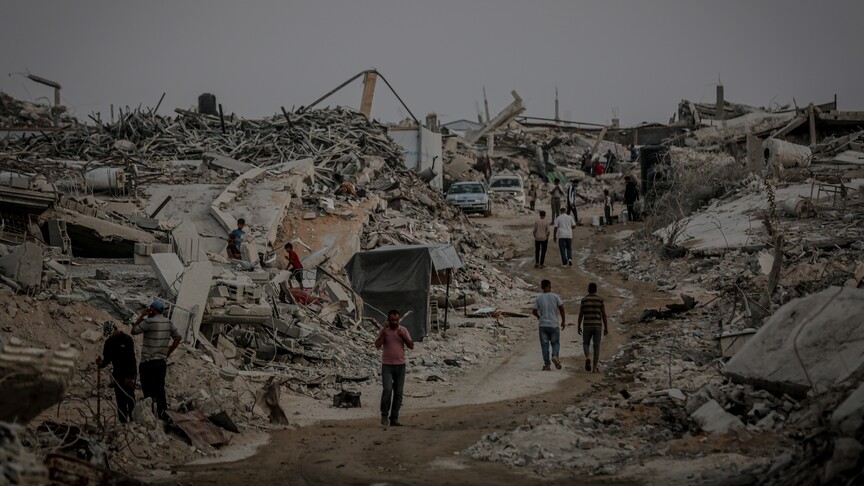
A mourner grieves over a victim killed in an Israeli strike in Lebanon. — Source: middleeasteye
Ongoing diplomatic talks in Washington
Lebanese and Israeli delegations convened at the Pentagon in Washington for security talks on a Friday, setting the stage for US-brokered negotiations scheduled to begin early the following week. These meetings represent the fourth round in a series aimed at addressing the situation, even as ground operations continue. The discussions occur in parallel with the reported advances, highlighting the separation between diplomatic efforts and field actions. [2] [5]
The Pentagon sessions focused on security matters and preceded the formal negotiations, providing a forum for direct exchanges between the parties. Despite the proximity of these talks to the military movements across the Litani River, the advance proceeded without interruption. This juxtaposition illustrates how the Lebanon conflict maintains dual tracks: one involving high-level diplomacy in the United States and another involving incremental territorial shifts in southern Lebanon. The upcoming negotiations are positioned as a potential avenue for de-escalation, yet current reporting shows no immediate impact on the expulsion orders or rocket exchanges already underway.
Hezbollah rocket fire and continued clashes

Israeli forces advance deeper into Lebanon amid ongoing military operations. — Source: middleeasteye
Hezbollah has fired rockets toward northern Israel while Israeli forces extend operations beyond the Litani River. These launches have persisted alongside the ground movements, underscoring that the nominal truce has not eliminated all exchanges. Clashes have continued for weeks under the ceasefire framework, with both sides maintaining active postures. [3] [5]
The rocket activity forms part of the sustained pattern of engagement that defines the current phase of the Lebanon conflict. Reports note that the firings occur in response to or in tandem with Israeli advances, creating a cycle of action and counteraction. Even as delegations meet in Washington, the field-level incidents demonstrate that the truce remains limited in scope. This persistence of fire from Hezbollah positions adds pressure to the diplomatic process, as negotiators seek arrangements that could address both the rocket threat and the territorial expansions.
Role of the Litani River as reference line
The Litani River serves as a key geographic marker in southern Lebanon, functioning as the northern limit of a UN-monitored security zone. Netanyahu’s announcement of the crossing draws attention to this reference point, which has long held significance in regional security arrangements. By moving forces across the river, Israeli operations have entered territory beyond the established boundary. [4] [5]
This crossing alters the practical meaning of the river as a dividing line, since troops are now positioned further north than the zone’s designated edge. The UN monitoring role attached to the area provides context for why the development carries weight in assessments of the Lebanon conflict. Sources describe the river as one of the most important reference lines, making any breach noteworthy for its implications on existing frameworks. The advance therefore tests the durability of prior understandings tied to the security zone.
Broader context of the Lebanon conflict
The sequence of river crossing, expulsion orders, and rocket fire unfolds within the wider Lebanon conflict, where nominal truces coexist with active operations. Netanyahu’s statements on deeper incursions set the tone for the recent phase, while talks in Washington attempt to chart a different path. The combination of military and diplomatic elements reveals the multifaceted character of the situation, with each development influencing perceptions of progress or stalemate. [5]
What to watch next
Attention now turns to the US-brokered negotiations set to start early next week, which could influence whether the recent advances and orders lead to any adjustments on the ground.