
United States Tensions Escalate as Precision Missile Stocks Near Depletion After Iran War
United States tensions have escalated as the country has used up virtually all of its Army Tactical Missile Systems (ATACMS) and Precision Strike Missiles (PrSM) after five months of war with Iran, prompting concerns about its ability to sustain operations or deter other adversaries. The United States launched the war jointly with Israel in February, expecting it to be short, but the conflict has continued and cost billions of dollars.
US Depletes Precision Missile Stockpiles in Iran Conflict
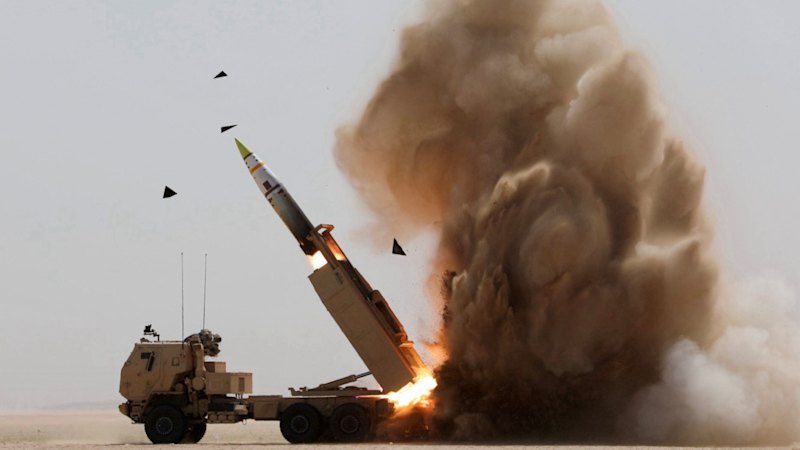
The United States has reportedly used up “virtually all” of its stockpile of missiles in five months of war with Iran. The affected weapons are understood to be the army’s highly accurate surface-to-surface munitions, known as Army Tactical Missile Systems (ATACMS) and Precision Strike Missiles (PrSM). The US has used “virtually all” of these, according to two sources who spoke to Reuters. There has been speculation about the severity of the shortfall for some time, with an official warning last month that the US military did not have enough for a return to “all-out war”. The missiles – which cost more than $US1 million each – are an important part of the military’s arsenal, allowing accurate strikes from a safe distance. ATACMS supplied by the US have played a key role in the war in Ukraine, allowing Kyiv’s forces to attack targets inside Russia. The PrSM is a newer, more advanced generation that will replace the shorter-range Atacms. According to the report, PrSM stockpiles were low to start with, since it is a relatively new munition, but the US military has ordered a large number of them for 2027. The US Army has said that ATACMS are being phased out, and that production is shifting to the newer PrSM missiles. They have been used to strike targets inside Iran, according to a March report by the Centre for Strategic and International Studies. [1]
Trump's Threats and Last-Minute Pullbacks
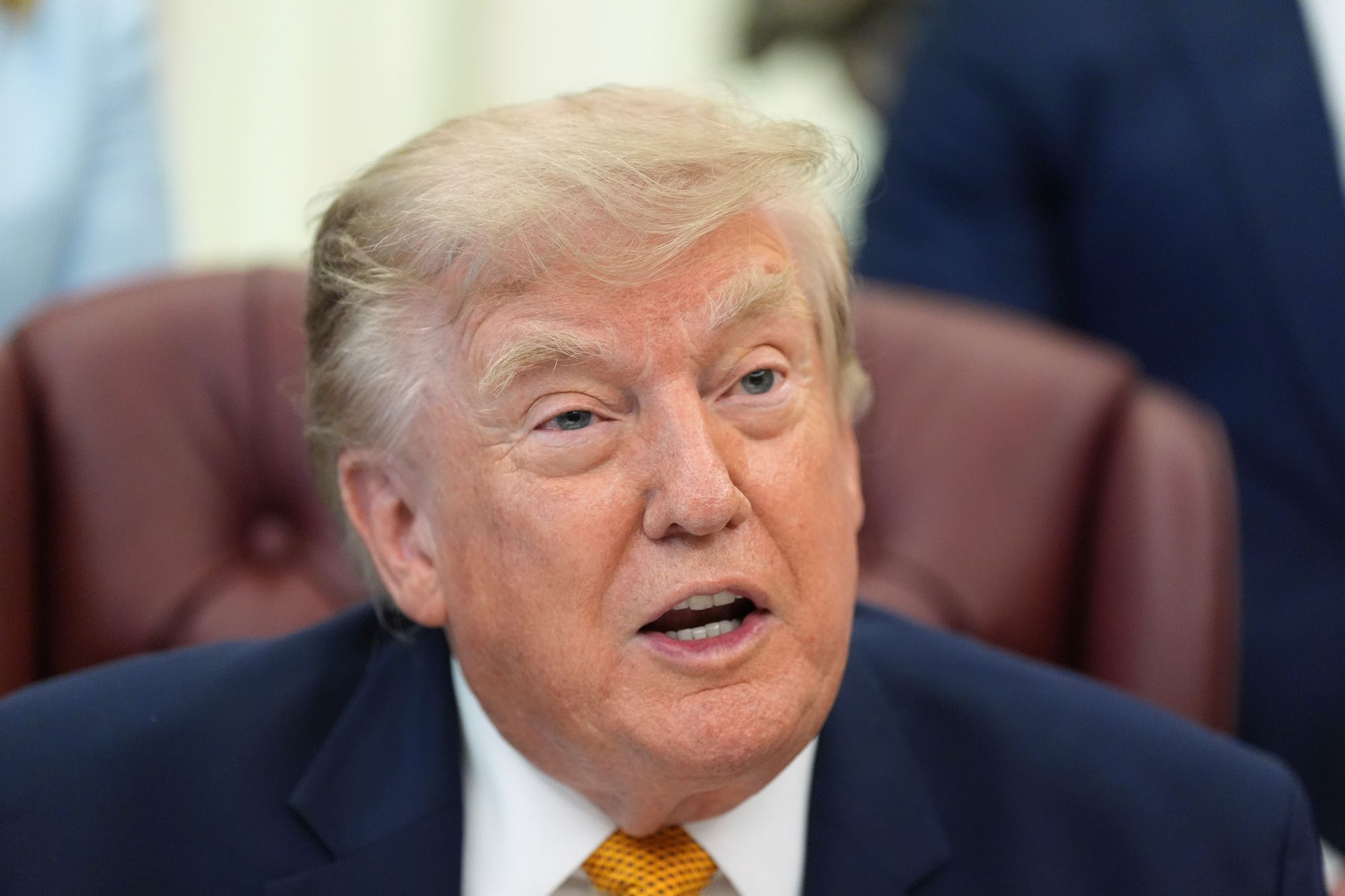
President Donald Trump has repeatedly threatened Iran with devastating strikes, only to call them off at the last minute. In what has become a regular pattern, Trump last week threatened to hit Iran “very hard”, potentially with attacks against civilian infrastructure, only to pull back, hinting a deal was near. Trump said on Tuesday a deal with Iran to reopen Hormuz could happen “tomorrow or the next day,” telling reporters in California that negotiators “had a very good day”. Earlier, he struck a more threatening tone. “The strait is going to be open very soon, or they’re going to get hit very hard — and then the strait’s going to be open,” Trump said in an interview with Fox News. “All you can do is fight your way out.” US Treasury Secretary Scott Bessent told CNBC earlier “there is a chance we may have a deal” by Wednesday or Thursday. Secretary of State Marco Rubio said on Tuesday that the US was involved in negotiations between Oman and Iran on increasing traffic through the Strait of Hormuz. News outlet Axios reported on Tuesday that the US, Iran and Oman were nearing an interim deal to reopen the strait, which Washington was hoping to announce on Wednesday. Axios, citing unnamed regional officials and a US official, said the deal on the table would be a 60-day arrangement for safe passage in the strait between Iran and Oman. [1][2]
United States Tensions Rise as Implications for Future Operations and Deterrence Emerge
The dramatic rundown means that the Pentagon will have to rely more on riskier, piloted bombing missions if the US president follows through with threats to relaunch large-scale attacks on Iran. Three people familiar with the matter expressed worry that the falling missile supplies could limit the US’s ability to deter adversaries in a potential future attack, including Russia and China. One of the sources said the drawdown of the ATACMS and PrSM stockpiles reflected a decision by the Trump administration to avoid riskier ways of attacking Iranian targets, such as by using piloted aircraft to drop bombs. Because these weapons allow the military to attack targets from a distance, analysts say they would be valuable in a war against an adversary with strong air defences, such as China. A fourth person familiar with the matter said that while Central Command – which oversees US forces in the Middle East – has nearly used up the land-based missiles it had before the war began, it has been able to reload from US military supplies elsewhere in the world. The US has had to top up its ATACMS stockpile in the Middle East from other operational regions. The supply figures have circulated inside the federal government over the last week during tense conversations inside the Trump administration about how much longer the US can continue striking Iran without drawing down the stockpile to levels that would limit the military’s ability to respond to crises elsewhere. Last week, several media outlets reported that Trump had decided not to launch another massive offensive inside Iran in part because his military advisers had warned about the US stockpile. A US official disputed those accounts, saying that the president chose not to move forward with another attack because of pressure from Persian Gulf states. [1]
White House and Pentagon Response on Munitions
Asked for comment on the stockpile data, the White House stated that the US had “far more munitions than anyone in the world” and “far more than we need”. “Our defence companies are, at this moment, making more munitions than they have ever made before, in addition to expanding their plants and equipment at record levels,” a Trump spokesperson said. Analysts agree that certain munitions, including artillery shells and several types of missiles, are being produced at record levels but caution that supplies might fall short of what is needed for a prolonged war. Sean Parnell, the chief Pentagon spokesman, said: “America’s military is the most powerful in the world and has everything it needs to execute at the time and place of the president’s choosing. We have executed multiple successful operations across combatant commands while ensuring the US military possesses a deep arsenal of capabilities to protect our people and our interests.” [1]
Ongoing Diplomacy Over Strait of Hormuz
US Treasury Secretary Scott Bessent told CNBC earlier “there is a chance we may have a deal” by Wednesday or Thursday. Underlining the volatile situation, one crew member was listed missing Tuesday on a merchant ship hit by a projectile in Hormuz, while an Indian ship in the Red Sea sank following an unattributed attack. Iran’s foreign ministry has denied negotiations with Washington, even as Trump insisted they were happening. Qatar, which has been mediating negotiations, said that diplomatic efforts were ongoing but that no direct Iran-US talks were planned. Its leader, Sheikh Tamim bin Hamad Al-Thani, spoke with Trump by phone on Tuesday, with Doha saying they discussed “efforts to de-escalate tensions.” Trump had previously said he expected to know by Tuesday how the talks were going, “one way or the other”, but insisted “it’s not very complex”. Washington’s diplomatic goals include reopening Hormuz and the denuclearisation of Iran, which Trump accepted could “take a little while”. The president previously called Tehran “duplicitous” for saying it was not negotiating, adding that a US counter-blockade of Iranian ports would remain “unless a Deal, or Total Surrender, is accomplished”. More than five months into a war that has cost Washington billions of dollars, Iran remains able to fire missiles and drones at US and allied targets in the region, as well as at commercial shipping. Early on Tuesday, Britain’s maritime security agency UKMTO said an unnamed cargo vessel had been struck by an “unknown projectile” in the Strait of Hormuz off the coast of Oman. Iran continues to impose an effective blockade on the strait and insists ships coordinate crossings with it. The disruptions in Hormuz have only placed greater importance on shipping lanes through the Red Sea, where Iran-backed Houthi rebels in Yemen have declared a maritime blockade on Saudi Arabia. The Saudi Red Sea port of Yanbu has enabled it to keep up shipments to global markets by circumventing Hormuz entirely. But since the Houthis announced their blockade, they have claimed attacks on multiple ships they say are in violation. On Tuesday, the Indian ship MSV Faize Noore Oliya sank in the Red Sea off Yemen following an unattributed attack, with all of its crew rescued. [2]
What to watch next: Axios reported on Tuesday that the US, Iran and Oman were nearing an interim deal to reopen the strait, which Washington was hoping to announce on Wednesday, while Trump warned Iran it would get “hit very hard” if negotiations fell through.