
Ukrainian Forces Repel 268 Russian Assaults With Most Attacks on Pokrovsk Front
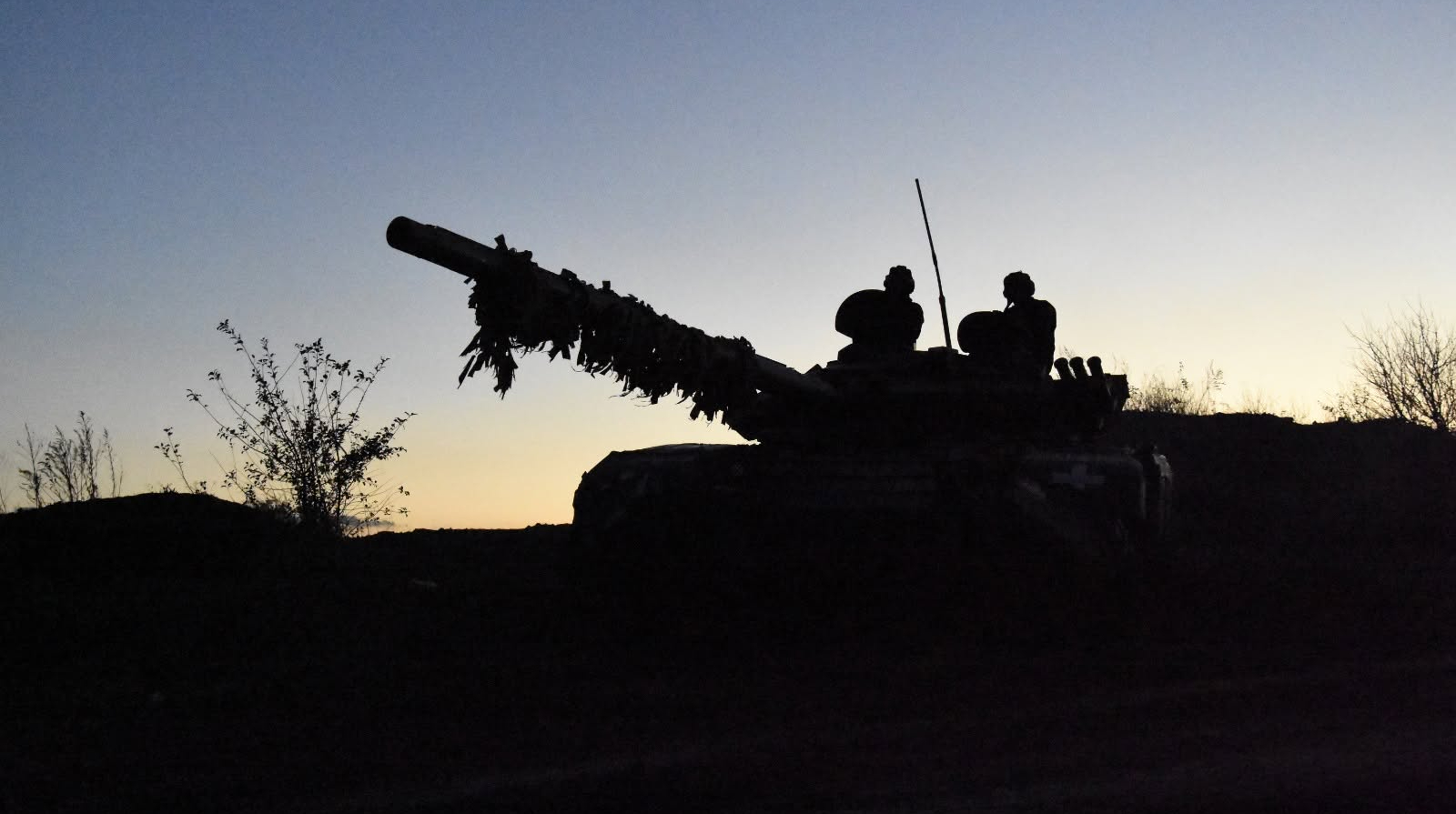
Ukrainian forces repelled 268 Russian combat clashes over the past day, with the highest number of assaults on the Pokrovsk front where 38 attacks were stopped.
Intense Fighting on Ukrainian Fronts
A total of 268 combat clashes have occurred on the battlefield over the past day. The Russians have conducted most attacks on the Pokrovsk front, where Ukrainian forces have repelled 38 assaults. [1] On the North Slobozhanshchyna front and in the operational zone in Russia's Kursk Oblast, Ukrainian defenders stopped two Russian assaults. [1] On the South Slobozhanshchyna front, Ukrainian units repelled two Russian assaults near the village of Hoptivka. [1] On the Kupiansk front, the Russians attacked twice towards the settlements of Novoplatonivka and Kivsharivka. [1] On the Lyman front, the Russians tried to break through the Ukrainian defence, conducting 15 attacks near the settlements of Stavky, Drobysheve and Lyman and towards Druzheliubivка, Derylove, Shyikivka, Novoselivka and Yampil. [1] On the Sloviansk front, the Russians conducted 28 assaults near the settlements of Kryva Luka, Zakitne and Riznykivka and towards Rai-Oleksandrivka. [1] On the Kramatorsk front, the Russians conducted three attacks towards the settlements of Nykyforivka, Tykhonivka and Yurivka. [1] On the Kostiantynivka front, 29 Russian attacks were recorded. [1] The Russians conducted assaults near the settlements of Kostiantynivka, Illinivка and Ivanopillia and towards Stepanivka and Oleksandro-Shultyne. [1] On the Pokrovsk front, the highest number of assaults was recorded, with Ukrainian defenders stopping 38 Russian attacks. [1] The Russians were active near the settlements of Toretske, Pokrovsk, Rodynske and Bilytske and conducted assaults towards Pavlivka, Vilne, Shevchenko, Hryshyne, Molodetske, Novopidhorodne, Svitle, Hulive, Matiasheve, Dorozhnie, Nykanorivka, Novyi Donbas, Kotlyne and Udachne. [1] On the Oleksandrivka front, the Russians conducted three attacks towards the settlements of Novohryhorivka and Voskresenka. [1] On the Huliaipole front, the Russians conducted 30 attacks on the positions of Ukraine's defence forces. [1] The Russians tried to advance near the settlements of Huliaipilske, Novoselivka and Verkhnia Tersa and towards Hirke, Rybne, Dobropillia, Vozdvyzhivka, Tsvitkove, Kosivtseve and Charivne. [1] On the Orikhiv front, Ukrainian defenders stopped two unsuccessful Russian attempts to advance towards the settlements of Stepove and Shcherbaky. [1] On the Prydniprovske front, the Russians did not conduct any assaults. [1] On the Volyn and Polissia fronts, there is no evidence of any offensive Russian groups being formed in the area. [1]
Russian Countermeasures Against Ukrainian Drones
Russian forces are trying to counter Ukrainian “midstrike” drone attacks by camouflaging cargoes and installing powerful jamming systems to disrupt Elon Musk’s Starlink satellite internet system. [5] Kyiv’s development of “midstrike” drones that can hit targets dozens of kilometers behind front lines accurately and cheaply, and are often flown via Starlink, has transformed the war in Ukraine. [5] In a concerted midstrike campaign this year, Ukraine has attacked supply lines, fuel storage facilities, air-defense installations and command centers, disrupting Russian forces’ logistics and causing fuel shortages in Russian-occupied Crimea. [5] But Russia is now developing many ways to try to counter the midrange strikes. [5] Four drone commanders and pilots described these countermeasures during a visit to Ukraine’s 422nd Unmanned Systems Regiment at work in the southern Zaporizhzhia region. [5]
UN Warns of Genocide Risks in Sudan
Atrocities committed by the Rapid Support Forces (RSF) militia against Sudanese civilians in El Fasher in October—including mass killings, abductions and gang rapes—bear the markers of genocide, independent UN human rights investigators reported. [3] The mission found “indicators of a genocidal path” in a report released in February. [3] The new report builds on the earlier findings by providing additional evidence on sexual violence, forced disappearances, detention and mass killings. [3] “The patterns we documented in El Fasher—including encirclement, attacks on civilian infrastructure, restrictions on humanitarian access, and widespread abuses against civilians—serve as a stark warning,” said Mohamed Chande Othman, Chair of the UN Fact-Finding Mission for Sudan. [3] “The international community must heed these lessons and act to prevent further catastrophe.” [3] Two years into the war between the Sudanese Armed Forces of the military government (SAF) and the RSF, the conflict has killed at least 59,000 people and displaced at least 14 million more. [3] With 33.7 million people requiring humanitarian assistance and access to people in need severely restricted, the UN considers Sudan the worst humanitarian crisis in the world. [3] The Human Rights Council-appointed investigators warned that the RSF is currently deploying tactics used in El Fasher around El Obeid, where its forces have encircled the city, attacking critical infrastructure and restricting access to essential services. [3] Following a 6 July resolution adopted by the UN's Human Rights Council, the mission will investigate alleged violations and abuses of international human rights law and humanitarian law in El Obeid. [3] El Obeid, the capital of the North Kordofan state, is currently under SAF control, but the city has faced “siege-like conditions” for 18 months. [3] The situation in El Obeid could deteriorate even further, as attacks on critical infrastructure such as power stations have caused blackouts, disrupted water supplies and hampered hospitals’ ability to operate. [3] In three weeks in June, the UN verified 15 drone strikes killing at least 45 civilians in El Obeid and the surrounding area. [3] In response to the situation in El Obeid, urgent Security Council action, a pause in hostilities to allow humanitarian aid and cooperation by the International Criminal Court (ICC) have been called for. [3] As they took control of El Fasher in October after an 18-month siege, RSF forces carried out door-to-door executions, identity-based targeting, aerial drone bombardments and indiscriminate shootings, killing more than 6,000 people in three days. [3] Before the RSF took the city, it spent months systematically cutting off civilians’ access to food, water, medical supplies and humanitarian assistance. [3] The mission noted that the UN repeatedly warned about the risk of atrocities in El Fasher before the city fell, but that those warnings were not heeded. [3] “At a moment when serious concerns are being raised about the risks facing civilians in El Obeid, the findings from El Fasher underscore the need for urgent protection measures before more lives are lost,” expert mission member Joy Ngozi Ezeilo said. [3] “The international community still has a window of opportunity to prevent further atrocity crimes,” expert mission member Mona Rishmawi said. [3] “El Obeid must not become the next crime scene.” [3]
Balochistan Opposition Condemns Rising Violence
Opposition parties in Balochistan condemned attacks in Hanna Urak and Ziarat, expressing concern over the provincial government’s failure to manage the deteriorating law and order situation. [4] In a meeting presided over by opposition leader Mir Younis Aziz Zehri at the Balochistan Assembly, parliamentary leaders and lawmakers declared the targeting of innocent citizens unacceptable. [4] They characterised the violence as a direct attack on the province’s peace, social harmony and stability. [4] During the meeting, participants offered prayers for the departed souls of those who lost their lives in the recent violence. [4] They expressed heartfelt condolences and sympathy to the bereaved families and prayed for the speedy recovery of the injured. [4] A late-evening communiqué issued by the participants warned that the security situation is deteriorating daily and has reached an “extremely alarming level”. [4] The opposition noted there is hardly any district or highway in the province where people feel completely safe from threats to their lives and property. [4] Routine closures of national highways, road blockades at various locations, prolonged inconvenience to travellers, transport disruptions and the torching of cargo vehicles have become increasingly common. [4] The communiqué stated that these conditions are severely affecting Balochistan’s trade, economy, interprovincial transportation and employment. [4] Traders, transporters, labourers, farmers, students and salaried employees are facing serious hardships as an atmosphere of fear disrupts daily life. [4] The opposition leader accused the government of completely failing its constitutional duty to protect the public. [4] Apart from the Red Zone, the government’s writ is not visible in most parts of the province, leaving the public feeling helpless and abandoned. [4] Lawmakers demanded impartial and transparent investigations into the rising incidents of violence, strict legal action against those responsible, and immediate measures to ensure highways are made safe under all circumstances. [4] The participants also reviewed the ongoing protest sit-ins in Hanna Urak and Ziarat, expressing full support for the protesters’ demands. [4] They called on the government to immediately accept the legitimate demands of the affected families and ensure they receive justice. [4] The opposition parties stated the government must resolve the issues through dialogue and a serious political strategy rather than the use of force. [4] The meeting urged both the federal and provincial governments to formulate a comprehensive and effective strategy on an emergency basis to restore peace and stability in Balochistan. [4] The opposition demanded practical measures to prevent future terrorist incidents and ensure complete security for the public and transporters on national highways. [4] The meeting concluded with a pledge that the opposition would not remain silent on the problems facing the province. [4] Lawmakers vowed to continue raising an effective voice, both inside and outside the assembly, on every democratic and constitutional forum to ensure the protection of lives, property and constitutional rights for the people of Balochistan. [4]
Displacement Crisis in Myanmar
The latest UNHCR map data records the number of people displaced in Myanmar since the 2021 coup and still remaining displaced as of 06 Jul 2026. [2]
What to watch next: Continued Russian efforts to jam Starlink systems and camouflage cargoes in response to Ukrainian midstrike drone operations, the UN fact-finding mission’s investigation into alleged violations in El Obeid following the 6 July Human Rights Council resolution, and the implementation of any federal-provincial strategy to address violence in Balochistan.