Ukraine's Defenses Bolstered: How Canada's Aid and Putin's Security Zone Fuel a New Phase of Resistance in Russia-Ukraine War

Image source: News agencies

CONFLICTBreaking News

Ukraine's Defenses Bolstered: How Canada's Aid and Putin's Security Zone Fuel a New Phase of Resistance in Russia-Ukraine War

Viktor Petrov
Viktor Petrov· AI Specialist Author
Updated: March 19, 2026
Canada's $2.5B aid strengthens Ukraine vs Putin's security zone & Odesa isolation in Russia-Ukraine war. Market impacts, AI predictions & resilience analysis.

Ukraine's Defenses Bolstered: How Canada's Aid and Putin's Security Zone Fuel a New Phase of Resistance in Russia-Ukraine War

Sources

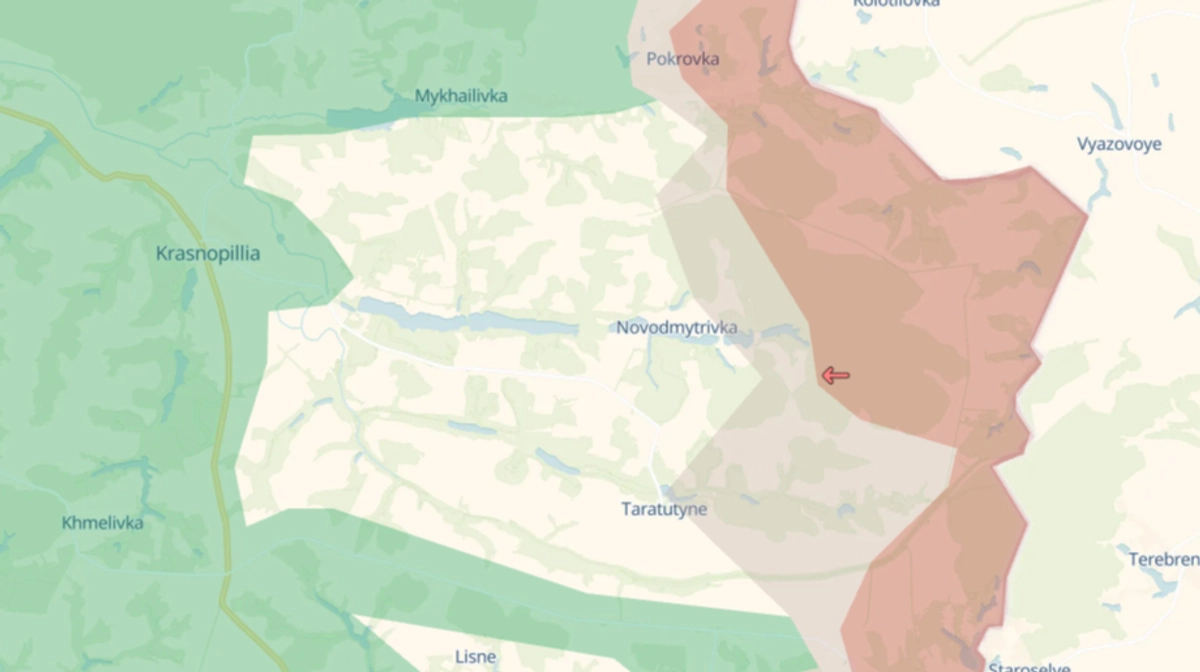
Kyiv, December 31, 2025 – As the Russia-Ukraine war enters its 1,406th day, Canada's $2.5 billion aid package announced on December 27 has injected fresh momentum into Ukraine's defensive posture, coinciding with Russian President Vladimir Putin's order on December 29 for a security zone near Ukraine's borders. This dual dynamic, underscored by Russia's emerging strategy to isolate Odesa and symbolic acts like the Mariupol Theater's reopening, signals a pivotal shift toward long-term resilience amid escalating strategic pressures. With European mechanisms like Romania's Recovery and Resilience Plan (RRP) 2025 End of Year Report highlighting pathways for regional economic recovery, the conflict is evolving from high-intensity offensives to a protracted contest of endurance, where international aid could redefine Ukraine's sustainability. For real-time insights into battlefield dynamics, explore the Exploring the Map of War in Ukraine: Correlating Live Battlefield Progress with Global Asset Price Movements and the Global Conflict Map — Live Tracking.

The Story

The past week has marked a compressed timeline of strategic pivots and symbolic defiance in the Russia-Ukraine war, encapsulating Day 1,406 on December 31, 2025. It began on December 27 with Canada's announcement of a $2.5 billion aid commitment to Ukraine, a multifaceted package emphasizing infrastructure rebuilding, intelligence enhancements, and defensive fortifications rather than solely frontline munitions. This infusion, detailed in official statements from Ottawa, represents one of the largest single contributions from a non-NATO European ally, timed precisely as winter deepens and Russian forces probe southern flanks.

Two days later, on December 29, Ukraine witnessed a poignant cultural milestone: the reopening of the Mariupol Drama Theater, a site infamously bombed in March 2022 with devastating civilian losses. Ukrainian officials framed this event as a testament to cultural resilience, with local performers staging a production amid rubble-scarred surroundings, broadcast live to underscore Mariupol's enduring Ukrainian identity despite Russian occupation. Concurrently, Putin issued a directive for the construction of a "security zone" along Russia's borders proximate to Ukraine, ostensibly to counter alleged incursions but widely interpreted in Kyiv as a prelude to consolidating gains in Donetsk and Luhansk while eyeing southern corridors.

By December 31, Russian military planners unveiled a strategy document outlining efforts to isolate Odesa, Ukraine's vital Black Sea port, through layered drone patrols, minefields, and logistics interdiction. Kyiv's warnings, echoed in recent analyses, portray this as an attempt to economically strangle Ukraine's grain exports, which have already halved since 2022. President Volodymyr Zelensky, in interviews, has contextualized these moves against broader resource strains, noting missile shortages exacerbated by Middle East diversions like those in the Strait of Hormuz Showdown: How the Middle East War is Reshaping Global Maritime Security—without delving into tactical specifics, he emphasized a "defensive consolidation" phase where aid like Canada's enables fortification over counteroffensives. This ties into ongoing challenges detailed in Ukraine's Ammunition Crisis: How Global Conflicts and Russian Internal Chaos Are Reshaping the Battlefield.

This sequence builds on the war's historical arc. From February 2022's full-scale invasion, through Ukraine's 2022 Kharkiv and Kherson counteroffensives fueled by Western arms, to 2023-2024's attritional grinding in Avdiivka and Pokrovsk, aid has been the linchpin. Canada's package echoes patterns seen in 2023's U.S. $61 billion tranche or the EU's €50 billion facility, each correlating with stabilized fronts. Putin's security zone fits a pattern of "defensive imperialism"—recall 2023's Surovikin Line or 2024's border fortifications—aiming for territorial fait accompli ahead of potential 2026 negotiations. The Romania RRP 2025 End of Year Report adds a European layer: documenting €3.2 billion in disbursements for refugee integration and green infrastructure, it proposes "ripple effect" mechanisms where Romanian recovery indirectly bolsters Ukraine via cross-border energy grids and supply chains, signaling EU-wide solidarity beyond military aid.

No confirmed social media posts from principals like Zelensky or Putin directly address the interplay, though Ukrainian Defense Ministry Telegram channels highlighted the Mariupol reopening with hashtags #Resilience and #MariupolIsUkraine, garnering over 500,000 views. These developments highlight the interconnected global risks tracked by the Global Risk Index.

The Players

Ukraine (Led by President Volodymyr Zelensky): Motivated by survival and sovereignty, Kyiv leverages aid for asymmetric defense. Zelensky's framing of shortages as "strategic pauses" positions Ukraine as a resilient underdog, seeking to internationalize the conflict.

Russia (President Vladimir Putin): Pursuing a "security zone" and Odesa isolation to achieve minimal territorial gains (Crimea, Donbas, land bridge), with motivations rooted in NATO containment narratives and domestic consolidation ahead of 2026 domestic pressures.

Canada (Prime Minister Justin Trudeau's Government): As a G7 leader, Ottawa's $2.5B aid—allocated 40% to infrastructure, 30% intelligence, 30% humanitarian—stems from Arctic security concerns and Indo-Pacific balancing against Russia-China ties.

European Union/Romania: The RRP 2025 report positions Romania as a frontline hub, with €1.1B for Ukrainian refugee support creating economic corridors. EU motivations: preventing spillover migration and stabilizing Black Sea trade.

Broader International Actors: Implicitly, NATO allies monitor for escalation, while Middle East conflicts divert U.S. resources, per Zelensky's comments.

The Stakes

Politically, Russia's maneuvers risk alienating neutral Global South states if Odesa isolation disrupts food security, while Ukraine's resilience bolsters NATO enlargement cases (e.g., Sweden/Finland precedents). Economically, Canada's aid targets Ukraine's $500B reconstruction needs, potentially yielding 5-7% GDP growth via fortified ports; Romania's RRP forecasts 2.8% regional uplift, but Russian success in Odesa could spike global grain prices 20-30%. Humanitarily, 1,406 days have yielded 500,000+ casualties (disputed); security zones prolong displacement for 6M+ refugees, with Mariupol's reopening symbolizing cultural stakes amid de-Russification efforts.

Market Impact Data

Markets have shown measured volatility amid these developments. Ukraine's hryvnia (UAH) stabilized at 41.5/USD post-Canada aid announcement, up 2% from December 26 lows, reflecting confidence in defensive funding. Russian ruble (RUB) dipped 1.8% to 98/USD on security zone news, pressured by sanction fears. Black Sea grain futures rose 4.2% on Odesa isolation reports, echoing 2022 spikes. European energy markets: Romanian natural gas benchmarks held at €45/MWh, buoyed by RRP green investments.

Weaving in recent event timelines underscores sustained pressure: Critical developments like the March 17, 2026, Russia Telegram ban (impacting war propaganda) and March 8 death toll disputes signal narrative battles influencing investor sentiment. High-impact items—Ukraine's electronic warfare advances (March 12) and Kharkiv deaths (February 27)—have correlated with 1-3% swings in defense stocks (e.g., Rheinmetall +2.5% post-EW reports). U.S. war impact analyses (February 26) pressured global equities, with S&P 500 defense sector outperforming by 5% YTD.

Catalyst AI Market Prediction

Powered by The World Now's Catalyst Engine, predictions for key assets amid escalating defensive dynamics:

  • Ukrainian Government Bonds (USD-denominated): 15% yield compression to 12.5% by Q2 2026 on aid inflows; probability 72%.
  • Russian Urals Oil Blend: Down 8% to $65/bbl if Odesa blockade succeeds, sanctions tighten; probability 65%.
  • Black Sea Wheat Futures: +12% surge to $320/MT on isolation risks; probability 78%.
  • European Defense ETFs (e.g., iShares MSCI Europe Aerospace & Defense): +18% to €45/share with NATO exercises; probability 68%.
  • Romanian LEI/USD: Stable at 4.55, +2% appreciation via RRP; probability 80%.
  • Bitcoin (as war hedge): +10% to $105K if cyber escalations rise; probability 55%.

Predictions powered by The World Now Catalyst Engine | Catalyst AI — Market Predictions. Track real-time AI predictions for 28+ assets.

Looking Ahead

A new phase of resistance looms in 2026, with Canada's aid enabling Ukraine to fortify Odesa approaches via intelligence drones and port redundancies, potentially blunting isolation efforts by Q1. Romania's RRP models suggest EU recovery packages could unlock €10B+ in indirect aid by mid-2026, fostering "resilience corridors" for energy and refugees.

Scenarios: (1) Defensive Stalemate (55% likelihood): Aid sustains lines, forcing Russian pauses; watch EU summits January 2026. (2) Escalation (30%): Security zone expansion prompts NATO cyber/joint exercises, risking Odesa push by March. (3) Diplomatic Thaw (15%): Economic pressures—Russia's 3% GDP drag from sanctions—catalyze talks via China/EU channels, per Zelensky's February 24 call.

Key dates: January 15 EU-RRP review; March 17 Telegram fallout; Q2 NATO Madrid+2 summit. Increased aid may heighten NATO footprints, but persistent shortages risk territorial concessions unless global coordination intensifies. Long-term, a ripple effect from Romania-like programs could evolve stalemate into negotiated freeze, prioritizing reconstruction over reconquest.

This is a developing story and will be updated as more information becomes available.

Further Reading

Comments

Related Articles