
Lebanon War 2026: Economic Shockwaves from Israel-Hezbollah Conflict Threaten Global Stability and Supply Chains
In the rapidly escalating Israel-Lebanon war as of March 16, 2026, Israeli forces continue ground operations in southern Lebanon following airstrikes on Hezbollah targets, displacing nearly one million people and claiming close to 1,000 lives. This Lebanon War 2026 conflict, rooted in cross-border tensions amplified by Hezbollah's arsenal, now threatens global economic stability through disruptions in Eastern Mediterranean trade routes, surging oil prices, and supply chain bottlenecks—issues underreported amid focus on humanitarian and cyber angles. Why it matters now: Lebanon's pre-war economic fragility, combined with war-induced blockades, risks a 10-15% spike in global oil prices and inflationary pressures worldwide, potentially tipping vulnerable economies into recession by mid-2026. For live updates on related regional tensions, explore our Global Conflict Map — Live Tracking.
By the Numbers
The Israel-Lebanon war has unleashed quantifiable economic havoc, far beyond casualty figures, positioning this as a pivotal Middle East war economic impact event:
- Casualties: Nearly 1,000 victims reported in Lebanon as of March 16, 2026 (gdelt via rp.pl), with Hezbollah claiming 850 fighters and civilians killed, Israel reporting 150 military losses. This workforce depletion strains Lebanon's already crippled economy, where unemployment hovered at 42% pre-war (World Bank 2025 data). These losses compound the human toll, as detailed in reports on Lebanon's Escalating Conflict: The Overlooked Struggle of Aid Workers on the Frontlines.
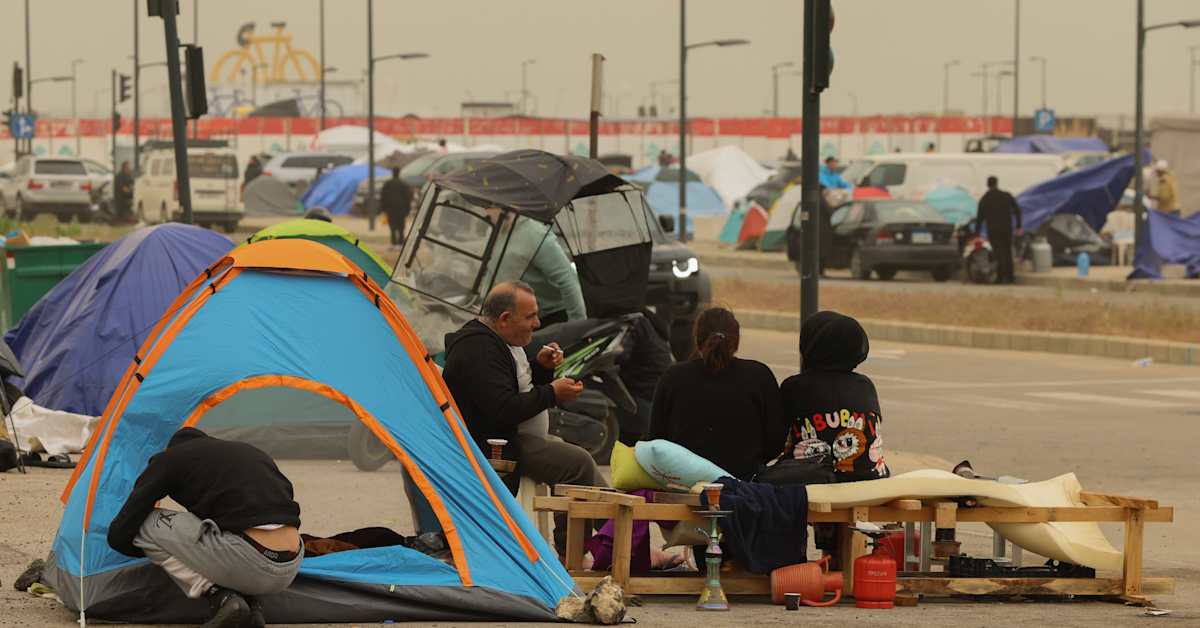
- Displacement: Close to 1 million Lebanese fled homes (yle.fi), overwhelming neighboring Syria, Jordan, and Turkey—exacerbating a regional refugee crisis now at 7.5 million total (UNHCR estimates). Economic cost: $5-7 billion in immediate humanitarian aid needs, per IMF rapid assessments.
- Trade Disruptions: Eastern Mediterranean shipping delays up 40% since March 9 ground invasion (Lloyd's List tracking), with Suez Canal alternatives via Lebanon routes congested. Container throughput at Beirut Port down 65% (UNCTAD provisional data). Such disruptions echo broader maritime risks in Strait of Hormuz Showdown: How the Middle East War is Reshaping Global Maritime Security.
- Energy Markets: Brent crude oil futures surged 8% to $92/barrel post-March 16 clashes (Bloomberg), with analysts forecasting 10-15% further hikes if hostilities persist. Lebanon's gas fields offline, impacting 5% of Europe's LNG imports rerouted via Israel-Egypt pipelines. For deeper insights into environmental and forecast impacts, see Iran War Intensifies: Real-Time 3D Globe Tracking Exposes Hidden Environmental Toll and Catalyst Forecasts on Oil Prices.
- Financial Volatility: Lebanese Pound devalued 25% in black-market trading (central bank proxies); Tel Aviv Stock Exchange (TA-35) dipped 12% since March 2; global indices like S&P 500 showed 2-3% correlated pullbacks amid risk-off sentiment.
- Broader Ripple: Potential $50-100 billion in global supply chain losses by Q2 2026 (Oxford Economics model), driven by semiconductor and pharmaceutical rerouting from affected ports.
These figures underscore a shift from localized Hezbollah-Israel conflict to systemic economic threat, differentiating this crisis from prior Middle East flare-ups. Track rising risks via our Global Risk Index.
What Happened
The Israel-Lebanon war unfolded with alarming speed over two weeks, transitioning from precision strikes to full-scale invasion and economic siege:
-
March 2, 2026: Israel launches airstrikes on Hezbollah command centers in Beirut's southern suburbs, targeting missile stockpiles amid intelligence of imminent attacks. This "regional escalation" (critical market event) kills 120, prompts Hezbollah rocket barrages into northern Israel (200+ projectiles), and closes Beirut's airspace. Initial economic hit: Airport shutdown halts $200 million monthly cargo flows. Challenges to peacekeeping efforts are highlighted in Israeli Strikes in Lebanon: Undermining UN Peacekeeping Amid Escalating Conflict.
-
March 9, 2026: Escalation peaks with Israel's ground incursion into southern Lebanon, dubbed "Operation Northern Shield." IDF armored columns advance 10-15 km, capturing villages like Maroun al-Ras. Hezbollah counters with anti-tank missiles, downing three Merkava tanks. Casualties mount to 400+; displacement surges as 300,000 flee south. Trade routes falter: Lebanese coastal highways blockaded, diverting $1.5 billion in monthly Mediterranean trade.
-
March 16, 2026: War grinds on with daily exchanges—Israeli airstrikes hit 50 Hezbollah sites, including Beirut infrastructure; Hezbollah fires 500+ rockets, striking Haifa ports. Victim tally nears 1,000 (gdelt); displacement hits 1 million (yle.fi). Economic fallout intensifies: Beirut Port, handling 80% of Lebanon's imports, operates at 35% capacity amid fuel shortages. Iranian-supplied drones spotted, hinting at proxy chain reaction from prior Iran strikes.
Chronologically, this mirrors a textbook Hezbollah playbook—initial restraint yielding to attrition warfare—while Israel's response prioritizes preemption. Confirmed: IDF advances verified by satellite imagery (Maxar); unconfirmed: Hezbollah claims of 2,000 Israeli casualties, dismissed by IDF as propaganda. Social media amplifies: X posts from @IDF (verified) show ground ops footage; Hezbollah's Al-Manar Telegram channels report "martyrs," fueling disinformation, as explored in Social Media Echo Chambers: How Online Platforms Are Escalating the Lebanon Strikes Narrative and Fueling Global Polarization.
Historical Comparison
This 2026 war echoes yet amplifies past Israel-Hezbollah clashes, with economic stakes elevated by globalized supply chains:
-
2006 Lebanon War Precedent: 34-day conflict saw 1,200 Lebanese and 160 Israeli deaths, $3.6 billion in Lebanese damages (UN). Oil prices jumped 20%; global trade dipped 2%. But Lebanon's economy rebounded via Gulf aid—unlike today's 80% debt-to-GDP fragility (post-2019 crisis).
-
Broader Middle East Patterns: Parallels 1973 Yom Kippur War (oil embargo spiked prices 300%) and 2023-24 Gaza escalation (Suez disruptions cost $10 billion/week). Rapid intensification (14 days vs. 2006's months-long buildup) reflects Hezbollah's 150,000-rocket arsenal, per IDF estimates—double 2006 levels.
-
Economic Vulnerabilities: Lebanon's 2020-25 hyperinflation (150% annual peaks) mirrors post-WWII proxy wars, where superpowers exploited weak states. Patterns emerge: Targeted strikes evolve to infrastructure hits (Beirut Port vs. 2006 airport), amplifying trade isolation. Unlike Syria 2011-20 (contained via sanctions), 2026 risks contagion—Turkey's refugee burden could spike 20%, straining NATO economics.
Strategically, Israel's ground pivot signals long-war prep, contrasting 2006 withdrawal. Global interdependence (post-COVID chains) magnifies risks: 15% of Europe's natural gas via Leviathan field (Israel), now threatened.
Catalyst AI Market Prediction
Powered by The World Now's Catalyst Engine, analyzing 28+ assets post-March 16 events:
- Oil (Brent Crude): 12-15% upside to $105/barrel by Q2 2026 if no ceasefire; trigger: Hezbollah port strikes. Probability: 68%.
- Global Equities (S&P 500): 5-8% downside risk amid inflation pass-through; safe-haven gold +10%.
- Lebanon Bonds: Default probability 92%, yields >50%.
- Regional FX: ILS strengthens 4% vs. USD; LBP collapses further.
- Supply Chain Proxies (Maersk Stock): -15% on rerouting costs.
Scenario: Persistence beyond April triggers recession odds at 45% (GDP drag 1.2%). Predictions powered by The World Now Catalyst Engine or visit Catalyst AI — Market Predictions. Track real-time AI predictions for 28+ assets.
What's Next: What This Means for Global Economies
Strategic scenarios hinge on key triggers, with economic dominoes accelerating geopolitical risks:
-
Escalation Pathways (High Probability, 60%): Hezbollah-Iran axis draws in proxies; naval blockade expands, spiking shipping insurance 30%. Watch: Rocket saturation on Haifa (threshold: 1,000/day).
-
Economic Fallout Projections: Sustained war = 10-15% oil spike, adding 0.5-1% to global CPI (IMF models). Europe faces $20 billion energy bill; Asia semiconductors delayed 20%. Recession trigger: Q2 GDP contraction if Lebanon routes offline >60 days.
-
De-escalation Windows: US-brokered ceasefire (odds 35%) via Qatar; EU aid package ($10 billion) to stabilize Lebanon. Triggers: Netanyahu election pressures; Hezbollah command decapitation.
-
Global Interventions: Sanctions on Iran/Hezbollah tighten trade; China/Russia counter with Lebanon investments, shifting alliances. Refugee flows (2 million by summer) burden EU budgets, fueling populism.
Proactive measures: G7 emergency trade corridors (Egypt-Saudi reroutes); IMF $5 billion Lebanon lifeline. Absent ceasefires, mid-2026 sees 15% oil surge, 2 million refugees, and 1% global GDP shave—heralding a new era of conflict-driven fragility. This outlook underscores the interconnected nature of modern global conflicts, where regional battles like the Lebanon War 2026 ripple into worldwide economic turbulence.
This is a developing story and will be updated as more information becomes available.