
Ukraine War Sees Russian Losses of 1130 Troops in One Day as Refinery Strikes Cut Oil Processing
In the Ukraine war, Russian forces lost 1,130 soldiers killed and wounded over the past day, bringing total personnel losses since February 2022 to 1,452,880 according to Ukraine's General Staff. [2] Ukrainian strikes have continued against Russian refineries, logistics, and infrastructure, contributing to Russian oil refining dropping to 3.6 million barrels per day in July. [4]
Russian Daily Combat Losses
Russia has lost 1,130 soldiers killed and wounded over the past day, bringing its total number of personnel losses to 1,452,880. [2] The total combat losses of the Russian forces between 24 February 2022 and 5 August 2026 include approximately 1,452,880 military personnel, 12,242 tanks, 25,084 armoured combat vehicles, 47,396 artillery systems, 2,002 multiple-launch rocket systems, 1,540 air defence systems, 439 fixed-wing aircraft, 354 helicopters, 2,134 ground robotic systems, 444,455 operational-tactical UAVs, 5,007 cruise missiles, 34 ships/boats, 2 submarines, 130,266 vehicles and fuel tankers, and 4,495 special vehicles and other equipment. [2] The latest daily losses include 5 tanks, 5 armoured combat vehicles, 65 artillery systems, 2 multiple-launch rocket systems, 2 air defence systems, 10 ground robotic systems, 1,715 operational-tactical UAVs, 449 vehicles and fuel tankers, and 3 special vehicles. [2] The information is being confirmed. [2]
Ukrainian Public Opinion on Elections
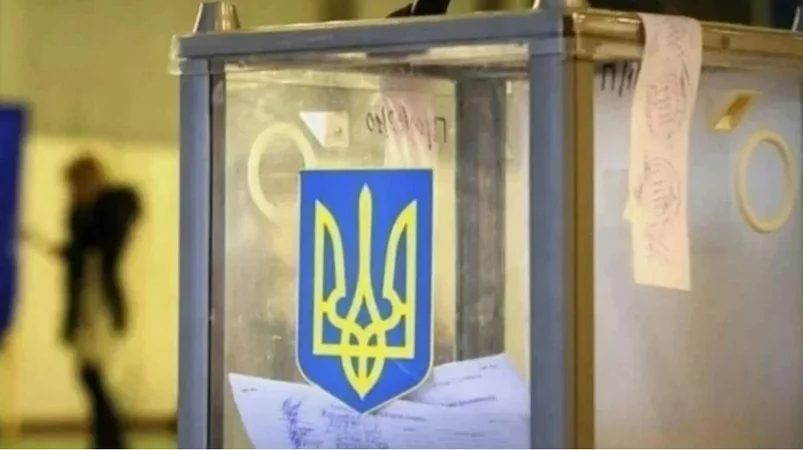
A total of 38% of Ukrainians support elections being held before the war fully ends, with 15% believing voting should take place even before hostilities cease and 23% saying it should be held after a ceasefire and security guarantees are in place but before a final peace agreement is signed. [1] In March, support for elections right now even before a ceasefire stood at 12%, while support for elections after a ceasefire and security guarantees stood at 13%. [1] Meanwhile, 57% believe elections should only be held after a final peace agreement is signed and the war has fully ended, down from 69% in March. [1] A further 6% of respondents were undecided. [1] The survey by the Kyiv International Institute of Sociology was conducted on 20 July – 3 August using telephone interviews across all government-controlled regions of Ukraine with a total of 974 respondents. [1] The survey covered Ukrainian citizens aged 18 and over who were residing in government-controlled areas at the time of the poll and did not include residents of territories temporarily occupied by Russia. [1] KIIS Executive Director Anton Hrushetskyi stated that although the number of people who support elections being held in the near future or at least after a ceasefire has risen slightly, most Ukrainians still believe elections should not be held yet. [1]
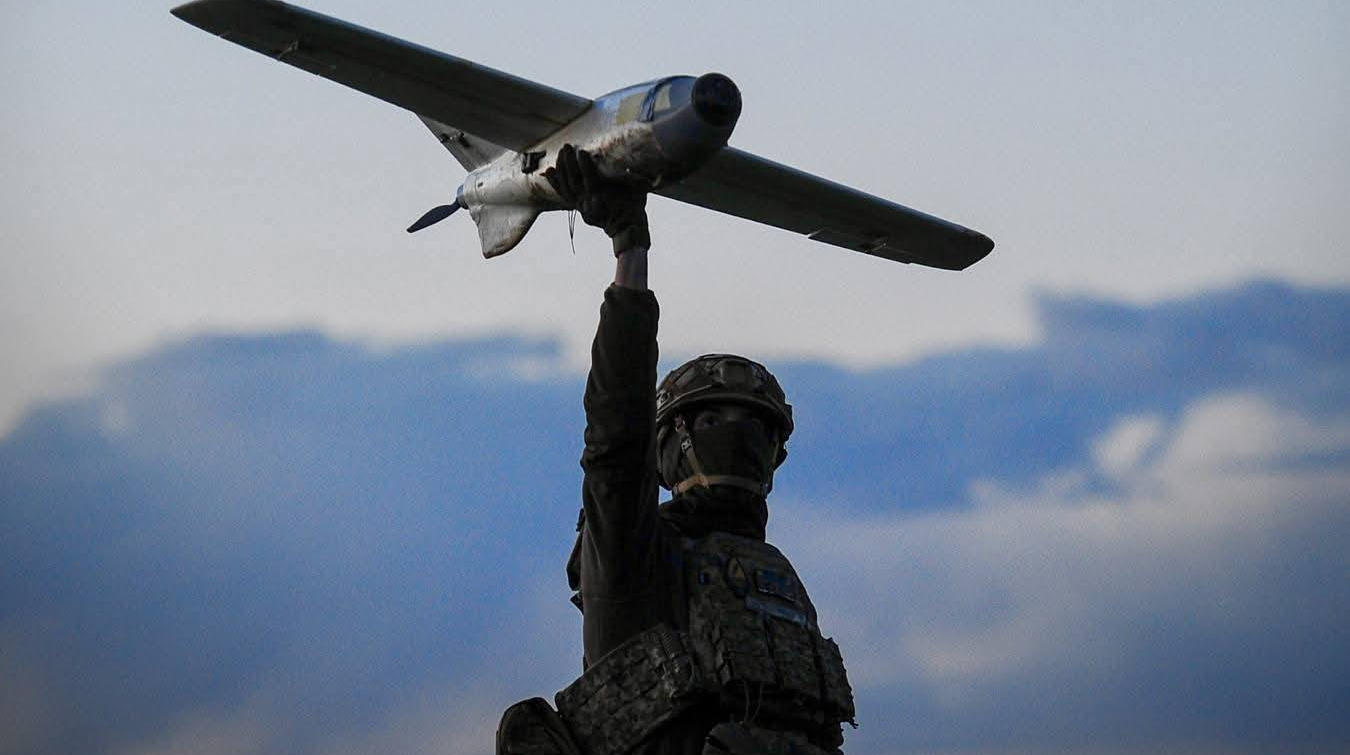
Ukrainian General Staff reports 1130 Russian soldiers lost in one day of fighting. — Source: ukrainskapravda
Ukraine's Ongoing Strikes on Russian Infrastructure
Ukraine’s 40-day campaign ended quietly, with Ukrainians not slowing the pace of attacks on refineries and lorries. [4] At the end of June, Ukrainian president Volodymyr Zelensky announced a 40-day campaign aimed at influencing Russia to end the war, involving strikes on Russian logistics, industry, refineries and shipping. [4] The deadline passed quietly on Monday or Tuesday depending on which day counted as the first. [4] Kyrylo Budanov, head of the presidential office, said that the attacks would continue, stating that the result is what matters and that if Ukraine wants to achieve the desired result it must be strong. [4] Over those 40 days Ukrainians repeatedly struck Russian targets as far as 2,500 km from the border including a refinery in Omsk and decimated both military and civilian vessels in the Black and Azov Seas. [4] Ukrainians have not stopped attacking Russian refineries, with strikes including the Syzran refinery in the Samara region. [4] Bloomberg journalists assessed that Ukraine struck a record 18 refineries in July. [4] According to calculations by EA Analytics, Russian refineries processed 3.6 million barrels of oil per day in July, the lowest level since 2002. [4] The July average between 2020 and 2025 was 5.3 to 5.6 million barrels per day. [4] Ukrainian attacks on Wildberries warehouses have continued, with 12 of the 25 largest warehouses burned accounting for 56 percent of the total area. [4] In July Ukraine struck a similar number of lorries as in June, with Russians verifiably losing 656 lorries. [4]
Russia's Technological Developments
Russia is introducing new technology into the Ukraine war. [3] Russia has launched a new satellite communications system called Rassvet-3. [3] The first 12 to 15 satellites are already operational and Russia is rushing to build portable ground terminals. [3] Russia’s 12 to 15 satellites do not come close to Starlink’s 10,000 in orbit, with coverage over Ukraine around two to three communication windows per day each lasting between 1 and 1.5 hours. [3] Russia launched another 16 satellites on July 19. [3] Russia’s goal is to have 156 satellites in orbit by the end of 2026. [3] Rassvet-3 uses Ka and Ku bands and supports inter-satellite laser communications demonstrating data speeds up to 10 Gbit/s in testing and supports the 5G NTN standard. [3] Rassvet provides encrypted military data relay, drone command-and-control links, and secure backhaul. [3] Rassvet was developed by the private Russian technology firm Bureau 1440 under the government’s broader Sfera space program. [3] Russia is introducing a new jammer system dedicated to jamming Starlink known as Volna. [3]

Russian private firms develop Rassvet-3 satellites for military use in the Ukraine war. — Source: asiatimes
Escalation Involving Iran
A New Arab opinion piece states that Ukraine’s 25 July strike on an Iranian ship in the Caspian Sea marked a significant moment in the growing overlap between the war in Ukraine and the conflict involving Iran, the United States, and Israel. [5] Kyiv maintained that it targeted the vessel because it was transporting military equipment to Russia. [5] Iran described the ship as a civilian commercial vessel and condemned the attack as a hostile and criminal act after one Iranian sailor was killed and another injured. [5] Tehran summoned Ukraine’s senior diplomat, accused Kyiv of violating international law, and called for international condemnation. [5] Iran is reportedly considering military retaliation. [5] The opinion piece argues that the incident highlights how two separate conflicts are becoming increasingly interconnected, with Ukraine viewing disrupting Iranian support for Russia as part of its broader war effort. [5] Dr Mark Katz stated that Kyiv wants to make clear to Iran that it cannot assist Russia’s war against Ukraine with impunity. [5] The opinion piece notes that the strike also brought conflict to the Caspian Sea, long considered one of Iran's safest trade and logistics routes. [5]
Broader Context and Responses
Analysts at the independent Russian think tank Conflict Intelligence Team wrote that contrary to the expectations of part of the public the several-month intensification of medium-range strikes has still not led to a reduction in fighting at the front. [4] On the contrary pressure from the Russian air force increased to some extent in July and this trend may continue in August. [4] Nothing so far suggests that Vladimir Putin is seeking a ceasefire including with regard to aerial attacks which Ukrainians continue to propose. [4] The fuel crisis affected ordinary Russians who in some places had to wait for hours at petrol stations. [4] Last week it was reported that the crisis had eased slightly as some refineries resumed operations. [4] According to The Moscow Times some regions were lifting limits on the amount of fuel that could be purchased. [4] However Ukraine has not stopped attacking refineries. [4]
What to watch next: Ukrainian officials have indicated that strikes on Russian logistics, industry, refineries and shipping will continue, with Budanov emphasizing that the result matters most.