Ukraine War: Putin Rejects Peace Talks and Prepares Escalation Despite Trump Push
President Vladimir Putin is rejecting peace negotiations with Ukraine and is instead likely to escalate the conflict in the coming months, despite U.S. President Donald Trump's push for a resolution, according to sources close to the Kremlin. [1] In the Ukraine war, three sources close to the Kremlin told Reuters that Putin is rejecting calls to negotiate peace with Kyiv. [1]
Putin's Rejection of Peace Talks
President Vladimir Putin is rejecting calls to negotiate peace with Kyiv, three sources close to the Kremlin told Reuters, with Ukraine's recent drone strikes on Russia's oil refineries and ports strengthening his resolve to keep fighting for now. [1] Two of the sources, speaking on condition of anonymity, said that Putin was instead likely to escalate the conflict, now well into its fifth year. [4] One of them, who meets regularly with the president, described a “high probability” of escalation in the coming months. [4] The comments come after U.S. President Donald Trump on Monday said that Putin wanted the war to end and that a resolution was “closer than people realize.” [4] One of the people familiar with Putin’s thinking said he had “dug in his heels” to achieve the key objective of capturing the remainder of Ukraine’s eastern Donbas region, where Russian advances have slowed this year. [4] The same source said Putin recently rebuked a group of advisers suggesting a compromise based on a ceasefire along the current front lines. [4] The second source said Putin believes Russia will soon capture the Donbas. [4] The Russian president publicly rebuffed a call by Zelenskiy in June for a meeting and a ceasefire. [4]
Impact of Ukrainian Drone Strikes
Ukraine's recent drone strikes on Russian oil refineries and ports have strengthened Putin's resolve to continue fighting rather than negotiate. [1] Repeated strikes on oil refineries, ports and storage depots in Russia and Russian-occupied Ukraine have caused severe fuel shortages, bringing the impact of the war home to millions of Russians. [4] Ukraine’s recent successes, however, have made Putin more angry and more determined to give a tough response, according to the person who meets Putin regularly. [4] Speaking to generals last week in televised comments, Putin said Ukraine’s strikes on energy infrastructure meant Russia would seek to capture more Ukrainian land along the border, beyond Donbas, as a “security zone.” [4] A former Russian defence ministry official, Andrei Ilnitsky, said in a June 29 column for Kommersant newspaper that escalation in the conflict could start with the destruction of 30 major industrial sites in Ukraine, including a steel plant and Odesa port. [4] Russia has already caused widespread damage to commercial enterprises and ports across Ukraine. [4]
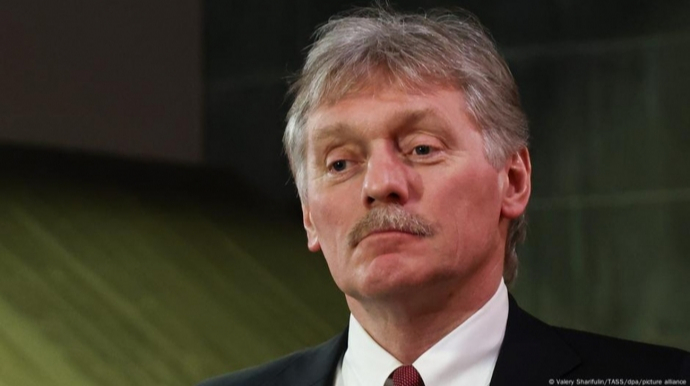
Kremlin spokesman Dmitry Peskov comments on US President Donald Trump statements about strikes on Russia. — Source: ukrainskapravda
Kremlin Response to Trump Comments
Kremlin spokesman Dmitry Peskov stated that further escalation from Ukrainian strikes may prolong the conflict and require Russia to create a larger security or buffer zone. [3] Kremlin spokesman Dmitry Peskov has said the administration of US President Donald Trump is mistaken if it believes Ukrainian strikes on Russian territory will help bring the war to a peaceful end. [3] Responding to Trump's remarks that long-range strikes deep inside Russia represent an escalation that could bring the war to an end, Peskov said: "Rather, we see certain misconceptions within the White House administration that escalation and military pressure can help facilitate a transition to a peaceful settlement." [3] He described that assessment as incorrect. [3] Quote from Peskov: "Further escalation may, to some extent, prolong the special military operation – we cannot say exactly to what extent – but it will lead to the need for us to create a larger security zone, a larger buffer zone." [3] Peskov also commented on US plans to allow Ukraine to manufacture Patriot missiles. "As regards the Patriot, yes, it is an obvious fact that the United States continues to supply weapons and military technologies to Ukraine – we know that," he said. [3] "We are not looking at the world through rose-tinted glasses, and President Vladimir Putin understands this perfectly well. However, there is a certain duality in the US position. Unlike the Europeans, the United States still maintains a desire to facilitate a transition to a peace process." [3]
Ground War Developments in Donbas
Russian forces continue a grinding advance in Donbas, with Putin claiming the seizure of Kostiantynivka, which Ukraine denies, while overall Russian casualties since 2022 are estimated at 1.4 million. [4] The talk of Russian escalation comes as its slower progress on the battlefield has raised the prospect that considerable time and casualties will be needed to take Donbas. [4] To date, about two million soldiers had been killed, wounded or were missing since the full-scale invasion in early 2022, 1.4 million of them Russian, according to a recent estimate by the Center for Strategic & International Studies. [4] Neither side releases military casualty data. [4] Russia’s troops have struggled to advance this year along the 1,200-km (745 mile) front line as Ukraine’s drones counter Russia’s numerical advantage in troops. [4] In recent weeks, Russia has been grinding into the eastern city of Kostiantynivka, one of several towns in Ukraine’s ‘fortress belt,’ a critical defensive front in the Donetsk region. [4] On July 3, Putin said Russian forces had seized Kostiantynivka. [4] Ukraine denied it. [4] A day later, during a call with Trump, Putin sought to convince him that Russia would take the remaining fifth of the Donetsk region of Donbas that Ukraine still controls. [4] Putin, the source who meets him regularly said, considers winning control of the region a matter of principle, saying the Russian president “needs some kind of victory.” [4]

Vladimir Putin rejects Ukraine peace talks and plans to escalate the war, sources say. — Source: cyprusmail
Risks of Further Escalation
Recent Russian drone and missile attacks on Ukraine, including Kyiv, have killed dozens of civilians, as strikes on energy infrastructure prompt Putin to seek additional Ukrainian territory for a security zone. [4] Some Western military analysts believe Russia would need a mandatory draft of fighting-age men to achieve the goal of taking the Donbas. [4] The draft is a politically unpopular move Putin has been reluctant to make since early in the war. [4] Russian military experts have increasingly discussed escalation in public, including the possibility of hitting European targets such as NATO bases in Baltic countries. [4] Such a step would risk drawing Russia into direct confrontation with the U.S.-led alliance, testing the NATO commitment that an attack on one member nation constitutes an attack on all. [4] Russia could seek to sow tensions within NATO with isolated attacks, comparable to a recent Russian drone strike on Romania, according to Jack Watling of the Royal United Services Institute (RUSI), a defence and security think tank in London. [4] “The Russians would not be aiming for a war with NATO. But it could be used to divide NATO over how to respond,” Watling said. [4] He added that heightened tensions with NATO could help give Putin a political justification within Russia for military conscription. [4] Putin’s approval rating remains high but recently hit its lowest point since the war started in 2022, a poll showed. [4] In response to a request for comment to Zelenskiy’s office, a senior Ukrainian official said Kyiv’s intelligence reports in recent months reflected that Putin was preparing for further steps in the war rather than for peace, including new operations in Ukraine or a possible attack on another European country. [4]
Recent Military Losses and Attacks
Ukraine’s latest figures on Russian personnel and equipment losses over the past day and cumulative since 2022 show Russia has lost 1,310 soldiers killed and wounded over the past day, bringing its total number of personnel losses to 1,414,820. [5] The total combat losses of the Russian forces between 24 February 2022 and 9 July 2026 are estimated to be as follows: approximately 1,414,820 (+1,310) military personnel, 12,107 (+7) tanks, 24,906 (+3) armoured combat vehicles, 45,628 (+59) artillery systems, 1,922 (+4) multiple-launch rocket systems, 1,479 (+1) air defence systems, 437 (+1) fixed-wing aircraft, 353 (+0) helicopters, 1,857 (+4) ground robotic systems, 398,763 (+1,843) operational-tactical UAVs, 4,887 (+0) cruise missiles, 33 (+0) ships/boats, 2 (+0) submarines, 117,910 (+363) vehicles and fuel tankers, 4,402 (+4) special vehicles and other equipment. [5] Russian forces have launched two major drone and missile attacks on Ukraine in the last week, including the capital Kyiv, killing dozens of civilians. [4] Moscow said the assaults had struck military targets. [4]
What to watch next: Russian military experts have discussed escalation including strikes on NATO bases in the Baltic states and Romania as well as facilities in the European Union producing long-range drones and missiles for Ukraine, while Peskov stated Russia should strengthen its own security and cannot close its eyes to the militarization of Europe. [4]