
Sudan Conflict Sees UN Warn of Genocidal Path Repeating in El Obeid After El Fasher Atrocities
UN human rights investigators have warned that atrocities by the Rapid Support Forces in El Fasher, including mass killings, abductions and gang rapes that bear markers of genocide, indicate similar risks now emerging in El Obeid, as the two-year Sudan conflict between the Sudanese Armed Forces and RSF has killed at least 59,000 people and displaced 14 million more. [1]
UN Warning on Genocidal Risks in El Obeid
The UN Fact-Finding Mission documented patterns in El Fasher such as encirclement, attacks on civilian infrastructure, restrictions on humanitarian access, door-to-door executions, identity-based targeting, aerial drone bombardments and indiscriminate shootings that killed more than 6,000 people in three days after an 18-month siege. [1] Investigators found indicators of a genocidal path in El Fasher and are now seeing the RSF deploy similar tactics around El Obeid, which has faced siege-like conditions for 18 months under Sudanese Armed Forces control, including attacks on power stations causing blackouts, disrupted water supplies and impaired hospital operations. [1] The mission noted that the UN repeatedly warned about the risk of atrocities in El Fasher before the city fell, but that those warnings were not heeded. [1] "The patterns we documented in El Fasher - including encirclement, attacks on civilian infrastructure, restrictions on humanitarian access, and widespread abuses against civilians - serve as a stark warning," said Mohamed Chande Othman, Chair of the UN Fact-Finding Mission for Sudan. [1] "The international community must heed these lessons and act to prevent further catastrophe." [1] "At a moment when serious concerns are being raised about the risks facing civilians in El Obeid, the findings from El Fasher underscore the need for urgent protection measures before more lives are lost," expert mission member Joy Ngozi Ezeilo said. [1] "The international community still has a window of opportunity to prevent further atrocity crimes," expert mission member Mona Rishmawi said. [1] "El Obeid must not become the next crime scene." [1]
Atrocities Documented in El Fasher
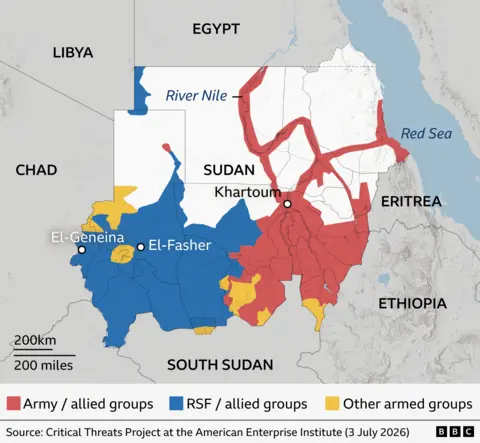
As they took control of El Fasher in October after an 18-month siege, RSF forces carried out door-to-door executions, identity-based targeting, aerial drone bombardments and indiscriminate shootings, killing more than 6,000 people in three days. [1] Before the RSF took the city, it spent months systematically cutting off civilians' access to food, water, medical supplies and humanitarian assistance, according to the Fact-Finding Mission's February report. [1] The new report builds on the earlier findings by providing additional evidence on sexual violence, forced disappearances, detention and mass killings. [1] The siege and takeover of el-Fasher marked one of the bloodiest episodes in the ongoing war between the RSF and Sudan's army. [2] More than 6,000 people were killed in el-Fasher as the RSF seized the city in October last year, the United Nations says, while the paramilitary group is accused of carrying out a similar massacre in el-Geneina. [2] The group has repeatedly denied carrying out widespread killings anywhere in Darfur. [2] Tens of thousands of people were forced to leave their homes in el-Fasher and the UN said the violence there bore the "hallmarks of genocide". [2] The RSF has denied widespread allegations that killings in the city were ethnically motivated and follow a pattern of the Arab paramilitaries targeting non-Arab populations. [2] The group insisted the scale of the atrocities had been exaggerated but acknowledged that some violations had occurred in the city. [2] Shortly after the capture of el-Fasher, RSF leader Gen Mohamed Hamdan Dagalo said the group was investigating any atrocities. [2] The probe is ongoing, the RSF said recently. [2]
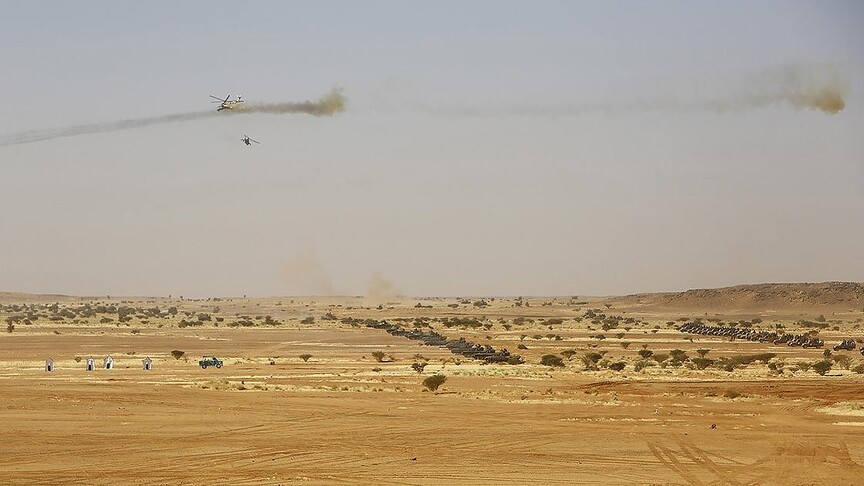
Sudanese army forces enter the strategic eastern town of Al-Kurmuk after clashes with RSF. — Source: anadolu
Escalating Crisis in El Obeid
Alarm grows as El Obeid, the capital of the North Kordofan state, is currently under SAF control, but the city has faced "siege-like conditions" for 18 months, UN human rights chief Volker Türk said on 3 July. [1] The situation in El Obeid could deteriorate even further, as attacks on critical infrastructure such as power stations have caused blackouts, disrupted water supplies and hampered hospitals' ability to operate. [1] In three weeks in June, the UN verified 15 drone strikes killing at least 45 civilians El Obeid and the surrounding area. [1] The Human Rights Council-appointed investigators warned that the RSF is currently deploying tactics used in El Fasher around El Obeid, where its forces have encircled the city, attacking critical infrastructure and restricting access to essential services. [1] Following a 6 July resolution adopted by the UN's Human Rights Council, the mission will investigate alleged violations and abuses of international human rights law and humanitarian law in El Obeid. [1] In response to the situation in El Obeid, Mr. Türk called for a range of measures to prevent further atrocities and a repeat of El Fasher, including urgent Security Council action, a pause in hostilities to allow humanitarian aid and cooperation by the International Criminal Court (ICC). [1]
ICC Breakthrough on RSF Leadership Evidence
The International Criminal Court (ICC) has "concrete evidence" linking leaders of the paramilitary Rapid Support Forces (RSF) to recent war crimes in the Sudanese state of Darfur, the ICC's deputy chief prosecutor says. [2] Nazhat Shameem Khan told the BBC the ICC had reached a "breakthrough" in its investigation into the massacres of civilians in the cities of el-Fasher and el-Geneina. [2] "It may take time for justice to develop, to be brought to the court, but we will get there," Khan said, adding that RSF leaders have also been linked to crimes against humanity. [2] Khan said: "We have now found concrete evidence that links what is happening on the ground through linkage evidence to specific persons in leadership mode." [2] However, she did not give a timeline on when charges might be brought against those responsible for the atrocities in the war, which began in April 2023. [2] "We cannot say how quickly or how long it's going to take," she said. [2] "But we can say that progress has been significant and that we have achieved a breakthrough." [2] The ICC, based in the Dutch city of The Hague, is a global court with the power to bring prosecutions for genocide, crimes against humanity and war crimes. [2] Khan spoke to the BBC after visiting refugee camps in eastern Chad, where those who had fled the fighting in Darfur told her of the atrocities they had suffered. [2] The ICC has been investigating allegations of war crimes in Darfur for more than 20 years since the previous round of violence in the 2000s. [2] "What we see is patterns of offending that in fact were the same patterns of offending 20 years ago when this situation was first referred to us by the Security Council," she said. [2] Khan said the ICC investigation included witness accounts, testimonials, and corroborating evidence such as videos, photographs, and forensic findings. [2] Previous investigations have led to seven arrests and six separate cases being brought before the court for alleged war crimes and crimes against humanity. [2] Those charged include Sudan's former President Omar al-Bashir. [2] He remains at large, having been ousted in a coup in 2019. [2] It is believed he is being held in a secure medical facility in Sudan. [2] Four others face arrest warrants but have not been detained. [2] Last year, the ICC sentenced one former militia leader to 20 years in prison after he was successfully convicted of 27 counts of war crimes and crimes against humanity, committed in Darfur from 2003 to 2004. [2] Ali Muhammad Ali Abd-Al-Rahman was a senior figure in the Janjaweed, a government-backed group which targeted Darfuri civilians who were not part of the country's majority Arab population. [2] The Janjaweed was one of the groups that developed into the RSF, a paramilitary force once aligned with Sudan's army but now fighting it. [2]
{IMAGE_3}
Military Developments on the Ground
Sudanese army enters strategic eastern town of Al-Kurmuk after battles with RSF. [3] Military sources tell Anadolu army retook key border town in Blue Nile state from RSF and SPLM-N. [3]
Broader Humanitarian Impact of the Conflict
Two years into the war between the Sudanese Armed Forces of the military government (SAF) and the RSF, the conflict has killed at least 59,000 people and displaced at least 14 million more. [1] With 33.7 million people requiring humanitarian assistance and access to people in need severely restricted, the UN considers Sudan the worst humanitarian crisis in the world. [1]
What to watch next: The UN Fact-Finding Mission will investigate alleged violations in El Obeid following the 6 July resolution, while the ICC continues its probe into RSF leaders with witness accounts, videos, photographs and forensic findings already obtained.