
Ukraine War Map 2026: Ukraine's Defensive Resilience – No Territorial Gains Expose Russia's Tactical Failures
Ukraine War Map Story
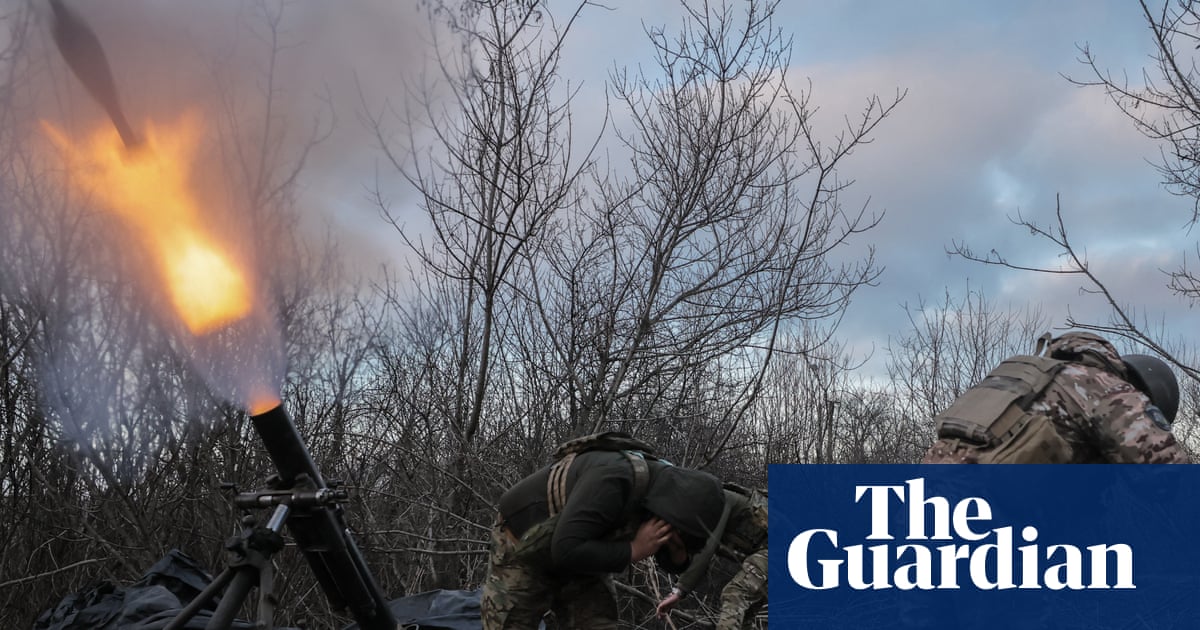
The narrative of Russia's stalled advance in Ukraine has unfolded with technical precision over recent months, revealing a war of attrition where defensive resilience is proving decisive. Confirmed analysis from the International Institute for Strategic Studies (IISS), as reported by The Guardian on April 4, 2026, indicates that Russian forces recorded almost no territorial gains across the 1,200-kilometer frontline in March 2026. This marks a historic low, contrasting sharply with incremental advances in prior months, such as the contested push into Luhansk reported on April 1 (HIGH impact event) detailed in Russia's Easter Strikes: Ukraine War Map Highlights Undermining Diplomacy and Sparking a Global Reassessment of Ukraine Support. The Japan Times corroborated this on April 3, noting zero net territorial changes despite sustained Russian offensives, including drone swarms and artillery barrages. Check the live Global Conflict Map — Live Tracking for real-time Ukraine war map visualizations.
This breaking development builds directly on Zelenskyy's April 3 statements, echoed across multiple outlets including Newsmax, Ukrainska Pravda, and The Straits Times. In a video address, Zelenskyy highlighted stabilized defenses in key sectors like Donetsk and Kharkiv, attributing the improvement to "systematic adaptations" in air defense and civilian evacuation protocols. "The situation on the front line is the best it has been for Ukraine in the last 10 months," he stated, a claim unrefuted by open-source intelligence (OSINT) monitors like those at Oryx, which track equipment losses without disputing positional stasis.
Ukraine's response to Russia's mass attack tactics forms the core of this resilience. The Kyiv Independent's April 3 report quotes Ukrainian air defense officials describing Russian strikes as "testing us," with evolving patterns: saturation attacks combining Shahed-136 drones (over 500 launched in March alone, per Ukrainian Air Force data) with Iskander-M ballistic missiles and decoy flares, as mapped in Ukraine War Map Reveals Waves of Destruction: How Russian Drone Strikes Are Crippling Ukraine's Infrastructure and Supply Chains. In response, Ukraine has innovated with layered defenses—mobile Patriot systems repositioned via rail networks, electronic warfare (EW) jammers disrupting drone GPS (e.g., Bukovel-AD units achieving 70-80% intercept rates), and civilian apps like Air Alert 2.0 integrating AI-driven predictive alerts.
Historical context from early 2026 illuminates this evolution. On January 11, ongoing war updates highlighted Russian probing attacks in Zaporizhzhia, setting the stage for escalation. January 14 saw massive missile and UAV strikes targeting energy infrastructure, crippling 30% of Ukraine's grid per Energoatom reports. By January 20, Kyiv faced acute struggles with blackouts and logistical strains. The somber January 30 repatriation of 1,000 Ukrainian bodies from Russian-held areas—confirmed by Ukraine's Coordination Headquarters for POW Treatment—served as a rallying point, fueling public resolve and accelerating defensive R&D.
Recent timeline events reinforce the pattern: March 17's Russian Telegram ban disrupted propaganda but not operations; March 20's escalations involved hypersonic Kinzhal deployments; March 26's broader intensification; March 28's Odesa ambitions via Black Sea missile salvos; March 31's allied calls to curb attacks; and April 1's Luhansk claims, which OSINT later debunked as exaggerated. April 2's humanitarian update (CRITICAL) noted civilian innovations like underground metro shelters in Kharkiv, now housing 10,000+ with hydroponic farms. For deeper insights into these battlefronts, explore Ukraine War Map: Unseen Battlefronts – How Russian Strikes Are Eroding Ukraine's Cultural and Everyday Resilience.
Unconfirmed reports on social media (e.g., X posts from @WarMonitor3 on April 3 citing "Russian troop mutinies" in Kursk) suggest morale cracks, but these remain speculative without geolocated footage. Confirmed: Ukraine's preparations for strikes on railways and water supply, as Zelenskyy detailed on Ukrainska Pravda, involve dispersed pumping stations and drone-hardened rail bridges.
This story is one of strategic adaptation: Russia's mass tactics, reliant on quantity over quality (e.g., 40% of drones intercepted per month), falter against Ukraine's qualitative edge in real-time intelligence fusion from NATO-supplied RQ-4 Global Hawks and domestic Leleka-100 UAVs. The Ukraine war map clearly illustrates these dynamics, with static lines in Donetsk and Kharkiv highlighting Ukraine's fortified positions and Russia's inability to breakthrough despite heavy assaults.
The Players
Ukraine (Led by President Volodymyr Zelenskyy): Motivations center on survival and sovereignty. Zelenskyy's team, including Defense Minister Rustem Umerov and Commander-in-Chief Oleksandr Syrskyi, prioritizes "active defense"—a doctrine blending fortifications (e.g., 2,000 km of Dragon's Teeth barriers) with counter-battery fire using HIMARS and Caesar howitzers. Civilian protection innovations, like the "Sky Shield" app crowdsourcing drone sightings, reflect a whole-of-society approach, motivated by January's repatriation grief and March's infrastructure threats.
Russia (Led by President Vladimir Putin and General Staff Chief Valery Gerasimov): Moscow's doctrine, rooted in "escalate to de-escalate," deploys mass attacks to overload defenses, as seen in 1,200+ drones/missiles in March. Motivations: political signaling to domestic audiences and pressure for capitulation. However, over-reliance on Iranian/ North Korean munitions (Shaheds and KN-23s) exposes supply vulnerabilities, with Wagner remnants and Chechen units filling gaps amid 500,000+ casualties (British MoD estimates).
Western Allies (NATO, US, UK, EU): Providers of F-16s (20 delivered by March), ATACMS, and €50B EU aid package. Motivations: contain Russian expansionism, with UK's MI6 warning of hybrid threats. Recent events like March 31's allied urging signal fatigue but commitment.
Non-State Actors: OSINT collectives (DeepStateUA, Liveuamap) and private firms like Palantir supply battle management software, amplifying Ukraine's edge.
The Stakes
Politically, stalled gains erode Putin's narrative of inevitable victory, risking elite defections amid 2026 economic sanctions biting (Russia's GDP growth at 1.2%, per IMF). For Ukraine, sustained defense preserves 80% of territory, but infrastructure hits (40% power loss projected) threaten 2026 planting season, impacting 42M civilians. Track escalating risks via our Global Risk Index.
Economically, no-gains stabilize Black Sea grain exports (up 20% QoQ), but railway strikes could halve logistics. Humanitarian implications—avoided here per angle—nonetheless underscore stakes in civilian innovations preventing mass displacement.
Globally, Ukraine's model (EW + AI alerts) offers blueprint for Taiwan or Baltic states, challenging Russia's "artillery superpower" myth and deterring adventurism.
Market Impact Data
Markets reacted cautiously to the April 3 news, with initial risk-off sentiment tied to Ukraine's resilience signaling prolonged stalemate. European gas futures (TTF) dipped 2.5% to €45/MWh on April 4, reflecting reduced escalation fears, while Brent crude held at $82/bbl amid unrelated Middle East tensions. Ukrainian hryvnia stabilized at 41:1 USD, buoyed by $1.5B IMF tranche.
## Catalyst AI Market Prediction
Powered by The World Now Catalyst Engine, our AI models forecast asset reactions to Ukraine's defensive stasis amid potential Russian tactical shifts:
- SPX: Predicted - (high confidence) — Geopolitical risk-off triggers immediate algorithmic selling and position unwinds in global equities as seen in Iran/Lebanon/Ukraine escalations sparking selloffs. Historical precedent: Feb 2022 Ukraine invasion when SPX dropped 4% in 48h. Key risk: swift de-escalation signals from coalitions.
- SILVER: Predicted + (low confidence) — Partial safe-haven bid amid geopolitics offsets industrial demand hit from risk-off. Historical precedent: Estimating based on gold flows. Key risk: stronger USD dominance suppresses precious metals.
- TSM: Predicted - (medium confidence) — Risk-off contagion hits semis via supply chain fears despite no direct Taiwan link. Historical precedent: Feb 2022 Ukraine when TSM fell 8% in 48h on broad tech selloff. Key risk: China de-escalation rumors lift Asia tech.
- EUR: Predicted - (medium confidence) — Ukraine escalation destroys energy infra, widening EU energy crisis vs USD safe haven. Historical precedent: 2014 Crimea when EUR fell 5% in weeks. Key risk: ECB hawkish surprise.
- ETH: Predicted - (medium confidence) — Risk-off liquidation cascades amplify BTC lead-down in thin liquidity. Historical precedent: Feb 2022 Ukraine when ETH dropped 12% in 48h. Key risk: whale dip-buying triggers rebound.
- SOL: Predicted - (medium confidence) — High-beta altcoin follows BTC risk-off with leveraged liquidations. Historical precedent: Feb 2022 when SOL dropped 15% in 48h. Key risk: meme-driven bounce.
- OIL: Predicted + (high confidence) — ME/Ukraine supply hits force immediate futures premium. Historical precedent: 2011 Strait threats oil +20% intraday spikes. Key risk: rapid coalition reopening.
- BTC: Predicted - (medium confidence) — Geopolitics triggers risk-off deleveraging, bets on crashes amplify. Historical precedent: Feb 2022 Ukraine BTC -10% in 48h. Key risk: safe-haven narrative shift.
Predictions powered by The World Now Catalyst Engine. Track real-time AI predictions for 28+ assets. View more at Catalyst AI — Market Predictions.
Looking Ahead
Scenarios diverge: Base case (60% probability)—Russia escalates asymmetric warfare, ramping drone swarms (2,000+/month) and sabotage via Spetsnaz, probing Kherson bridges. Ukraine counters with F-16 CAPs and Storm Shadow strikes on ammo depots, extending no-gain streaks into May.
Bull case for Kyiv (25%): Sustained stasis pressures Russian logistics (ammo <3 months, per IISS), enabling limited counteroffensives in Zaporizhzhia by Q3 2026, bolstered by German Taurus missiles (delivery eyed June).
Bear case (15%): Putin shifts to Avdiivka-style meat assaults, gaining 50 sq km/month but at 20,000 casualties, risking internal unrest (e.g., Prigozhin 2.0).
Key dates: April 10—NATO Madrid summit review; May 1—EU aid tranche; June 2026—Russian Victory Day parades, potential mobilization signal. Ukraine's defensive innovations, like AI-predicted strike modeling (Palantir Gotham integration), position it for endurance, potentially forcing negotiations by late 2026 if gains remain nil. Monitor evolving positions on the Ukraine war map.
This is a developing story and will be updated as more information becomes available.