Ukraine Reclaims Net 100 Square Kilometres in May While Doubling Strikes on Russian Supply Lines
Ukraine reclaimed more territory than it lost in May 2026 while doubling mid-range strikes that disrupted Russian logistics, as separate conflicts continued with Israeli strikes triggering further displacement in Lebanon and the expansion of a Gaza buffer zone.
Ukrainian Territorial Gains Reverse Russian Advances
Ukrainian forces achieved net territorial gains of approximately 100 square kilometres in May according to the commander-in-chief, with independent estimates ranging from 120 to 240 square kilometres gained versus Russian advances. [4] The ratio of liberated and lost territories is almost 100 square kilometres in Ukraine’s favour, wrote Ukrainian commander-in-chief Oleksandr Syrskii on his Telegram messaging channel. [4] Ukrainian defence news outlet Militarnyi estimated net gains slightly higher, at 120 square kilometres, citing sources within the military. [4] Militarnyi said Russia seized 130 square kilometres and lost 250 square kilometres during the month. [4] The Institute for the Study of War, a Washington-based think tank using open source geolocated information, assessed Ukrainian gains higher still, saying Russia had seized or infiltrated 40 square kilometres in May but lost control of about 280 square kilometres. [4] Syrskii said Ukraine reclaimed 600 square kilometres during the first five months of 2026. [4] However, Russia was successful on one part of the front. Ukrainian military observer Kostyantyn Mashovets reported that Russian forces had advanced into eastern Konstiantynivka, the southernmost of a “fortress belt” of four cities in the eastern region of Donetsk. [4] Russian forces first infiltrated parts of the city last October, and now hold about 13 percent of it, said the Institute for the Study of War. [4] Russian President Vladimir Putin has prioritised the capture of the remaining one-fifth of Donetsk he does not possess, but his set deadlines to achieve this have been missed several times. [4]
Escalation of Drone and Missile Strikes on Russian Logistics
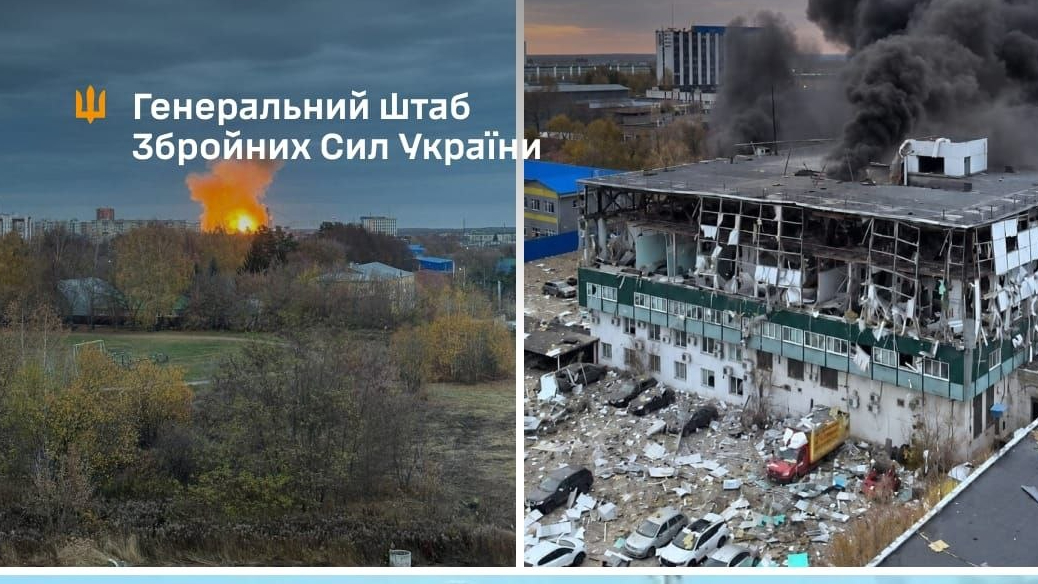
Ukraine conducted nearly 2,000 strikes beyond 50 kilometres from the frontline in May, doubling the previous month and reducing Russian military traffic by over 70 percent on key southern routes, forcing reliance on vulnerable Crimea-linked highways that were subsequently attacked. [4] Ukraine says its battlefield achievements are thanks to a strategy of disrupting Russian supply lines by striking fuel and ammunition in warehouses and in transit. [4] The number of hits on enemy targets at a distance of over 50 kilometres from the frontline has doubled, said Ukrainian Defence Minister Mykhailo Fedorov, comparing May to April. [4] Syrskii put the May total at almost 2,000 strikes. [4] The effects of Ukraine’s strategy have begun to build up. Weeks of attacks in the southern regions of Kherson and Zaporizhia reduced Russian military traffic by more than 70 percent along the M-14 motorway, the main east-west route, said Robert Brovdi, commander of Ukraine’s Unmanned Systems Forces. [4] Regional authorities prohibited traffic along the M-14 altogether. [4] That forced Russian planners to route more supplies along two highways that reach Kherson and Zaporizhia, via Crimea – the E105 and E97. [4] Ukraine struck a bridge that shoulders the E105 over the Chonhar Strait, leaving only the E97 passable. [4] As about 50 Russian fuel and ammunition trucks were routed to the E97, Ukrainian forces ambushed and destroyed some of them at Armyansk. [4] This operation would not have been possible if other units had not struck at Mariupol and the road to Berdyansk, said commander Dmitry Filatov. [4] This is what led to the units stationed in the Hulyaipil direction starting to be supplied, not via the Mariupol highways, but via Crimea. [4] Civilians in Crimea have faced severe fuel shortages as a result of Ukrainian strikes, and these became dramatically worse. [4] On 7 June, Sevastopol occupation governor Mikhail Razvozhaev rationed fuel to 20 litres per car per day before changing that to 20 litres per week. [4] Shortages were reportedly forcing troop evacuations from some outlying positions. [4] The Ukrainian underground group Atesh, which operates in Crimea, said Russian units were abandoning their positions on the Kinburn Spit because they were running out of food and fuel. [4] We will create conditions under which it will be extremely difficult for military personnel and defence industry workers to remain in Crimea, in the temporarily occupied territories, or to use the routes leading to them, Brovdi told Reuters. [4] Traffic between Russian-occupied Crimea and Kherson Oblast near the damaged bridge in the Chonhar area is moving across a pontoon crossing, with a queue of lorries forming in front of it. [3] Satellite images taken on 12 June show lorries moving across the pontoon bridge towards temporarily occupied territories of Kherson Oblast. [3] The main bridge had earlier been damaged and closed. [3] The image also shows two clusters of lorries heading towards mainland Ukraine. [3] No cars or lorries travelling towards Russian-occupied Crimea are visible in the satellite image, although the peninsula continues to face shortages of fuel and some everyday goods. [3] On 9 June, Volodymyr Saldo, the Russian-installed governor of the occupied part of Kherson Oblast, claimed that a bridge near the village of Chonhar was damaged again following an overnight drone attack conducted by Ukrainian forces. [3] The bridge near Chonhar is one of two road routes leading from mainland Ukraine to temporarily occupied Crimea. [3]

Displaced Lebanese civilians receive no government shelter amid ongoing Israeli strikes. — Source: thenewarab
Russian Manpower and Recruitment Shortfalls
Russia has faced fuel shortages in occupied Crimea after Ukrainian strikes on bridges and logistics, leading to rationing of 20 litres per vehicle per week and the abandonment of some military positions due to supply failures. [4] Russian recruitment for unmanned systems units reached only 21 percent of its annual target in the first half of 2026, while overall enlistment bonuses paid fell compared with the previous year amid rising casualties estimated at 31,500 in May alone. [4] Aware of the Ukrainian drone threat, Russia has created unmanned systems units of its own but appears to be having trouble manning them. [4] Since the beginning of the year, 14,500 people have signed contracts to serve in these units, about 21 percent of the annual recruitment target, said Syrskii. [4] Overall, Ukraine has killed or wounded 12,500 more troops than Russia has been able to recruit this year, he said. [4] That is both because casualty figures have been rising since last autumn there – Ukraine estimated 31,500 Russian casualties in May – and because Moscow’s recruitment has been falling, despite increased bonuses to sign-up. [4] Russian opposition source Vazhnye Istorii said 71,200 people had been paid enlistment bonuses in the first quarter of 2026 according to budget data, compared to almost 90,000 in the first quarter of 2025. [4] It estimated that recruitment in 2025 was already 10 percent lower than in 2024. [4]
Ongoing Hostilities and Displacement Crisis in Lebanon
In Lebanon, hostilities since 2 March 2026 have caused at least 3,711 deaths and 11,483 injuries, with continued airstrikes and new displacement orders in southern governorates adding to 134,800 registered internally displaced persons, 85 percent of whom live outside official shelters and bear the costs through private rentals and social networks. [1] [2] Hostilities continued with airstrikes and three renewed displacement orders covering six localities across the South and Nabatieh Governorates triggering additional displacement. [1] At least 3,711 deaths and 11,483 injuries due to hostilities were recorded by the Ministry of Public Health since 2 March. [1] A total of 134,800 Internally Displaced Persons were registered in 642 co. [1] As the Israeli army continues to displaced residents of Lebanon amid ongoing threats and deadly attacks, a recent study published by the Beirut-based Arab Centre for Research and Policy Studies found that around 85 percent of displaced people in Lebanon are living outside the current official shelter system. [2] The findings are based on focus group discussions with displaced people as well as experts in humanitarian work and public policy. [2] The Arab Centre for Research and Policy Studies in Beirut pointed to a phenomenon it termed “the privatisation of displacement”, explaining that forcibly displaced families have come to bear the burden of securing their own housing, livelihoods, and safety, as public institutions and humanitarian groups fail to provide them with this. [2] In a previous study published in April, the centre found that more than one million forcibly displaced people in Lebanon were living outside official shelters during the Israeli war, stressing that their humanitarian and living conditions were extremely harsh. [2] It said that there was a “silent” humanitarian disaster affecting the displaced people, as they struggled beyond the “radar” of international organisations and official bodies. [2] In a report entitled “The Privatisation of Displacement: How the Burden of Managing the Humanitarian Crisis Shifted from Institutions to Displaced Families in Lebanon”, the centre explained how “the latest wave of displacement in Lebanon reveals a profound transformation in humanitarian crises and how they are managed”. [2] It noted that while traditional responses continue to revolve around collective shelters and emergency aid, most displaced people today live outside these centres, relying on rented accommodation, staying with relatives, or depending on social support networks. [2] The centre stressed in its study that “displacement in Lebanon is no longer merely a temporary humanitarian condition but has become a prolonged urban condition increasingly managed through market mechanisms and opportunities for self-provision rather than through official institutions and traditional protection systems in humanitarian crises”. [2] Thus, “housing emerges as the primary entry point for understanding the current displacement”, as “the rental market has become the space through which the crisis is reshaped and its burdens redistributed, with significant increases in rents, cases of discrimination in access to housing, overcrowding within homes, and growing disparities in the ability to obtain adequate shelter”. [2] It added that “housing is no longer simply a humanitarian need but has become the main mechanism through which the cost and management of displacement are transferred to individuals and families themselves”. [2] The centre pointed in its latest study to “mounting economic pressures”, explaining that many displaced people “have lost sources of income linked to their areas of origin, at a time when the cost of living has risen in areas of displacement”. [2] Families have consequently depleted their savings, taken on debt, reduced consumption, and relied on family and social support networks. [2] The centre warned that “although these strategies allow survival in the short term, they weaken prospects for recovery and stability in the medium and long term”. [2] The centre found that “the experience of displacement is not measured solely by the availability of material assistance but has become closely linked to issues of human dignity and social relations”. [2] It added that “despite displays of solidarity by host communities, many displaced people have faced forms of stigma, discrimination, and feelings of being unwelcome, making the preservation of dignity and privacy an essential part of the daily struggle for survival”. [2] The centre examined “the growing gap between the reality of urban displacement and the response models in place; while support is largely concentrated around collective shelters, the majority of displaced people live outside them”. [2] It explained that “this imbalance leads to weak access to assistance and reinforces what can be described as the privatisation of displacement management”, as “displaced families themselves become the primary actors managing the crisis and bearing its costs”. [2] The study concluded with “the need to move from an emergency humanitarian approach centred on collective shelters to an integrated urban approach linking immediate relief with housing policies, social protection, livelihood support, local development, and the strengthening of social cohesion”. [2] It also pointed to “the importance of empowering municipalities and local administrations as the first responders on the ground”. [2] The centre stressed that “without this shift, displacement will remain a crisis managed through the market and social relations, while displaced families bear the largest share of its burdens and costs”. [2]
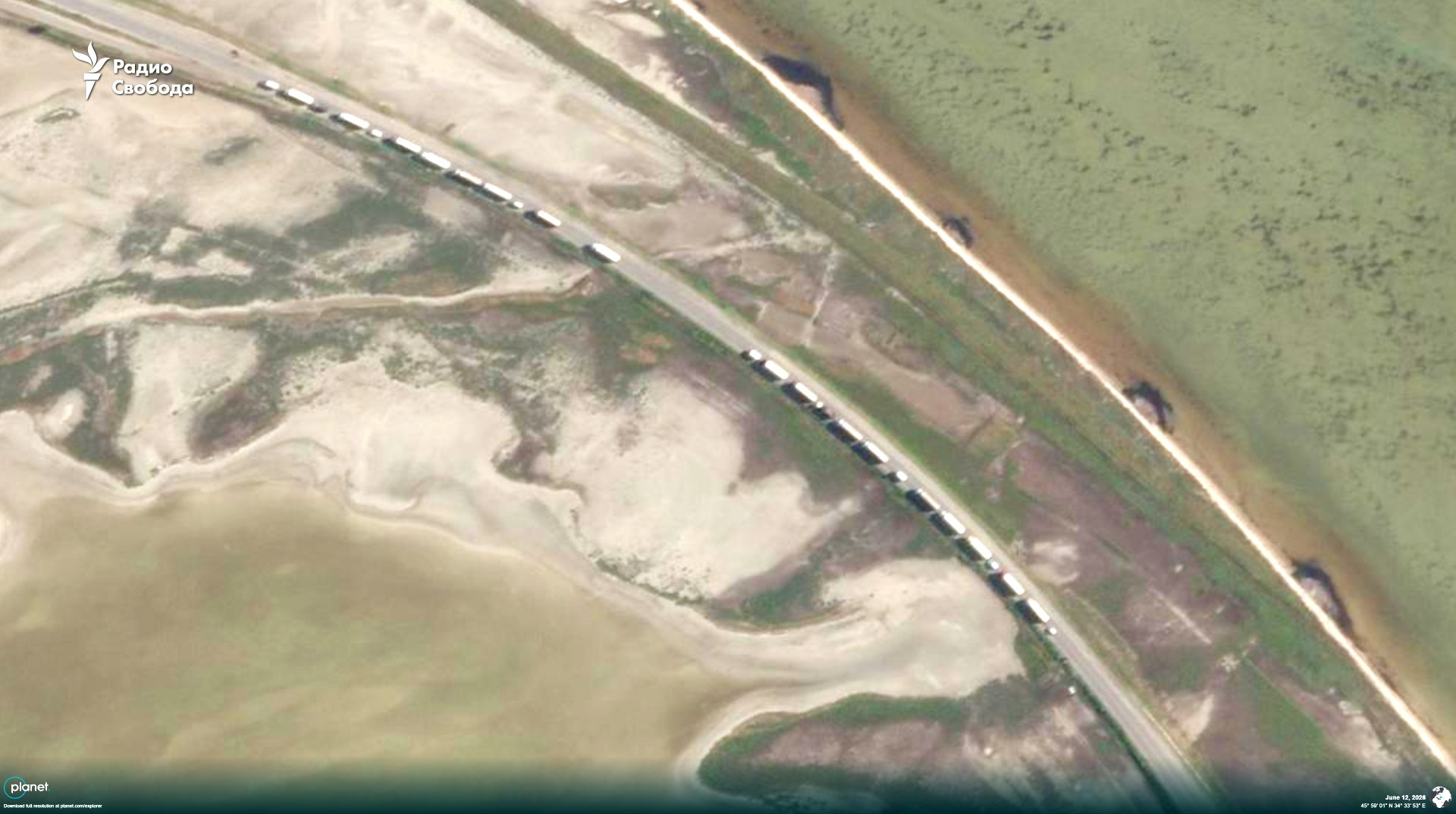
Russian forces build a pontoon crossing near the damaged Chonhar bridge with lorry queues visible. — Source: ukrainskapravda
Gaza Buffer Zone Expansion and Ceasefire Implications
Israeli forces expanded the Gaza “yellow line” buffer zone westward by 300 metres in several areas, a move Hamas described as intended to derail ceasefire negotiations. [5] Israeli army moves yellow line blocks westward by 300 meters in several areas of Gaza Strip. [5] Israel expanding Gaza “yellow line” to derail ceasefire talks, says Hamas. [5]
Broader Patterns Across Multiple Conflict Zones
Ukrainian forces achieved net territorial gains of approximately 100 square kilometres in May according to the commander-in-chief, with independent estimates ranging from 120 to 240 square kilometres gained versus Russian advances. [4] Ukraine conducted nearly 2,000 strikes beyond 50 kilometres from the frontline in May, doubling the previous month and reducing Russian military traffic by over 70 percent on key southern routes, forcing reliance on vulnerable Crimea-linked highways that were subsequently attacked. [4] Russia has faced fuel shortages in occupied Crimea after Ukrainian strikes on bridges and logistics, leading to rationing of 20 litres per vehicle per week and the abandonment of some military positions due to supply failures. [4] Russian recruitment for unmanned systems units reached only 21 percent of its annual target in the first half of 2026, while overall enlistment bonuses paid fell compared with the previous year amid rising casualties estimated at 31,500 in May alone. [4] In Lebanon, hostilities since 2 March 2026 have caused at least 3,711 deaths and 11,483 injuries, with continued airstrikes and new displacement orders in southern governorates adding to 134,800 registered internally displaced persons, 85 percent of whom live outside official shelters and bear the costs through private rentals and social networks. [1] [2] Israeli forces expanded the Gaza “yellow line” buffer zone westward by 300 metres in several areas, a move Hamas described as intended to derail ceasefire negotiations. [5] The logistical lockdown is working, said Ukrainian Defence Minister Mykhailo Fedorov. [4] The Institute for the Study of War believed Ukraine actually reversed Russian gains in April, when it estimated Moscow’s gains at 28 square kilometres of Ukrainian land and lost 116 square kilometres. [4] The ISW’s assessments suggest Ukrainian gains are growing. [4] Although Russia’s air force continues to command the skies over eastern Ukraine and to drop large ordnance there, Ukraine’s own figures suggest its drone superiority is the more effective tool. [4] Ukrainian short-and medium-range drones hit 180,000 targets in May, said Syrskii, 12.7 percent more than in April. [4] Ukrainian defenders are also reportedly becoming more adept at shooting down Russian Shahed drones with their own interceptor drones. [4] Although Russia launched 25 percent more Shaheds in May compared to April, shoot-downs increased by 50 percent to about 4,000, said Fedorov. [4] Fedorov expected a step-change in Shahed elimination once a new generation of interceptor goes into full production which “automates 95 percent of the entire interception process”. [4] Beyond these mid-range strikes, Ukraine has also continued a successful long-range strike campaign that has devastated Russian refineries, oil depots and offloading terminals, reducing Russian oil production and export revenue. [4]
What to watch next: Syrskii said Ukraine reclaimed 600 square kilometres during the first five months of 2026, while the Institute for the Study of War assessed that Ukrainian gains are growing.