
Ukraine Conflict Spreads Across Black Sea as Turkey Urges Moratorium on Vessel Attacks
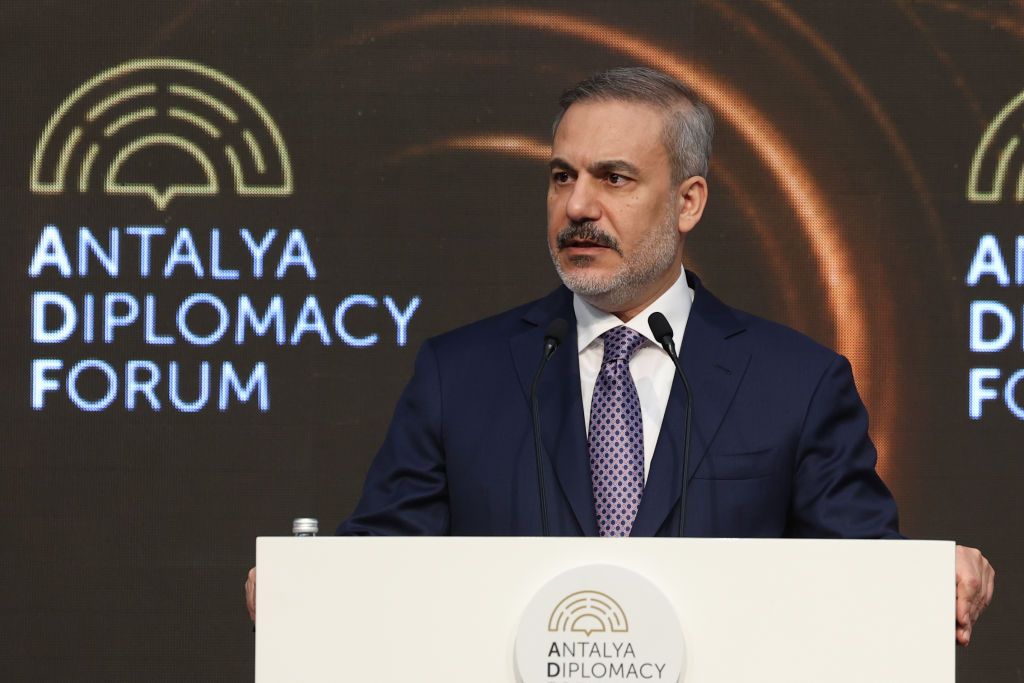
The Ukraine conflict has spread across the Black Sea as strikes on commercial vessels by both sides have intensified, prompting Turkish Foreign Minister Hakan Fidan to call for a moratorium on such attacks. [1]
Turkish Call for Black Sea Moratorium
Turkish Foreign Minister Hakan Fidan on Aug. 8 called on Russia and Ukraine to impose a moratorium on attacks on vessels in the Black Sea amid the increasing number of strikes on ships in the region. [1] "At first, ports and warships were attacked. Now all commercial vessels are being attacked indiscriminately. We need to create a mechanism that would allow us to declare a moratorium," Fidan said in an interview with Anadolu. [1] "The Ukrainians already had a corresponding proposal. We passed it on to our Russian colleagues and are waiting for a response." [1] In recent weeks, Ukraine and Russia have increasingly traded blows on vessels in the Black Sea, directly impacting foreign-flagged ships, including those owned and operated in Turkey. [1] On July 6, Ukraine launched Operation Molochka, a campaign targeting Russia’s shadow fleet in the Black Sea and the Sea of Azov in an effort to tighten the noose around Russian-occupied Crimea peninsula. [1] Since the start of the operation on July 6, Ukrainian drones have struck 218 Russian shadow fleet vessels, including 134 in the Sea of Azov and 84 in the Black Sea, according to the Unmanned Systems Forces. [1] In response, Russia has launched attacks primarily targeting civilian cargo ships near the port city of Odesa. [1] The attacks have targeted foreign-flagged ships carrying grain and fertilizers, including Turkish-flagged and Turkish-owned ships. [1] One attack struck a Turkish-flagged fishing vessels near occupied Crimea, killing one person and injuring four others. [1] Ukrainian attacks have also targeted vessels as far south in the Black Sea as around 50 miles (80 kilometers) off the coast of northern Turkey. [1] "The conflict has spread across the whole Black Sea," Fidan added. [1] Attempts at brokering a ceasefire between Ukraine and Russia in the Black Sea have thus far been unsuccessful. [1] In March 2025, during early rounds of peace negotiations, the United States claimed it had secured a ceasefire in the Black Sea. [1] While Ukraine agreed to the ceasefire, Moscow said it would only agree to the ceasefire only after Western sanctions on Russian food producers and exporters, were lifted — leaving the ceasefire proposal to quickly whittle away. [1] A drone of suspected Ukrainian origin exploded close to a gas pipeline in Bulgaria, near the Romanian border. [3] Bulgaria's defence ministry said the drone was of a type "widely used by the Ukrainian military". [3]
Turkish Foreign Minister Hakan Fidan calls for moratorium on Black Sea vessel attacks. — Source: kyivindependent
Ukraine's 40-Day Influence Operation
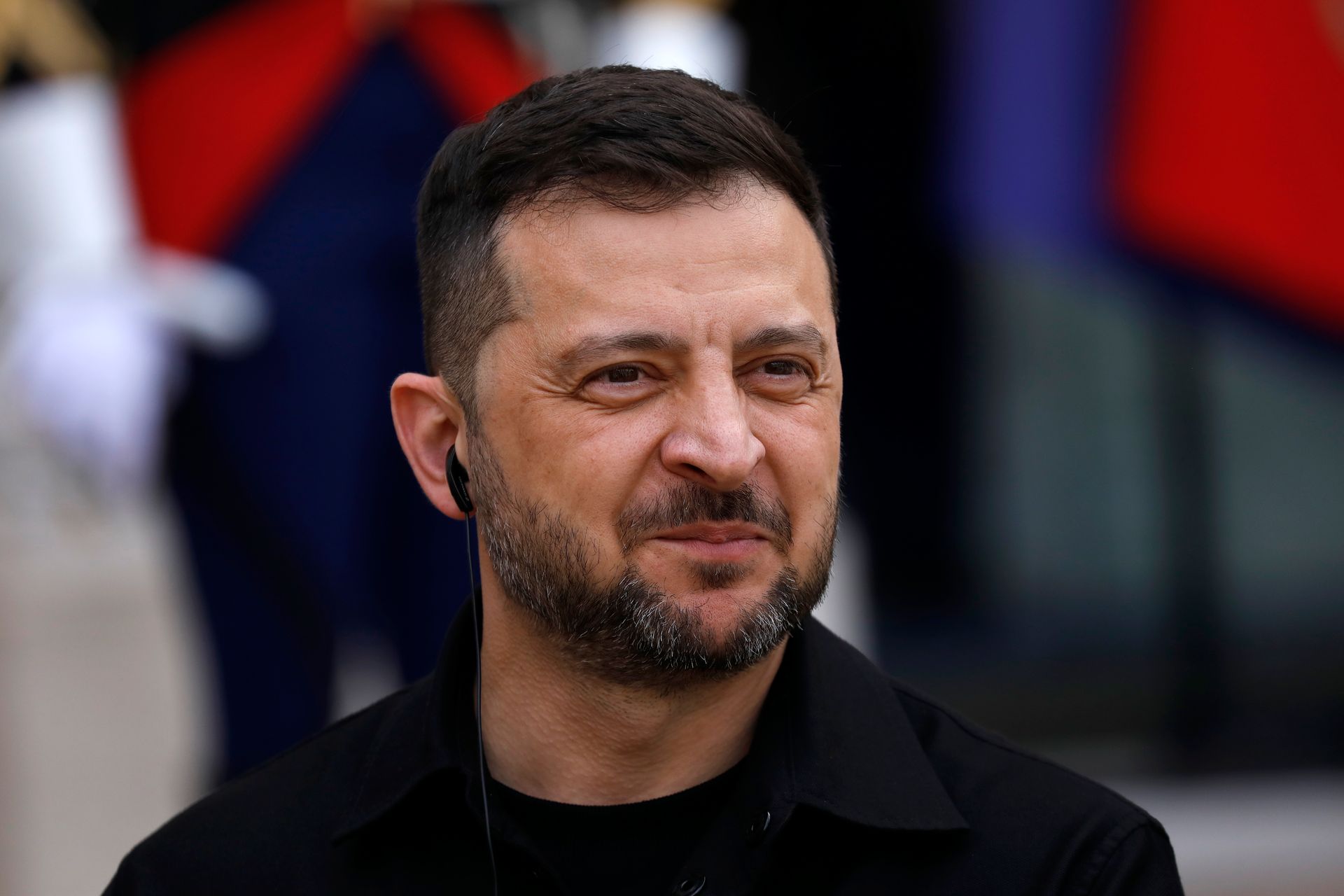
President Volodymyr Zelensky said on Aug. 8 that he was "satisfied" with the result of a 40-day influence operation designed to compel Russia to "end the war," suggesting that Kyiv's forces will continue to strike Russian logistics beyond the limited timeline. [2] Zelensky tasked Ukraine's Security Service (SBU) to launch the 40-day operation in late June, with the operation culminating with Ukraine's crippling of dozens of Russian tankers supplying occupied Crimea, as well as the destruction of numerous warehouses across the country belonging to online retailer Wildberries. [2] Details of what the campaign actually constituted remained sparse until it ended, when the SBU released a statement on Aug. 4 clarifying the actions that the agency claimed were part of it. [2] According to the statement, the campaign "was aimed at simultaneously weakening key elements of the Russian military machine." [2] "I am satisfied, absolutely. In terms of our logistical responses, we understand how much they have lost; they have major problems," Zelensky said in a wide-ranging interview on Ukraine's marathon television program. [2] "After they began striking our logistics, we found another logistical operation and responded to them. The losses there are staggering — one trillion rubles ($12.2 billion). It was a very successful operation by Ukrainian forces," the president added. [2] Despite not achieving an end to Russia's full-scale war, Ukrainian officials familiar with the planning previously told the Kyiv Independent that one of the operation's central political objectives was looking further ahead than the stated 40 days — to force Russians to experience the consequences of the war more directly with a view to influencing elections in September. [2] In his interview comments, Zelensky alluded to the impact the war was having on the Russian population, issuing thinly veiled threats that strikes on Russian logistics will continue. [2] "They have for a long time allowed themselves to target non-military targets, and they must know that Ukraine strikes military targets. But if they continue, we understand all their weak points... We have not had a normal life or such habits since the beginning of Russia's aggression. Russia does not feel this. Obviously, goods that do not reach ordinary consumers in Russia because of a lack of logistics will, understandably, be felt by people in Russia," Zelensky said. [2] "I would not advise Russia to continue striking Ukrainian logistics, because we have clearly studied what Russia's logistics look like." [2] Amid Ukraine's efforts to target logistics facilities, Russia has intensified its efforts to launch large-scale attacks on Ukrainian cities — with Ukraine facing a shortage of air defense capabilities. [2] Another overnight attack on Kyiv on Aug. 8, killed four people, including a three-year-old child, and injured eight others, Zelensky and local officials reported. [2] The Russian-occupied Zaporizhzhia Nuclear Power Plant lost external power twice during the day on 8 August. [4]
Zelensky's Warnings on Continued Strikes
President Volodymyr Zelenskyy has said he is satisfied with the results of a 40-day operation aimed at exerting pressure on Russia and has "advised the Russians against" carrying out further strikes on Ukrainian logistics. [5] "After they [the Russians – ed.] began striking our logistics, we found another logistical approach and responded to them. The losses there are staggering – a trillion roubles (approximately US$12 billion)… This has been a very successful operation by Ukrainian forces. It involved the Armed Forces, the Special Operations Forces, Defence Intelligence, the Security Service and the Foreign Intelligence Service. Today we work together when carrying out long-range or even mid-range strikes," Zelenskyy said. [5] Asked whether he was satisfied with the results of the 40-day operation, Zelenskyy said: "I am satisfied, absolutely. Our logistical responses – we understand how much they have lost; they have serious problems." [5] "They have long allowed themselves to strike non-military targets, and they must understand that Ukraine strikes military targets, but that if they continue, we know all their weak points. Logistics is not [just] a weak point for Ukrainians; it is a weak point for everyone. Logistics is about life, everyday functioning, routine. We have not had a normal life or routine since the beginning of Russia's aggression. Russia does not feel this. When products don't reach ordinary consumers in Russia because of disrupted logistics, then people in Russia will feel it… I would advise Russia against continuing to strike Ukrainian logistics, because we have clearly studied Russia's logistics," Zelenskyy said. [5] Zelenskyy noted that the Russians have "built three layers of air defence around Moscow to protect the electricity and energy facilities – all the things they strike in Ukraine – because they realise that we will respond in kind". [5] "But no matter how much air defence you have, it runs out anyway, and we will still find technologies to respond so that they feel it," he said. [5] On 25 June, Zelenskyy announced that he had approved a 40-day operation by the Security Service of Ukraine to push Russia towards ending the war. [5] The 40 days came to an end on 4 August. [5] Commenting on the operation on 3 August, Kyrylo Budanov, Head of the President's Office, urged people "not to fixate on deadlines". [5] On 4 August, Zelenskyy said he had approved new operations by the SSU. [5]
Drone Incident in Bulgaria
Ukraine on Sunday denied targeting Bulgaria after a drone exploded close to the strategic Trans-Balkan gas pipeline linking Turkey to Ukraine near the Romanian border. [3] Bulgaria's defence ministry said the drone was of a type "widely used by the Ukrainian military", and the foreign minister summoned the Ukrainian ambassador for a meeting on Monday in response, her office told the Agence France-Presse (AFP) news agency. [3] Ukraine said it was "in close contact with the Bulgarian side to clarify the circumstances" of the incident, the latest case of a drone straying into NATO airspace as Ukraine fights off Russia's invasion. [3] "We can say with certainty that the Ukrainian Armed Forces did not intentionally direct any assets toward Bulgaria," Ukraine's foreign ministry spokesman Georgiy Tykhyi said, blaming Russia's invasion for the incident. [3] While the explosion caused no casualties, Bulgarian Prime Minister Rumen Radev said the amount of explosives it was carrying was "significant". [3] "The drone exploded in the immediate vicinity of the Kardam border-crossing with Romania," near the Black Sea in the country's northeast, "1,000 metres from the Trans-Balkan gas pipeline's compressor station," he said in a video released by the government. [3] After analysing the debris from the crash, Bulgaria's defence ministry, however, said that "currently, nothing suggests that this was a deliberate incident". [3] The drone eventually crashed into a sunflower field, Radev said. [3] Romania border police recorded the sound of the drone, then a Bulgarian border police patrol spotted "a loud explosion accompanied by black smoke", Radev added, speaking after an extraordinary meeting of his cabinet's security council. [3] "One thing is certain: the drone was carrying a significant amount of explosives, given that it could be heard from a distance and produced such black smoke," he said. [3] The drone had not been detected by either of the two neighbouring countries, he said, adding: "As you know, identifying and neutralising these drones poses a major challenge." [3] Incidents involving drones have become increasingly frequent in recent months across eastern European countries that are NATO members and supporters of Ukraine in its conflict with Russia. [3] Romania has faced frequent drone incursions since the start of Russia's full-scale invasion of Ukraine in 2022, including some crashes on its territory. [3] It ordered the expulsion of a Russian embassy staff member in late July. [3] Radev said that, following the latest incident, Bulgaria had boosted its surveillance and would redeploy troops and soldiers to the borders to detect drones and employ anti-drone measures. [3] Bulgaria in June halted its military aid to Ukraine. [3] Radev said the country did not belong in the coalition of Kyiv's allies supplying arms and that he preferred to see diplomatic efforts to end the war. [3]
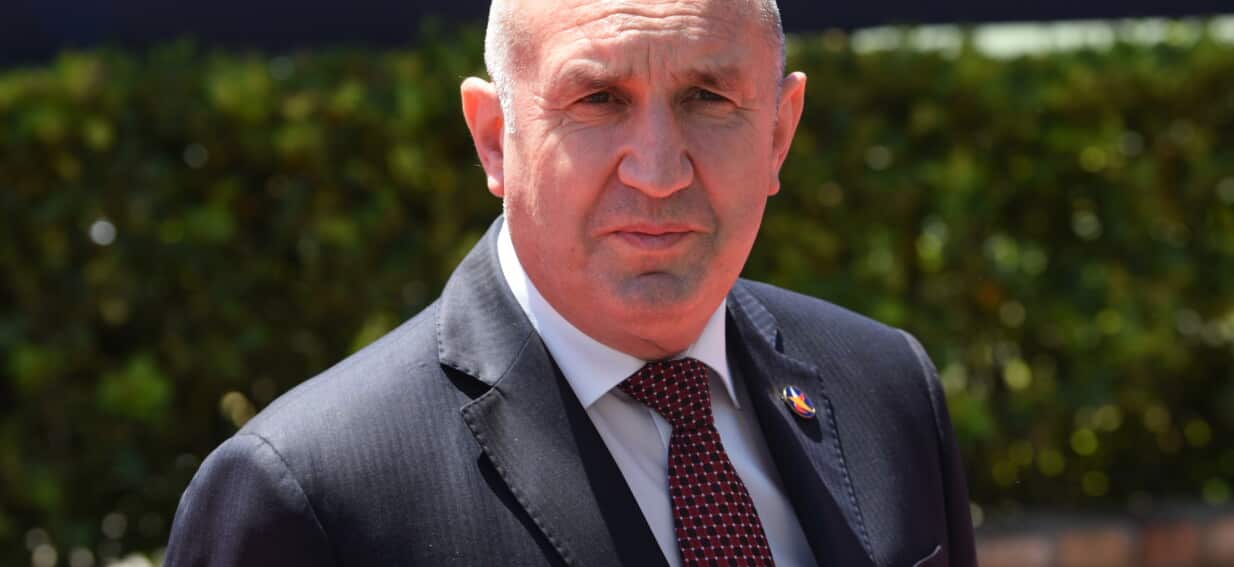
Bulgaria summons Ukrainian ambassador after drone crashes near Romanian border. — Source: sbsaustralia
Power Disruptions at Zaporizhzhia Nuclear Plant
The Russian-occupied Zaporizhzhia Nuclear Power Plant (ZNPP) lost external power twice during the day on 8 August. [4] At 10:59, the 330 kV L-243 Ferosplavna-ZaTES No. 1 overhead power transmission line, which supplies the ZNPP's own power needs, was briefly disconnected. [4] The line was automatically reconnected at the Ferosplavna substation and remained live. [4] While the necessary procedures were being carried out, the plant's on-site power needs were supplied by diesel generators. [4] Power supply to the ZNPP was restored at 11:52. [4] However, at 14:26, the plant once again lost its external power supply. [4] Its own power needs were again switched to diesel generators. [4] At 15:35, the Zaporizhzhia Nuclear Power Plant's own power needs were reconnected to the 330 kV Ferosplavna-1 overhead line. [4] "The situation once again demonstrates the vulnerability of the Zaporizhzhia Nuclear Power Plant under Russian occupation. Any disruption to the normal power supply arrangements at a nuclear facility creates additional risks to nuclear and radiation safety," Energoatom said. [4]
Arms Transfers and Mediation Efforts
Turkish Foreign Minister Hakan Fidan on Aug. 8 called on Russia and Ukraine to impose a moratorium on attacks on vessels in the Black Sea amid the increasing number of strikes on ships in the region. [1] Turkey, a NATO member, has positioned itself as a mediator in the Russia-Ukraine war, maintaining a close economic and political partnership with Moscow while also providing arms to Kyiv. [1] According to U.S. congressional records made public on Aug. 8, Ukraine has purchased a significant package of U.S.-made defense equipment from Turkey, including 70 long-range Army Tactical Missile Systems (ATACMS). [1] The weapons transfer is expected to be initiated in late August. [1] Attempts at brokering a ceasefire between Ukraine and Russia in the Black Sea have thus far been unsuccessful. [1]
What to watch next: Ukraine has indicated it will continue striking Russian logistics, while Turkey waits for a Russian response to its moratorium proposal and the Zaporizhzhia plant remains vulnerable to further power losses.