Iran War Forces US to Shift Missiles and Air Defenses From Europe and Asia
The Iran war has now lasted six months, prompting US Joint Chiefs Chairman Gen. Dan Caine to privately tell senior Trump advisers that the United States must find an exit because available military options, particularly air strikes, are unlikely to achieve President Trump’s stated objectives and risk backfiring. [1]
Caine Privately Urges Exit Strategy
Gen. Dan Caine has held separate discussions with CIA Director John Ratcliffe, Secretary of State Marco Rubio and Vice President JD Vance to coordinate concerns about escalation risks and limited options, aiming for a unified position before meetings with Trump. [1] Caine has told these officials that the military options under consideration for escalating the conflict could produce the opposite of the intended result. [2] One source described the general’s approach as a way of protecting the military. [1] Trump has appeared consistently reluctant to deploy ground troops in Iran and has instead suggested that air strikes could force Tehran to accept an agreement on his terms. [1] Caine and other Cabinet members privately consider such an outcome improbable and have sought to develop other options within the parameters set by the president. [1] A White House official praised Caine’s contribution, stating that he is an extraordinary asset to the president’s national security team and that he always provides accurate and unbiased information along with a wide range of options. [1]
Limits of Air Power and Escalation Risks
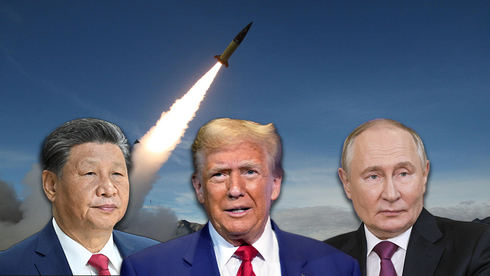
US military weapons stockpiles are depleted after six months of the Iran war. — Source: gdelt
Trump has resisted ground troops and favored air strikes to force Iran into an agreement, but Caine and other officials believe this outcome is improbable and have highlighted limits of air power. [1] Many senior national security officials in the Trump administration, supported by military doctrine and intelligence assessments, share Caine’s public statement to lawmakers at the end of last month that air power has its limits. [1] Caine and other Trump administration officials viewed the most recent plan, drawn up at the end of July, for new and more aggressive attacks with reservations because of concerns over the likely consequences of escalation. [1] Trump ultimately decided to abandon the plan after talks with Middle East allies who conveyed fears of Iranian retaliation, especially attacks on their energy infrastructure. [1] The president has not ruled out launching attacks at a later date. [1] Trump has repeatedly threatened to strike Iranian energy infrastructure, yet sources said such a step is unlikely to make Tehran capitulate and would almost certainly provoke retaliatory attacks on Gulf states’ energy infrastructure. [1] Trump has also considered bombing bridges, but according to one source this option would probably not produce useful results either. [1]
Depleted US Munitions Stocks
US Patriot interceptor stocks have fallen below 1,700 after firing more than 1,500 in the conflict, with long-range missiles such as ATACMS also critically short; replenishment would take over two years even with accelerated production. [2] Caine warned Trump before the war against drawing further on already depleted stockpiles, yet the president chose to attack believing the conflict would end quickly. [2] That assumption proved wrong. [2] Caine has expressed concern about the drawdown of US munitions stocks in at least two recent meetings with Trump that examined possible escalation options. [1] Trump has become increasingly frustrated that the issue appears to affect his ability to credibly project force in negotiations with Iran. [1] Before the war began, Caine and other military leaders also warned Trump that a prolonged military campaign could affect US weapons stocks, particularly those intended to support Israel and Ukraine. [1] Senior US military commanders now consider the munitions stocks to have reached a dangerously low level. [1]
Impact on Global US Posture

President Trump faces limited military options in the six-month Iran war. — Source: vg
The Pentagon has redirected missiles, warships, aircraft and air-defense systems from Europe and Asia to the Middle East, delaying deliveries to partners including Ukraine, where Western interceptor supplies have dropped to one-third of 2025 levels. [2] US officials told The New York Times that the conflict has forced the Pentagon to move missiles, warships, aircraft and air-defense units from Europe and Asia to the Middle East. [2] American and Western officials are increasingly concerned that pulling weapons and forces from those regions could influence decisions by Russia and China over whether to initiate military confrontations that could ultimately draw in the United States. [2] The US military has delayed weapons deliveries to customers in Europe and Asia. [2] In Asia, the Pentagon has moved Tomahawk missiles and other long-range weapons to the Middle East that had been reserved for a possible conflict with China. [2] Hundreds of advanced interceptors have also been transferred from South Korea and other countries, while an aircraft carrier and several of the US Navy’s most advanced destroyers have been redirected to the Iran war. [2] One US official said the removal of air-defense and surveillance systems from South Korea has left American forces there more vulnerable in the event of a conflict with North Korea. [2]
Iran’s Hormuz Leverage and Trump’s Options
Iran has tightened its hold on the Strait of Hormuz, creating new leverage that complicates any US exit, while experts describe Trump’s options as a menu of bad alternatives: diplomacy requiring concessions, further escalation that could deepen involvement, or maintaining the current stalemate. [3] The war, which started with US and Israeli attacks on Iran on 28 February, is now in its sixth month. [3] Iran has gained a grip on the Strait of Hormuz that the country did not have before the conflict started. [3] This limits Trump’s room for maneuver. [3] According to expert Aaron David Miller, Trump now faces three main alternatives. [3] The first is diplomacy. Iran and Oman are working on a temporary agreement that could open the Strait of Hormuz more to international shipping, but the price could be high for Trump because an agreement could in practice give Iran a formalized role in controlling ship traffic through the strait. [3] The second alternative is to escalate. Trump could order a new and far more powerful wave of US attacks on Iran, but this offers no guarantee of victory and could instead draw the United States even deeper into the war. [3] The third alternative is to maintain the fragile status quo by continuing the blockade of Iranian ports and responding militarily when Iran attacks shipping. [3] This may be the least dramatic option in the short term but does not solve the fundamental problem of a war without a clear victory or end date. [3]
Domestic Political Pressures
Trump rejected a late-July escalation plan after warnings from Gulf allies about Iranian retaliation against their energy infrastructure and concerns over depleted US munitions; he has threatened but not yet struck Iranian energy sites or bridges. [1] Trump confronted Defense Secretary Pete Hegseth after learning how strained US ammunition stocks are. [3] The president reacted strongly and felt he had not been sufficiently informed about the situation. [3] Hegseth pointed to Deputy Defense Secretary Stephen Feinberg as responsible. [3] Later the same day a crisis meeting was called to find solutions. [3] Midterm elections in the United States are less than three months away. [3] High gasoline prices and falling poll numbers create additional political challenges for Trump. [3] Several key MAGA figures, including Tucker Carlson, have distanced themselves and criticized the president. [3] The White House has rejected claims that Washington is running short of weapons, with press secretary Karoline Leavitt stating that the United States has more than enough firepower to carry out any operation the president orders, anytime, anywhere. [2]
What to watch next: Iran and Oman continue work on a temporary agreement that could open the Strait of Hormuz more to international shipping, while Ukraine seeks air-defense systems from Israel amid sharply reduced Western interceptor deliveries.