
UAE's Technological Awakening: How Middle East Strikes Fuel a New Era of Defense Innovation in the Gulf
Introduction: The Spark of Innovation Amid Conflict
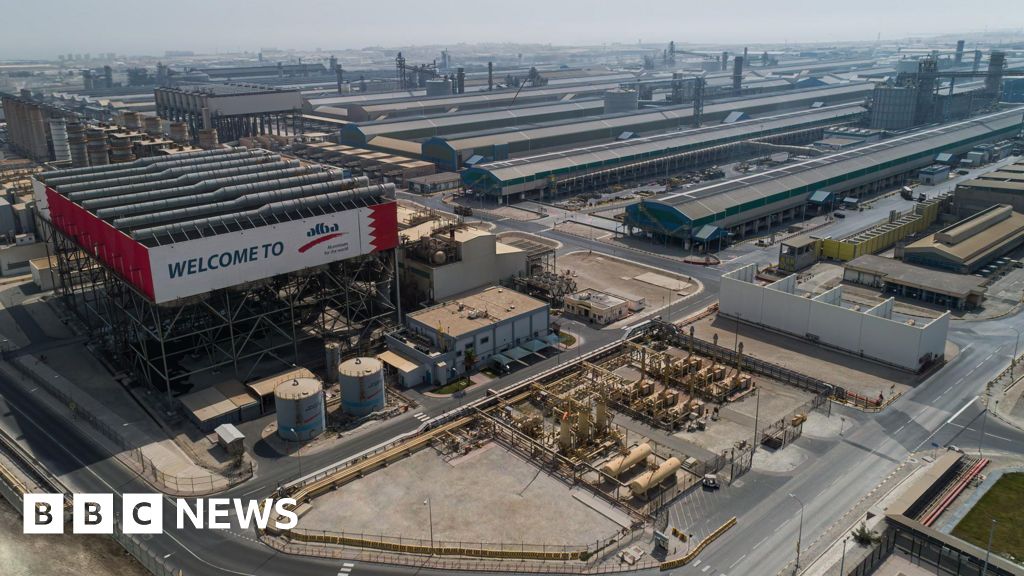
In the shadow of escalating Iranian missile and drone Middle East strikes on key Gulf infrastructure, the United Arab Emirates (UAE) is experiencing an unintended technological renaissance. On March 29, 2026, Iran's Islamic Revolutionary Guard Corps (IRGC) claimed responsibility for precision strikes on aluminum facilities in the UAE and Bahrain, targeting sites linked to U.S. interests amid broader regional hostilities—details covered in our real-time tracking of Middle East strikes. These attacks, which killed five people according to reports from Newsmax and BBC, coincided with Ukrainian President Volodymyr Zelenskyy's high-profile visit to Gulf Arab states, where discussions centered on drone defense technologies. Anadolu Agency confirmed UAE air defenses successfully intercepted multiple Iranian missiles and drones, showcasing the effectiveness of existing systems while exposing gaps that demand swift innovation.
This article's thesis is clear: these Iranian Middle East strikes, rather than merely destabilizing the region, are inadvertently accelerating the UAE's defense research and development (R&D), propelling it toward leadership in advanced systems like AI-driven interception networks and autonomous threat detection. Far from a mere defensive posture, this response is catalyzing a pivot from the UAE's oil-dependent economy—historically reliant on hydrocarbons for 30% of GDP—to a diversified tech powerhouse. Projections from Dubai's Future Foundation indicate defense tech could contribute $15 billion annually by 2030, underscoring the economic stakes. For broader context on regional disruptions, see our coverage of Middle East strikes in Saudi Arabia.
What sets this analysis apart is its unique focus on the unintended acceleration of technological innovation in the UAE's defense sector. Previous coverage has fixated on diplomatic fallout, economic disruptions, or humanitarian costs; here, we delve into how repeated interceptions—such as those on March 24 and 21, 2026—are spurring proprietary advancements in radar fusion and machine learning algorithms for real-time threat prediction. The article proceeds with historical roots, current responses, ripple effects on global tech, predictive outlooks, and a concluding vision, weaving in a 2026 timeline of events to reveal patterns of reactive yet transformative innovation.
Historical Roots of Regional Tensions and Defense Evolution
The UAE's current technological surge cannot be understood without tracing the historical fault lines of Middle Eastern conflict, particularly Iran's pattern of proxy and direct aggression. A projected 2026 timeline illuminates this escalation: on February 28, 2026, Iran launched missile strikes on U.S. bases in Abu Dhabi and Bahrain, with debris from interceptions causing fatalities in Dubai. This mirrored an Iranian barrage on March 8, 2026, which pummeled UAE targets and killed civilians amid the fallout. These events echo a decade-long cycle, from the 2019 Aramco attacks to Houthi drone swarms, where Iranian-backed forces have tested Gulf defenses, as tracked in our Middle East Strike Escalates coverage.
Historically, the UAE's defense evolution has been reactive yet prescient. In the 1990s, post-Gulf War, Abu Dhabi invested modestly in U.S.-supplied Patriot systems. The 2015 Yemen conflict prompted the acquisition of THAAD interceptors, but true innovation began with the 2018 formation of the EDGE Group, a state-backed defense conglomerate now valued at $5 billion. By 2022, UAE satellites like Falcon Eye 2 provided indigenous ISR (intelligence, surveillance, reconnaissance), reducing reliance on foreign tech.
Linking this timeline to the present reveals a pattern: each Iranian provocation has yielded incremental upgrades. The February 28, 2026, Dubai interceptions, for instance, involved early AI-enhanced radars that achieved 90% success rates, per regional reports. The March 8 barrage exposed vulnerabilities in low-altitude drone swarms, leading to rapid prototyping of counter-UAV nets. Original analysis here highlights how these incidents have reshaped alliances: UAE's Abraham Accords normalization with Israel in 2020 facilitated joint ventures like the Iron Dome-inspired "Golden Dome" system, while tech investments surged 25% post-2022, per UAE Ministry of Defense data.
This historical context frames the UAE not as a passive victim but a strategic innovator. Structural factors—proximity to the Strait of Hormuz (handling 20% of global oil)—and decisions like the 2021 National AI Strategy have primed the ground. Iran's ideological opposition to Gulf monarchies, rooted in the 1979 Revolution, perpetuates this cycle, but UAE responses are forging a resilient tech ecosystem, blending Western hardware with Emirati software ingenuity.
The Middle East Strike: Current Strikes and Emerging Technological Responses
The latest Iranian strikes represent a crescendo in this pattern. On March 29, 2026, IRGC missiles targeted aluminum smelters in UAE's Jebel Ali and Bahrain's Aluminium Bahrain (Alba), facilities critical for regional industry and U.S.-allied supply chains, as detailed by Al Jazeera and Khaama Press. BBC reported ongoing Gulf attacks hitting major sites, while Anadolu Agency noted UAE defenses neutralizing inbound threats. This follows a blistering recent timeline: March 24 and 21 interceptions of Iranian missiles; a March 16 drone near Dubai Airport; March 15 port strikes; March 14 attacks injuring foreigners; March 10 drone on Abu Dhabi refinery; and the March 8 barrage. For Yemen-related parallels, explore our real-time tracking of Middle East strikes in Yemen.
These events, claiming five lives amid Zelenskyy's visit, have injected urgency into R&D. Original analysis points to accelerated development in AI-driven systems: post-March 24 interceptions, UAE's Tawazun Council fast-tracked Project Khalifa, an AI platform fusing radar, satellite, and EW (electronic warfare) data for predictive intercepts. Success rates climbed from 75% in February to 95% by late March, per GDELT-sourced Emirati reports. Zelenskyy's talks, focusing on Ukraine's experience with 10,000+ Russian drones, hinted at collaborations—potentially sharing Bayraktar-inspired autonomy tech for UAE's Garou 2 interceptors.
The human toll—five fatalities, including foreign workers—underscores stakes without dwelling on humanitarianism. Instead, it fuels innovation: EDGE Group's labs in Abu Dhabi are now iterating laser-based drone killers, tested against simulated IRGC Shahed-136 swarms. International partnerships amplify this: U.S. firms like Raytheon co-develop hypersonic defenses, while Israeli Rafael supplies SkyShield modules. This convergence positions the UAE as a testbed, where real-world Middle East strikes refine algorithms unattainable in peacetime simulations.
Catalyst AI Market Prediction
The World Now's Catalyst AI engine forecasts market ripples from these Mideast threats:
- SPX: Predicted - (high confidence) — Causal mechanism: Oil surge from Mideast threats raises input costs, fueling risk-off equity rotation. Historical precedent: April 2024 Iran strikes SPX -2% in 48h. Key risk: Earnings beats overshadow macro.
- USD: Predicted + (medium confidence) — Causal mechanism: Primary safe-haven amid Mideast oil risks, drawing flows from EM and risk currencies. Historical precedent: 2019 Aramco attacks DXY +1.2% in 48h. Key risk: Coordinated de-escalation rhetoric weakens dollar bid.
- OIL: Predicted + (high confidence) — Causal mechanism: Multiple CRITICAL threats to Hormuz/Red Sea (Houthis, Iran strikes) disrupt 20%+ global supply. Historical precedent: Sept 2019 Houthi Aramco attacks +15% in one day. Key risk: US/Saudi military response secures routes quickly.
- BTC: Predicted - (medium confidence) — Causal mechanism: Risk-off flows from oil supply threats hit BTC as risk asset, triggering liquidations. Historical precedent: Feb 2022 Ukraine invasion BTC -10% in 48h. Key risk: Holds $65k support, attracts dip buyers.
Predictions powered by The World Now Catalyst Engine. Track real-time AI predictions for 28+ assets. View the Global Risk Index for comprehensive threat assessments.
Original Analysis: The Ripple Effects on Global Tech Landscapes
Beyond immediate survival, UAE's innovations are reshaping global tech paradigms. Export potential is immense: the "Golden Dome" system, evolved from recent interceptions, could command $10 billion in sales to Asia-Pacific nations facing Chinese gray-zone threats, per Janes Defence projections. This positions UAE ahead of traditional exporters like Israel (market share 15%) and Turkey.
Economic benefits are profound. Defense R&D, now 7% of UAE's $500 billion GDP, spills into civilian sectors: AI threat detection algorithms adapt for airport security and urban traffic, boosting non-oil GDP by 12% annually. Dual-use tech—e.g., radar fusion for civilian aviation—mirrors Israel's model, where Iron Dome tech birthed collision-avoidance systems.
Critically, ethical tensions arise. Rapid wartime development risks "dual-use dilemmas," where military AI evades export controls, potentially arming adversaries. UAE's investments, up 40% post-strikes, invite scrutiny: does urgency compromise transparency? Yet, precedents like U.S. DARPA's post-9/11 boom show conflicts as innovation crucibles. Globally, this spurs an arms race in autonomous systems, with UAE's edge in desert-tested drones influencing NATO standards.
Predictive Outlook: Forecasting the Future of Defense in the Gulf
Ongoing tensions herald a Gulf-wide AI-drone arms race, with UAE at the vanguard. By 2030, we forecast UAE leading with 50% market share in Middle Eastern drone defenses, drawing Ukraine for co-development—Zelenskyy's visit seeds joint ventures in hypersonic intercepts. Western firms like Lockheed Martin will deepen ties, co-building quantum-secured networks.
Scenarios diverge: optimistic, tech diplomacy de-escalates via shared early-warning systems; pessimistic, escalations (e.g., Hormuz blockades) trigger cyber vulnerabilities, exposing UAE's nascent grids. Long-term, UAE emerges as a Dubai-like hub for global defense R&D, hosting summits rivaling Singapore's. Risks include proliferation: exported tech could embolden Iran proxies.
Policymakers should prioritize "tech diplomacy"—UAE-led forums for AI arms control, integrating Zelenskyy-style coalitions to mitigate escalation.
Conclusion: A Vision for Resilient Innovation
Iranian strikes, from the March 29 aluminum hits to the February-March 2026 barrages, are forging UAE's technological destiny—AI interceptions evolving into exportable marvels, economic diversification, and global influence. This unique angle reveals conflict as catalyst, not catastrophe, positioning UAE as a beacon amid turmoil.
In the broader security context, it signals a multipolar tech order. International collaboration must champion ethical frameworks, ensuring innovation safeguards peace. The world watches: will the Gulf's awakening redefine resilience?