
Trump Secures Iran Memorandum at G7 and Tells Netanyahu Deal Ends Nuclear Threat to Israel
US President Donald Trump announced a 14-article Memorandum of Understanding signed with Iran at the G7 summit in France, describing it as removing Israel's greatest nuclear risk while NATO leaders separately prepare for their Ankara summit amid increased defense spending.
Trump Announces Iran Memorandum at G7 Summit
US President Donald Trump revealed details of his conversation with Israeli Prime Minister Benjamin Netanyahu before the signing of the agreement at the G7 summit in Évian-les-Bains, France. Trump said the agreement was designed to protect Israel from existential danger, stating “Look, think of what Israel is getting. They're not going to be nuked.” He added that he had directly told Netanyahu that Israel’s central concern had been addressed, noting “Bibi, your biggest risk was that they'd drop a nuclear weapon into the middle of Israel. They'd only need one, and there would be no more Israel.” Trump asserted that he thinks “they’re happy” with the agreement and reiterated that he had conveyed the same message privately to Netanyahu. [2]
The US president has grown increasingly publicly critical of Netanyahu, confirming in an earlier interview this month that he called the Israeli leader “fucking crazy” during a phone call. Days earlier, he told Axios that Netanyahu had “no fucking judgement” over a Beirut strike that he said nearly jeopardised the deal. Trump earlier criticised Israel’s military conduct in the region, saying Netanyahu would need to “be more responsible” regarding Lebanon, while suggesting the issue involving Hezbollah could be better addressed by Syria. He also stated that “Without the United States, there would be no Israel. Without me, there would be no Israel because no other president was willing to do what I did.” [2]
Trump and Iranian President Masoud Pezeshkian signed a Memorandum of Understanding aimed at ending the war, with the US administration releasing the official text of the agreement reached between Washington and Tehran. The deal contains 14 articles outlining the framework for negotiations toward a final settlement. [2] Trump’s remarks came amid reports that Israel strongly opposed the deal, with Israeli officials voicing concerns through background briefings with journalists. [2]
Leaders Praise Deal as Gamechanger for Global Stability
For the first time in his two presidencies, Donald Trump attended a Group of 7 summit this week without leaving early or ripping up a joint leaders’ statement upon his departure. The summit’s host, French President Emmanuel Macron, was caught on a hot mic describing an al fresco first-night dinner with Trump as a “difficult discussion,” yet Trump endorsed surprisingly tough language in a group statement about Russia’s war in Ukraine, vowing “unwavering support” for Kyiv. [3]
Leaders lavished praise on the American president for his Iran agreement, which has the potential to end a months-long energy crunch that has affected Europe far more than the United States. Canadian Prime Minister Mark Carney told CNN’s Kaitlan Collins that “I think it’s a gamechanger” and that “It allows us, and this is what’s happened in the meeting, to step back, look anew at Ukraine.” German Chancellor Friedrich Merz waited until all the leaders were seated around their meeting table to stand up and present Trump with a white soccer jersey bearing the number 47, writing later under a picture of the moment “We’re on the same team.” Italy’s Prime Minister Giorgia Meloni held a “clarifying” meeting with the president this week. [3]
Trump has now attended five G7s. Unlike his earlier outings, Trump is now a senior member of the exclusive club, with most of the other leaders elected within the last few years. This has lent Trump’s recent outings on the world stage a different tone. [3]
Iran Claims Victory Through Military and Diplomatic Pressure
Iranian Parliament Speaker Mohammad Bagher Ghalibaf asserted that Tehran defeated the US and Israel by achieving its aims via combined military actions and negotiations. Ghalibaf said “ABD VE SİYONİST REJİMİ YENDİK” and described how during the negotiations process military power was also used. He stated that the US and Israel were not allowed to reach the 9 goals they set at the beginning of the war. [5]
Ghalibaf detailed that “Müzakereler sırasında düşmanın Fars Körfezi'ndeki eylemlerine cevap verdik. Hürmüz Boğazı'ndan geçmeye çalışan iki düşman fırkateyn vuruldu ve yandı. Öte yandan düşman uçaklarının kalktığı tüm havalimanları bulundukları ülkelerde vuruldu.” He added that when Israel struck Dahiye, threats were issued to respond to the US and ultimatums were given, leading US President Trump to post that Netanyahu had no right to attack Dahiye. [5]
Ghalibaf described himself as a warrior conducting diplomacy with a warrior spirit, stating “Diplomasiyi savaşçı ruhuyla yürütüyorum. Askeri eylemle elde etmek istediğimiz şeyleri hatta daha fazlasını müzakere ile başardık. Savaşı kazandık ve kazanımlar müzakerelerde şekillenecektir.” [5]
NATO Prepares Implementation Phase for Ankara Summit
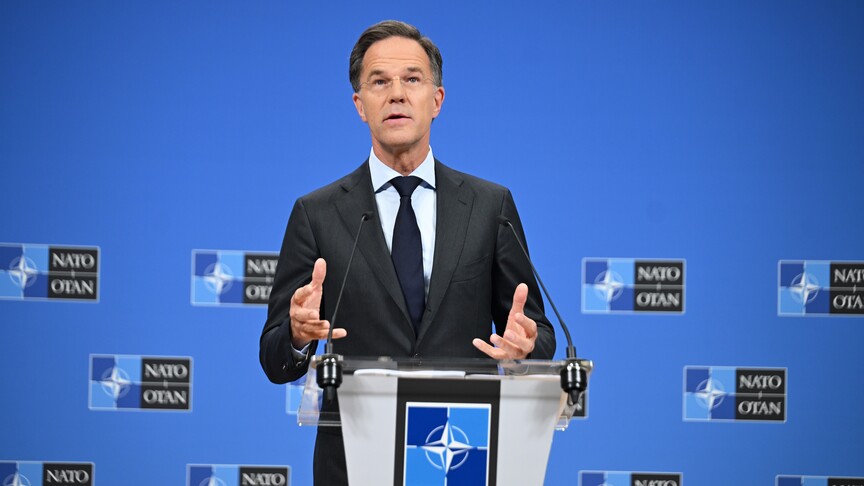
NATO Secretary General Mark Rutte stated the alliance is entering an implementation phase ahead of the Ankara summit, with allies increasing defense spending and boosting production in response to security challenges. [1]
Finnish President Rejects Near-Term Russia-NATO Conflict Warnings
Finnish President Alexander Stubb dismissed warnings of imminent Russian attacks on NATO countries, arguing Russia aims to destabilize Europe through hybrid operations while losing in Ukraine, and that the war may last another three to four months. Stubb said he fundamentally disagrees with recent warnings, such as those from Sweden’s Defence Forces commander Michael Claesson about Russia possibly wanting to test NATO’s Article 5 in the near future. [4]
Stubb stated “Olen perustavanlaatuisesti eri mieltä. Venäjän pyrkimyksenä on saada Eurooppa ja eurooppalaiset maat epätasapainoon. Osa tätä hybridioperaatiota on saada eurooppalaiset itse varoittamaan venäläisestä hyökkäyksestä.” He added that as president, commander-in-chief and Finn, he sees no evidence that this is happening. Stubb noted he does not believe Russia aims to challenge NATO while losing the war in Ukraine. [4]
Stubb painted a less rosy picture of Russia’s future, saying the dream of a democratic and open Russia is not realistic and the country will likely remain isolated and economically behind the United States and Europe for a long time. He stressed that a stable and secure Russia is crucially important for Finland and emphasized the need to open dialogue with Russia. [4]
Context and Next Steps for Iran Framework
With the interim framework now in place, further negotiations are expected over Iran’s nuclear programme and enforcement mechanisms. [2] Trump framed the terms as a major win not only for the United States but for his fellow leaders as well. Some meetings were periodically tense, including a one-on-one with Macron the day he arrived. [3]
The agreement outlines a framework for further negotiations on Iran's nuclear program and enforcement mechanisms. At the G7, fellow leaders praised the Iran deal as a potential gamechanger that could ease Europe's energy crunch and allow renewed focus on Ukraine, with Trump endorsing a joint statement of unwavering support for Kyiv. [3]
What to watch next: Further negotiations on Iran’s nuclear programme and enforcement mechanisms are expected, while NATO allies continue increasing defense spending and boosting production ahead of the Ankara summit.