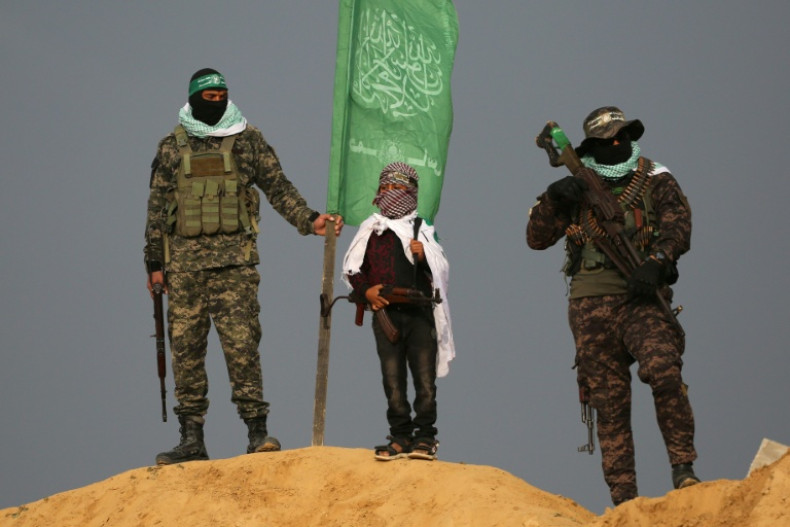
Houthis Deny Plans to Charge Ships in Red Sea
Houthi Denial of Red Sea Fees
Yemen’s Houthi rebels have denied planning to charge ships for passing through the Red Sea, saying passage through the waterway remains free. [1] The denial came in a statement issued Saturday by the Houthi-run Humanitarian Operations Coordination Center, which oversees vessel movement through the Bab al-Mandeb Strait. [1] The center said its safe transit service was voluntary and free of charge, adding that anyone demanding payment for passage did not represent Yemen or the HOCC. [1] It urged shipping companies not to make payments or share information with unauthorised parties. [1] The statement follows a Reuters news agency report on Wednesday, citing regional sources, that the Iran-aligned Houthis were considering imposing fees on ships transiting the strait. [1]
Background on Reuters Report
Those sources said the idea was raised with Iranian officials during a Houthi visit to Tehran earlier in July, with Iranian advisers reportedly helping set up an authority to regulate the fees. [1] The denial follows a Reuters report citing regional sources that the Houthis raised the fee idea with Iranian officials during a visit to Tehran in July, with Iranian advisers helping set up a regulatory authority. [1] Yemen’s foreign minister-designate, Afrah al-Zouba, said on Tuesday that the Houthis were seeking to copy the Iranian model. [1] A United Nations expert report found that the group may have collected significant informal fees from shipping agents in 2024, though this was never independently verified. [1]
Strategic Impact on Saudi Arabia
The Bab al-Mandeb Strait is a vital chokepoint linking the Red Sea to the Gulf of Aden, used by ships carrying oil and other cargo between Asia, Europe and the Middle East. [1] Any fee on passage would echo Iran’s own efforts to charge ships transiting the Strait of Hormuz, which has been largely shut since the US-Israel war on Iran began earlier this year. [1] A toll on the Bab al-Mandeb Strait would particularly affect Saudi Arabia, which has relied on it as an alternative export route while the Strait of Hormuz remains disrupted amid the US-Israel war on Iran. [1] A toll on Bab al-Mandeb would hit Saudi Arabia especially hard, since the kingdom has increasingly relied on the strait as an alternative export route while Hormuz remains disrupted. [1] Traffic through the strait has still not recovered to pre-2023 levels. [1]
Houthi Campaign and Blockade
The Houthis declared a maritime blockade on Saudi Arabia last month, and have conducted a long campaign against Red Sea shipping since 2023 linked to the Israel-Gaza war. [1] The statement follows a Reuters news agency report on Wednesday, citing regional sources, that the Iran-aligned Houthis were considering imposing fees on ships transiting the strait – a week after the group declared a maritime blockade on Saudi Arabia. [1] The Houthis have waged a long campaign against Red Sea shipping, beginning in 2023 after the start of Israel’s genocidal war on Gaza, and only pausing attacks after a ceasefire last October. [1] The Houthis have waged a long campaign against Red Sea shipping, beginning in 2023 after the start of Israel’s genocidal war on Gaza, and only pausing attacks after a ceasefire last October. [1]
Saudi-Led Maritime Coalition
In response, Saudi Arabia announced a 14-nation maritime coalition this week to protect freedom of navigation in the Bab al-Mandeb Strait, Red Sea and Gulf of Aden. [1] In response to the renewed threat, Saudi Arabia this week announced a 14-nation maritime coalition aimed at protecting freedom of navigation through the Bab al-Mandeb Strait, the Red Sea and the Gulf of Aden. [1] At least 14 countries, among them Pakistan, Egypt and Turkiye, have signed a joint statement supporting the coalition that seeks to strengthen maritime security in the Red Sea, Gulf of Aden and the Bab al-Mandeb strait. [3] The development comes after the pro-Iran Yemeni Houthi militia announced a blockade of Saudi ports last month. [3]
Regional Tensions and Calls for Restraint
As the US-Iran war drags on, new battle lines are being drawn. [3] The pro-US Gulf Arab monarchies and Iran have enjoyed a chequered history, specifically after the latter’s Islamic Revolution of 1979. [3] But now, in the midst of the current conflict, the Arabs and Iranians are moving dangerously close to direct confrontation. [3] Many saw the Houthi move as an Iranian pressure tactic to complement the closure of the Strait of Hormuz. [3] While Tehran’s decision-makers may have sought to hurt the US and its allies with these closures, the truth is that they were affecting the entire international community, including some of Tehran’s own allies. [3] The result is that due to Iran’s hard line on Hormuz, and the Houthis’ move against the Saudis, Riyadh is developing a defence coalition apparently aimed at Iran and its allies. [3] While Tehran’s mistrust of the US and Israel is understandable, its uncompromising posture is alienating many of its neighbours, and isolating it further. [3] Much of the internal situation in Iran is the direct result of the US-Israeli aggression, as the more pragmatic figures have been assassinated, leaving relatively hard-line factions, such as the Pasdaran, to call the shots, especially in foreign policy. [3] Those within the Iranian establishment who believe in maintaining better ties with their neighbours need to prevail on their compatriots, and rethink Tehran’s rigid approach. [3] It is evident that as the Iranians and Arabs move towards open confrontation, Israel is watching on with glee. [3] During the Iran-Iraq war, then Israeli prime minister Menachem Begin was reported to have said that he wished them both success. [3] One assumes the current Israeli regime has similar feelings towards the Arab-Iran stand-off. [3] The situation demands wisdom and restraint from all sides. [3] Once this war is over, America may leave, but the Arabs and Iranians have to live in the region. [3] Hence, matters need to be addressed before they spiral out of control. [3] The GCC and other Arab states and Iran must, among themselves, resolve to halt attacks on each other. [3] Moreover, the Arabs should see to it that their soil is not used by foreign aggressors against Iran. [3] Tehran, similarly, should ensure there is free passage for vessels through the region’s maritime chokepoints. [3] Unless all sides show statesmanship, an ugly new chapter in this conflict is likely to open. [3]
What to watch next: Observers will monitor whether the 14-nation maritime coalition advances joint patrols in the Bab al-Mandeb Strait and Red Sea while tracking any further statements from the Houthi-run Humanitarian Operations Coordination Center on transit rules.