
Trump Criticizes Nato Spending as Summit Opens in Turkey
Nato members approach the July 7-8 summit in Ankara warily as US President Donald Trump criticizes the alliance's value and questions its purpose, while a fragile US-Iran ceasefire has partially reopened the Strait of Hormuz but left seized ships in place and tensions unresolved.
Trump's Criticism Casts Shadow Over Nato Summit
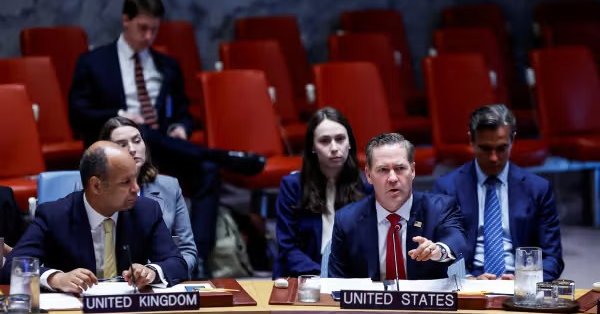
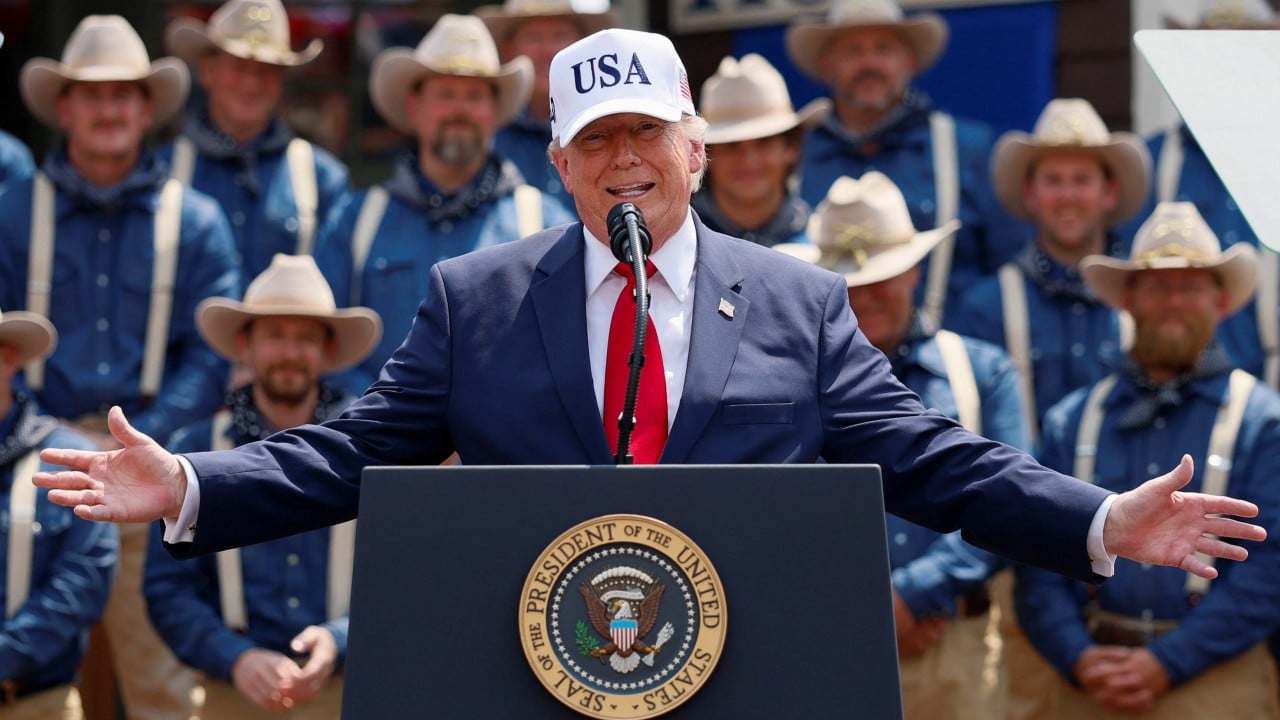
The Nato summit beginning on Tuesday in Turkey is expected to be low-key as European members track their progress towards increased defence spending goals and Beijing watches intently from afar. [1] Early indications suggested it would be the raging one. “The United States spends more money on Nato than any other country, by far, to protect them, without getting any benefit from so doing,” Trump posed Thursday. [1] “Ridiculous!” [1] The mercurial president’s impatience, distrust of multilateral groupings and repeated run-ins with Nato have its other 31 members walking on eggshells in advance of the July 7-8 gathering in Ankara. [1] “It’s never quite clear with President Trump what will transpire,” said Max Bergmann, a director at the Centre for Strategic and International Studies. [1] “Europeans view President Trump as quite combustible and are quite nervous.” [1]
Uneasy Calm Returns to Strait of Hormuz
The Strait of Hormuz has been partially reopened since June as part of the US-Iran ceasefire agreement. [2] It's a sweltering summer's day and fishermen are unloading their catch on the docks. [2] One proudly holds several baby sharks tangled in his nets. [2] Shark sandwich is a local delicacy, he explains. [2] Another rides off with two large fish strung over his motorbike. [2] In many ways this looks like an ordinary fishing port, but the docks are in Bandar Abbas, an Iranian city on the Strait of Hormuz, one of the world's most vital shipping lanes and a key focal point of the US-Israeli war with Iran. [2] This is the first time international journalists have visited the Iranian side of the strait since the conflict began. [2] When the US and Israel launched attacks on 28 February, the Iranian regime responded by attacking Israel and neighbouring Gulf states hosting US forces and turned its geography into one of its greatest sources of leverage. [2] Iran's Islamic Revolutionary Guards Corps (IRGC) began firing on commercial ships attempting to go through the strait without its permission, effectively making the waterway impassable. [2] Seafarers from around the world were stranded and oil prices surged, pushing up the cost of energy and fuel, along with a vast range of goods that are shipped around the world. [2] The US retaliated with a blockade of its own, targeting any ships using Iran's Gulf ports. [2] As a result, these waters have been too dangerous to fish for months. [2] Many fishermen stopped going out, while others continued, knowing they were heading into a battlefield. [2] Now, weeks after Iran allowed the partial reopening of the strait - under a ceasefire agreement with the US that is mostly holding - the sea is calm once more and fishermen are returning. [2]
Seized Ships and Waiting Cargo Vessels Remain
As we sailed through the strait, two container ships seized by the IRGC in April, at the height of the conflict, came into view. [2] At the time, the IRGC said the vessels had endangered maritime security "by operating without the necessary permits and tampering with navigation systems". [2] Despite the ceasefire, the MSC Francesca and the Epaminondas, which were flagged to Panama and Liberia respectively, have not been released. [2] Dozens of other cargo ships could be seen offshore, waiting for permission from the Iranian authorities to pass through the strait. [2] As we approached Hormuz Island, 8km (five miles) off the coast of Bandar Abbas, our guide Rahman pointed out an old fortress overlooking the sea. [2] Its weathered red walls are a reminder that control of the strait has been fought over for centuries. [2] Built in the early 16th Century, it was central to the Portuguese Empire's control of this vital waterway - until 1622 when Portugal was driven out by Shah Abbas I of Persia, after whom Bandar Abbas is named. [2] Today, Bandar Abbas remains just as strategically important. [2] Sitting on Iran's southern coast, close to the narrowest point of the strait, it is home to Iran's Navy and the naval arm of the IRGC. [2] Around a fifth of the world's oil and gas shipments pass through these waters in peacetime, making the city central to the world's economy and key to Iran's military doctrine of "asymmetric warfare" designed to fight more powerful adversaries. [2]
War's Impact Visible in Bandar Abbas
When the BBC reached Bandar Abbas city, there were signs of life returning to normal. [2] Families have gone back home, shops have reopened and traffic once again fills the streets. [2] The market, for centuries the place where goods arrive by sea before making their way into southern Iran, is once again bustling. [2] Yet, nearby, the effects of war remain. [2] On Khushnoodi Street, behind Bandar Abbas's main university, an apartment block is in ruins. [2] It was hit on 26 March by an Israeli strike. [2] Half of the building is standing, while the other half has collapsed into a pile of concrete and twisted metal. [2] Exposed rooms where families once lived can be seen, and Iranian flags fly from the shattered façade. [2] The building also had some offices and Fatima, a 40-year-old business owner who worked there, was elsewhere at the time of the strike. [2] "I knew many of the families who lived here," she said. [2] "There were mothers and children. They were asleep when the attack happened. Some survived, but three people were killed. One of them was a military officer who lived here with his family. But it wasn't a military base." [2] Israel Defense Forces said the intended target was IRGC Navy commander Alireza Tangsiri - and four days after the strike, Iran confirmed he had been killed. [2] Iran's Fars news agency reported that three people were killed and seven injured when two missiles hit the building. [2] According to the Red Crescent, 261 people, including civilians and military personnel, have been killed in Hormuzgan province, of which Bandar Abbas is the capital. [2] The strike illustrates how closely civilian and military life can overlap, blurring the distinction between military targets and residential dwellings. [2] There were at least 96 separate US strikes in and around Bandar Abbas between 28 February and when the ceasefire came into effect on 8 April, according to data compiled by the monitor Armed Conflict Location and Event Data Project (Acled). [2] It says that more than a third were reported to have targeted military infrastructure, including IRGC facilities, missile sites, naval assets and the air base at Bandar Abbas International Airport. [2] Many of these locations are close to residential neighbourhoods. [2] Acled was not able to confirm what was hit in other attacks. [2]
Iran Views Strait as Key Leverage in Talks
US President Donald Trump has repeatedly threatened an escalation of the conflict, warning that Iran "won't have a country" if it did not reopen the strait. [2] Yet, despite his threats and the ceasefire, Iran has not fully reopened the strait and analysts argue it remains a key point of leverage for Tehran in the ongoing talks to reach a lasting peace agreement between the US and Iran. [2] Iranians succeeded in making Strait of Hormuz primary issue rather than their nuclear programme. [3] Delano D'Souza is pleased to welcome Scott Lucas, Professor of International Politics at the University College Dublin. [3] Lucas argues that the centre of gravity has fundamentally shifted. [3] And he highlights the growing divergence between American diplomatic objectives, Israeli territorial ambitions, and Iranian efforts to secure economic recovery after a devastating conflict. [3] Rather than depicting the current ceasefire as a pathway towards peace, Lucas characterises it as an unstable equilibrium. [3] Speaking to the BBC from a government compound with a gleaming golden minaret, Mehdi Nobani, said neither Israel nor the US had achieved their military objectives, including regime change. [2] He also argued the appointment of the new Supreme Leader, Mojtaba Khamenei, Ali's son, had united Iran rather than divided it. [2] If the ceasefire were to break down, "Iran would close the Strait of Hormuz for sure", he said. [2] At the market, many of the people the BBC approached were reluctant to speak to us - not all gave a reason but some said they didn't trust the way the media portrays Iran. [2] Eventually, a young woman, who had recently returned from living in China, told us she had come back to be with her family during the conflict. [2] "Iranians have come together to support each other," she said. [2] Further down the market's winding alleyway, 55-year-old Fatemeh sits selling peaches. [2]
Broader Geopolitical Context
Acting Attorney General Todd Blanche told the International Criminal Court that the Justice Department "unequivocally rejects" any assertion of jurisdiction over U.S. citizens. [4] In medio de la tensión entre Estados Unidos y Cuba, el presidente Miguel Díaz Canel sorprendió este jueves al responderle a Donald Trump con tono desafiante sobre los constantes embates del republicano para tomar el control de la isla. [5] "No queremos una guerra (con Estados Unidos), pero tampoco le tenemos miedo. Nos estamos preparando para que no nos tome por sorpresa ni seamos derrotados", dijo el jefe de Estado cubano en una entrevista con la cadena británica Sky News. [5] Díaz Canel aseguró que la retórica "amenazante" de Trump sobre una agresión contra Cuba forma parte de "una estrategia de intoxicación mediática y de guerra psicológica" para atemorizar al país y constituye "una atrocidad y una afrenta" a la dignidad del pueblo cubano. [5] "Somos un país de paz. No somos una amenaza para nadie, al contrario, brindamos solidaridad al mundo. Por lo tanto, Cuba no es una nación en conflicto, no somos una colonia y no vamos a renunciar a nuestra soberanía ni a la independencia", agregó. [5]
What to watch next: Analysts will monitor whether the mostly holding US-Iran ceasefire leads to full reopening of the Strait of Hormuz or if Iran retains the waterway as leverage in talks, while European Nato members track Trump's approach at the Ankara summit.