
Top US General Urges Trump Administration to Find Exit from Iran Conflict
US Joint Chiefs Chairman Gen. Dan Caine has privately urged senior Trump administration officials to seek an exit from the six-month-old US-Iran conflict, citing the limits of air power and depleted munitions stocks. [1]
Caine Privately Pushes for Exit Strategy
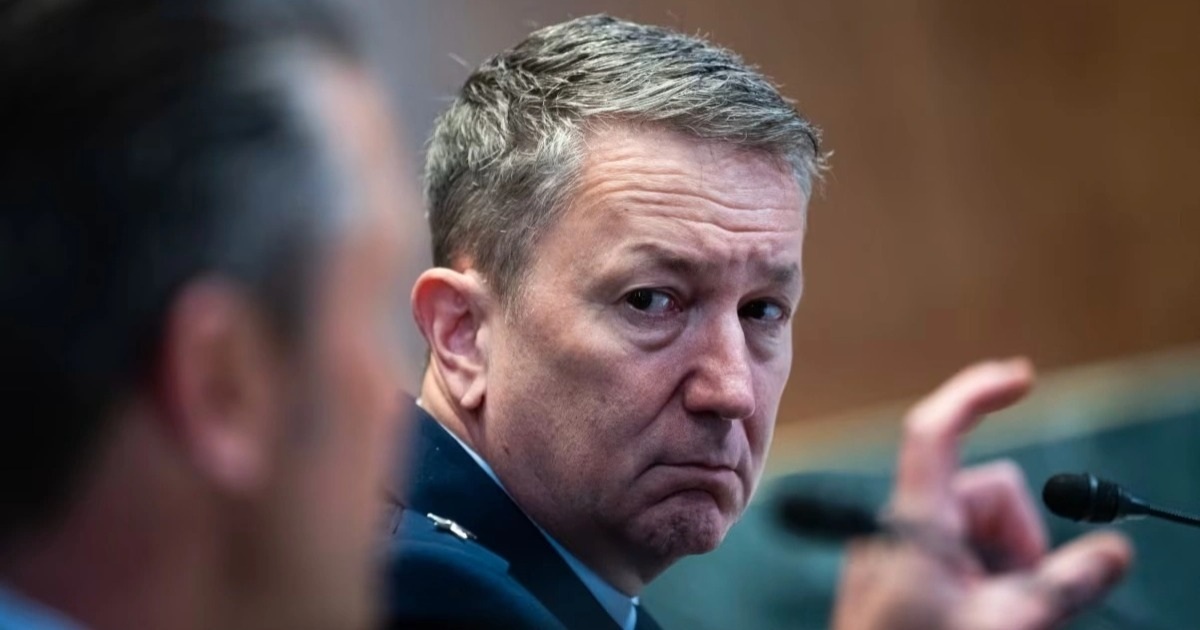
Gen. Dan Caine has told advisers including Vice President JD Vance, Secretary of State Marco Rubio and CIA Director John Ratcliffe that military escalation options risk backfiring and that air power alone is unlikely to achieve President Trump's stated goals. [1] According to sources, Caine has argued in recent weeks that the United States needs to find a path out of the conflict with Iran, noting that escalation options on the table could backfire and that U.S. air power alone would struggle to meet the objectives set by President Trump. [1] Caine has sought to coordinate a unified interagency view by discussing these concerns with senior cabinet officials who share the president's perspective, with the aim of ensuring they speak with one voice ahead of meetings with the president. [1] The goal has been to clarify the limitations and pitfalls of current military options, including those that do not require deploying U.S. ground forces. [1] One source described Caine's approach as a way to protect the military while providing accurate and objective information along with a range of options to the commander in chief. [1]
Trump Rejects Latest Strike Plan
Trump rejected a proposed large-scale strike in late July after talks with Middle East allies concerned about Iranian retaliation against Gulf energy infrastructure and amid US munitions shortages. [1] The president ultimately decided to stand down from a more intense campaign after conversations with Middle East allies who expressed fears of Iranian retaliation targeting their energy infrastructure. [1] Shortages in key U.S. munitions stocks also factored into the decision, a concern raised not only by Caine but also by Gulf officials who highlighted how depleted advanced U.S. air defense systems could affect the ability to intercept potential Iranian responses. [1] Only members of U.S. Central Command supported the proposed campaign, while Israel broadly backed escalation. [1] The conflict, now nearly six months old, has reached a point where senior Trump national security officials share the view Caine expressed publicly in a congressional hearing at the end of last month that air power has limits. [1]
Iran's Stance on War and Diplomacy
Iranian President Masoud Pezeshkian stated that Iran does not seek war but will resist US pressure, while diplomatic efforts continue over the Strait of Hormuz, Iran's nuclear program and regional security. [4] Pezeshkian said Tehran does not seek war or territorial expansion but will resist what he described as pressure and bullying, adding that Iran's efforts remain focused on strengthening defensive capabilities and protecting national security. [4] The president accused the United States of using military bases in Gulf countries to launch attacks against Iran and alleged that Washington seeks to create divisions between Tehran and its neighbors. [4] He noted that Iran has resolved many disputes with neighboring countries and seeks to maintain regional relations, stating that if pressure and threats against Iran ended there would be no reason for tensions to continue. [4] Pezeshkian’s comments come amid ongoing diplomatic efforts involving the Strait of Hormuz, Iran's nuclear program and regional security, with reports indicating Washington expects a possible agreement between Iran and Oman that could help reopen the strait if Tehran meets its commitments. [4]
New Turkish-Saudi-Pakistani Defense Pact
The Organization of Islamic Cooperation welcomed a new joint defense pact signed by Turkey, Saudi Arabia and Pakistan. [5] Türkiye, Saudi Arabia and Pakistan signed the Mecca Joint Defense Agreement on Friday, an accord the Organization of Islamic Cooperation described as historic. [5]
Caine's Balancing Act with Trump
Caine has warned in both private discussions and a recent public congressional hearing that air power has limits, while also telling Trump directly that the US could still inflict major damage on Iran if ordered. [1] Caine has maintained access to the president by presenting both limitations and capabilities in a measured way, including during a White House meeting at the end of last month where he outlined potential downsides of escalation options and depleted munitions stocks while also making clear that large-scale operations could still inflict major damage on Iran. [1] Caine has sought to restore confidence in U.S. military leadership and has been described as a valuable asset to the Trump national security team for providing accurate information and options. [1] The general has also raised concerns about depleted munitions in at least two recent meetings with Trump while reiterating that the U.S. military could cause extremely large damage to Iran if the president ultimately chose to escalate. [1]
What to watch next: Diplomatic efforts over the Strait of Hormuz, Iran's nuclear program and regional security remain central to any potential agreement between Tehran and Washington, while the Organization of Islamic Cooperation continues to highlight the new joint defense pact among Türkiye, Saudi Arabia and Pakistan.