Three Iranian Missiles Intercepted Over Jordan During Regional Strikes
Jordan intercepted three Iranian missiles and a fourth fell in a remote area as air raid sirens sounded in Amman amid Iranian strikes on the region that also prompted responses from Kuwait and Bahrain. The Jordan strikes come as authorities in Bahrain and Kuwait said they intercepted missiles and drones launched from Iran. Air raid sirens also sounded in Jordan's capital, Amman, while Israel said it detected Iranian missiles targeting the coastal city of Aqaba. [1] [2]
Jordan Intercepts Iranian Missiles
Jordanian authorities reported that the army intercepted three Iranian missiles. A fourth missile fell in a remote area. Air raid sirens sounded in the capital Amman during the incident. [3] These events unfolded as Israel detected Iranian missiles targeting the coastal city of Aqaba. [1] The interceptions occurred amid broader Iranian attacks that drew responses from multiple regional actors. [2] Jordanian officials confirmed the details of the missile activity without providing further operational specifics on the interception methods employed.
The timing aligned with heightened alerts across the region. Israel publicly stated it had detected the missiles heading toward Aqaba. [2] This detection added to the sequence of events that included sirens in Amman. [1] The remote landing of the fourth missile was noted by Jordanian army statements as occurring away from populated zones. [3] Such details underscore the localized nature of the Jordanian response within the wider pattern of Iranian launches.
US Embassy Warning Precedes Strikes
The US Embassy in Jordan urged American citizens in a social media post to avoid Aqaba's airport and seaport because of a specific and credible threat. [1] This advisory preceded the reported Iranian missile activity detected by Israel. [2] The warning highlighted risks to the coastal area that later saw missile detections. Officials issued the notice amid growing regional tensions that included the subsequent interceptions by Jordanian forces.
The embassy's statement focused on the airport and seaport facilities in Aqaba. [2] It came as authorities monitored incoming threats from Iran. [1] The advisory provided context for travel restrictions in the area where missiles were later detected. No additional details on the nature of the threat were released in the social media post itself.

Jordanian forces intercept Iranian missiles amid regional strikes near Amman. — Source: france24
US Troops Killed in Jordan Attack
The U.S. military launched new strikes against Iran’s Islamic Revolutionary Guard Corps on Sunday in retaliation for an attack in Jordan that killed two American service members. [4] Two U.S. service members were killed Saturday and another remains missing after the attack in Jordan, while four additional service members were injured but have since been treated and discharged from hospital, according to U.S. Central Command. [4] The attack brought the total number of U.S. military fatalities in the conflict to 16, according to the Pentagon. [4]
CENTCOM officials said the identities of the deceased service members are being withheld pending the notification of next of kin. [4] Several other personnel were evaluated for minor injuries and have already returned to duty. [4] American forces also struck Islamic Revolutionary Guard Corps positions linked to an attack on U.S. troops in Jordan on July 17, CENTCOM said. [4] The incident marked one of the deadliest for U.S. forces since active combat resumed following the collapse of a U.S.-Iran ceasefire agreement. [4]
US Retaliatory Strikes on Iran
The latest strikes targeted Iranian military coastal surveillance and air defense facilities, maritime capabilities, and missile and drone storage sites. [4] Footage released by the U.S. military appeared to show the strikes being carried out by fighter jets and Tomahawk cruise missiles launched from naval vessels. [4] CENTCOM said the strikes were intended to further degrade Iran's ability to threaten commercial shipping in the Strait of Hormuz and to swiftly punish Islamic Revolutionary Guard Corps forces that launched attacks against American service members in Jordan. [4]
One of the targeted sites appeared to be located in a valley within a mountainous region, where the Revolutionary Guard has often positioned missile facilities and other military equipment. [4] The renewed hostilities have prompted U.S. officials to issue updated travel warnings for parts of the Middle East. [4] Hours after initial reports, CENTCOM said U.S. forces had launched a new round of airstrikes against Iran at President Donald Trump's direction. [4]
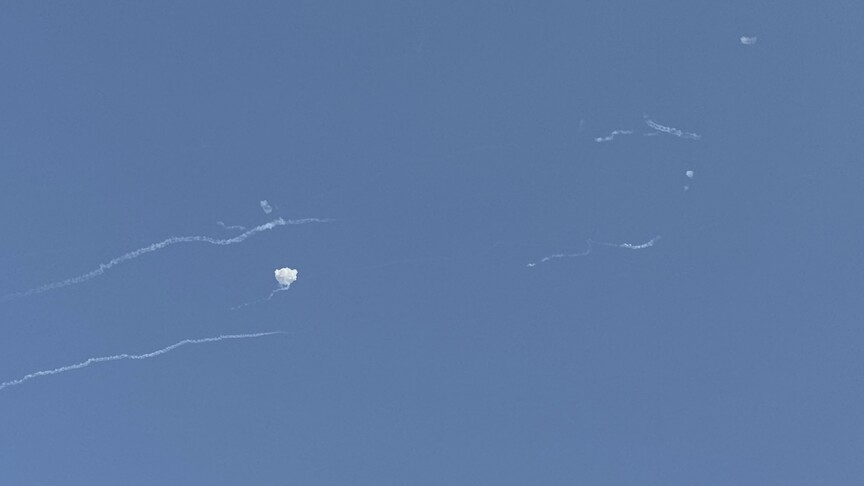
Jordanian air defenses intercept Iranian missiles as sirens sound over Amman. — Source: anadolu
Regional Responses from Gulf States
Kuwait and Bahrain activated air defense systems Sunday as they warned of incoming Iranian drones and missiles. [4] Authorities in Bahrain and Kuwait said they intercepted missiles and drones launched from Iran. [1] The United Arab Emirates issued a warning against further escalation as Iran threatened to expand its campaign. [4] Tehran has responded with attacks on U.S. allies in the region. [4]
The risk of a wider war in the Middle East is growing after these interceptions. [2] Kuwait, Bahrain respond to Iranian attacks amid growing escalation. [1] The UAE warning came alongside Iran's statements about expanding its campaign. [4] These Gulf state actions followed the pattern of responses seen in Jordan and Israel. [2]
Collapse of US-Iran Ceasefire Agreement
A Memorandum of Understanding signed by Washington and Tehran in June was intended to halt attacks, restore commercial shipping through the Strait of Hormuz, and provide a 60-day window for broader negotiations over Iran's nuclear program and regional security. [4] But the fragile diplomatic pause unraveled amid mutual accusations of violations, renewed targeting of commercial shipping, and a swift return to a cycle of military strikes and retaliation. [4] The attack represents one of the deadliest incidents involving U.S. forces since active combat resumed following the collapse of a U.S.-Iran ceasefire agreement. [4]
The June MOU was intended to act as a temporary arrangement to stop active fighting and open a window for diplomacy. [4] Under the agreement, both nations committed to halting military operations and taking immediate steps to reopen vital maritime trade routes. [4] However, military analysts warned from the beginning that the framework failed to address the core friction points between the two nations. [4] The collapse of the agreement removed the primary diplomatic mechanism keeping the conflict contained, paving the way for the renewed military escalation now unfolding across the region. [4]
What to watch next: Continued exchanges between U.S. forces and Iranian Revolutionary Guard Corps positions, alongside further responses from Gulf states to incoming missiles and drones.