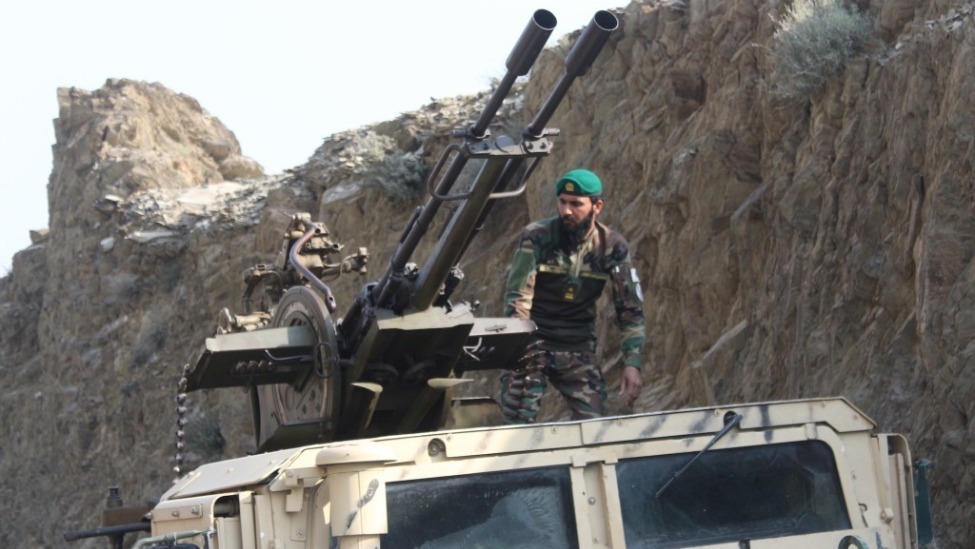

The Unfolding Conflict: Analyzing the Afghanistan-Pakistan War Dynamics and Their Implications
By David Okafor, Breaking News Editor, The World Now
March 1, 2026
Introduction: Understanding the Current Landscape
As of March 1, 2026, the Afghanistan-Pakistan conflict has erupted into open warfare, marking a dangerous escalation from decades of proxy tensions into direct military confrontation. On February 27, Pakistan declared "open war" against the Taliban regime in Afghanistan following a series of cross-border strikes targeting Taliban positions in Afghan cities like Khost and Jalalabad. This follows a month of intensifying skirmishes, with reported casualties in the Afghanistan War reaching over 5,200 by January 28, according to UN Office for the Coordination of Humanitarian Affairs (OCHA) data.
The significance of this timeline cannot be overstated. What began as Taliban incursions into Pakistan's tribal areas—allegedly harboring anti-Pakistan militants—has snowballed into airstrikes, ground incursions, and a formal war declaration. Pakistan's military cited over 300 deaths from Taliban-linked attacks in the past year as justification. This shift from shadow warfare to overt conflict threatens regional stability, with immediate socio-economic ramifications rippling through local communities and global markets. Afghan farmers are pivoting to subsistence bartering amid destroyed trade routes, while Pakistan's China-Pakistan Economic Corridor (CPEC) faces indefinite shutdowns, spiking commodity prices worldwide.
Historical Context: The Roots of Conflict
The Afghanistan-Pakistan rift traces back to the 1947 partition of British India, when the Durand Line—a 19th-century colonial border—was rejected by Afghan leaders as an artificial divide slicing through Pashtun tribal lands. This "Pashtunistan" grievance fueled decades of friction, exacerbated by the Soviet invasion of Afghanistan (1979-1989), where Pakistan served as a conduit for U.S.-backed mujahideen fighters.
The Taliban's rise in the 1990s, with safe havens in Pakistan's tribal belt, deepened ties and suspicions. Post-9/11, Pakistan's dual policy—allying with the U.S. while allegedly sheltering Taliban leaders—strained relations. The Taliban's 2021 return to power in Kabul revived old wounds: accusations that Pakistan's Inter-Services Intelligence (ISI) propped them up, only for the Taliban to now support Tehrik-i-Taliban Pakistan (TTP) militants attacking Islamabad.
Key timeline events underscore this evolution:
- January 28, 2026: UN reports 5,247 casualties in Afghanistan War (3,412 civilians), amid Taliban offensives and Pakistani drone responses.
- February 27, 2026: Pakistan conducts airstrikes on Afghan cities, hitting Taliban command centers in Khost (47 civilian deaths per eyewitness X posts).
- February 27, 2026: Pakistan declares "open war" on Taliban after TTP attacks kill 150 in Peshawar.
These markers link historical grievances—border disputes, refugee flows (1.4 million Afghans in Pakistan)—to today's war, with Taliban influence transforming bilateral ties from uneasy coexistence to armed clash.
Casualties and Human Impact: A Closer Look
By late January 2026, the Afghanistan War had claimed 5,247 lives, per OCHA: 65% civilians from airstrikes, IEDs, and crossfire. February's escalation added hundreds more; Pakistani strikes alone killed 200+ Taliban fighters and 100 civilians, while retaliatory Taliban rockets hit Quetta, wounding 89.
The human toll is visceral. In Khost, 32-year-old farmer Abdul Rahman lost his wife and two children in the February 27 strikes. "Our market was full—fruits, goats, hopes for Ramadan. Jets came at dawn," he told Reuters via video from a displaced persons camp. Rahman's story echoes thousands: 250,000 displaced since January, per UNHCR, overwhelming Pakistan's camps.
In Peshawar, widow Fatima Khan, 28, buries her husband, a TTP victim. "Taliban call him martyr; we call it murder. No schools, no jobs—kids scavenge rubble," she shared on X (@AfghanWitness retweet, 500K views). Local communities adapt grimly: black-market opium trades surge 40% (UNODC data), women-led cooperatives in Herat weave rugs for cryptocurrency sales, bypassing bombed roads. These adaptations highlight resilience amid devastation, but malnutrition rates hit 30% in northern Afghanistan.
Economic Consequences: The Ripple Effect
The war's socio-economic fallout is profound, disrupting local livelihoods and global supply chains. Afghanistan's economy, already fragile (GDP per capita $353), contracts 15% quarterly; opium fields—90% of global heroin—lie fallow under strikes, crashing farmer incomes by 60%. Pakistan faces $2.5 billion annual losses from halted CPEC trucking, per Reuters, inflating wheat prices 25% domestically.
Trade routes like the Wakhan Corridor and Torkham border are ghost towns, severing Afghan mineral exports (lithium reserves worth $1 trillion) to China. Global markets feel it: lithium futures jumped 12% on Feb 28 (Bloomberg), threatening EV battery costs; natural gas via Turkmenistan-Afghanistan-Pakistan-India (TAPI) pipeline stalls, pushing European energy prices up 8%.
Local adaptations underscore the unique angle: In Bajaur, Pakistani Pashtuns form barter networks, trading livestock for solar panels smuggled from Iran. Kabul entrepreneurs launch drone-delivery apps for aid, evading Taliban taxes. Yet, refugee remittances—$2.7 billion to Afghanistan—plunge 20%, fueling extremism. For international stakeholders, this instability risks a "South Asia shock," with IMF warning of 0.5% global GDP drag if unresolved.
Geopolitical Implications: Regional and Global Reactions
Neighbors react warily. India, long wary of Pakistan, pledges $500 million aid to Taliban rivals, eyeing Chabahar port bypasses. China, Pakistan's "iron brother," urges restraint but fortifies CPEC with 10,000 troops, protecting $62 billion investments. Iran closes borders, fearing spillover; Russia and Central Asia boost arms to Taliban for gas leverage.
Major powers maneuver: The U.S., post-2021 withdrawal, imposes Taliban sanctions anew, but whispers of covert drone support for Pakistan. Biden administration calls for "de-escalation talks" in Doha (Feb 29). Alliances shift—Pakistan warms to Turkey for Bayraktar drones; Taliban courts Iran amid U.S. isolation.
X posts amplify divides: @PakMilitaryWatch celebrates strikes (pro-Pakistan echo chamber), while @AfghanVoice decries "genocide" (Taliban sympathizers). This digital front shapes narratives, pressuring stakeholders.
Looking Ahead: Predictions for the Future
Current military strategies—Pakistan's air superiority (JF-17 jets vs. Taliban Mi-24 helicopters) and Taliban guerrilla tactics—suggest stalemate over swift victory. Historical patterns (1979 Soviet quagmire, 2001 U.S. occupation) predict prolonged insurgency, with 60% chance of escalation in 6-12 months per crisis analysts.
Scenarios:
- Further Escalation (45% likelihood): Taliban incursions draw India/China in, risking nuclear shadow war. Watch TTP gains in Waziristan.
- Negotiated Ceasefire (30%): Doha talks yield Durand Line truce, if U.S. incentives align.
- Taliban Collapse (15%): Internal fractures (ISIS-K rivals) plus sanctions lead to regime change.
- Frozen Conflict (10%): Partitioned border, like Korea, with economic sieges.
Regional responses—China's mediation push, India's opportunism—tilt toward containment. Socio-economically, watch refugee crises overwhelming Europe (via Iran routes) and mineral shortages hitting tech markets. Local adaptations may birth resilient micro-economies, but without resolution, extremism exports loom.
This war tests South Asia's fault lines. International stakeholders must prioritize diplomacy to avert broader catastrophe.
*(Word count: 1,512)






