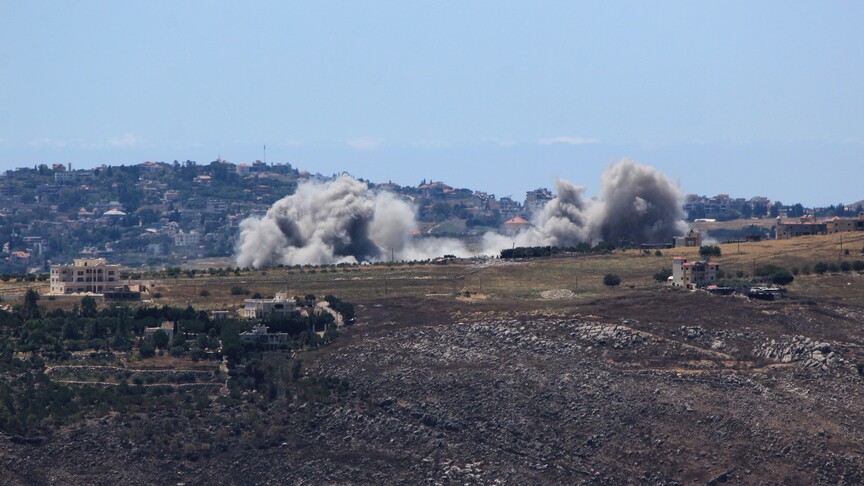
Strike in Afghanistan: Four Killed in Pakistan's Cross-Border Attacks
Cross-border strikes by Pakistan against Afghanistan have killed at least four people and injured dozens, putting a recent ceasefire at risk.[1] In a significant escalation, mortar and rocket attacks launched by Pakistan resulted in four deaths and 70 injuries, according to the Taliban government.[2][3] These incidents mark the first major violence since the two nations agreed to a ceasefire during peace talks last month, raising concerns over the stability of ongoing diplomatic efforts.[1]
Overview of the Attacks
The recent cross-border strikes represent a sharp turn in Pakistan-Afghanistan relations, with reports detailing mortar and rocket fire originating from Pakistan targeting Afghan territory.[2][3] According to statements from the Taliban government, these attacks occurred on Monday, marking a breach in the relative calm that had prevailed following last month's ceasefire agreement.[2] News outlets have highlighted that such actions are the first of their kind since the peace talks, where both sides committed to halting violence.[1] This overview underscores the immediate context of renewed hostilities, as border areas have now become focal points of tension once again.[3]
The strikes come amid a backdrop of longstanding disputes along the shared border, though the specifics of this incident point to deliberate military engagements using conventional artillery.[2] Pakistani forces launched the mortar and rocket barrages, which the Taliban government has publicly attributed directly to their neighbor.[3] This development has drawn international attention, with media coverage emphasizing the potential for wider conflict.[1] The timing of these attacks, just weeks after the ceasefire, suggests underlying frictions that the peace process has yet to fully address.[1]
Furthermore, the nature of the assaults—employing mortars and rockets—indicates a level of coordination typical of border skirmishes but unprecedented in scale since the agreement.[2] Reports from multiple sources confirm the Afghan side's casualty figures and the attribution to Pakistan, providing a clear picture of the event's scope.[3] As the first post-ceasefire incidents, they serve as a stark reminder of the volatility in the region, where even temporary halts in fighting can unravel quickly.[1]
Casualties and Specific Incidents
Casualties from the Pakistani attacks have been severe, with the Taliban government reporting four people killed and 70 others injured in mortar and rocket strikes.[2][3] Among the specific incidents, missile strikes targeted Kunar province, where at least three people were killed and 45 injured.[4] These figures highlight the human toll of the violence, concentrated in border regions vulnerable to such cross-border fire.[2]
In Kunar, the missile impacts struck areas in and around the province, exacerbating the overall injury count as tensions boiled over.[4] The Taliban's official tally encompasses these events, painting a picture of widespread harm from a series of coordinated attacks on Monday.[3] Sources indicate that dozens were affected in Kunar alone, contributing significantly to the total of 70 injuries reported nationwide.[4][2]
The precision of missile strikes in Kunar underscores the targeted nature of some assaults, though the broader mortar and rocket barrages suggest a more indiscriminate approach in other areas.[4][3] Eyewitness accounts and official statements have not detailed individual victims, but the aggregate numbers reflect a substantial impact on civilian and possibly military populations near the border.[2] This level of casualties—four confirmed deaths—amplifies the urgency of the situation, as medical responses strain under the influx of wounded.[3]
Detailed reporting on the Kunar incident notes that the strikes hit parts of the province, leading to immediate reports of three fatalities and 45 injuries.[4] Combined with other mortar and rocket actions, the events form a composite of violence that has left communities reeling.[2] The Taliban government's prompt disclosure of these numbers serves to rally domestic support while pressuring international observers to address the aggression.[3]
Ceasefire Background
The ceasefire agreement between Pakistan and Afghanistan emerged from peace talks held last month, where both parties pledged to halt cross-border violence.[1] This marked a pivotal moment in their strained relations, offering a fragile pause in hostilities that had persisted for years.[1] The strikes now represent the first violation since that commitment, testing the durability of the diplomatic breakthrough.[1]
Contextually, the ceasefire was a hard-won concession amid ongoing border disputes, with both sides reporting previous incidents that nearly derailed negotiations.[1] By agreeing to stop the violence, Pakistan and Afghanistan signaled a willingness to pursue dialogue over confrontation, though underlying issues like territorial claims remained unresolved.[1] The recent attacks shatter this nascent calm, occurring mere weeks after the talks concluded.[1]
Media analysis frames the ceasefire as a temporary measure, dependent on mutual restraint, which has now been compromised.[1] The peace talks themselves were a rare instance of direct engagement, highlighting the potential for resolution but also the ease with which progress can be undone.[1] With the strikes as the inaugural breach, the agreement's framework faces immediate scrutiny, as reported in coverage of the events.[1]
Impact on Peace Efforts
These cross-border attacks threaten to derail fragile peace talks between Pakistan and Afghanistan, as fighting has erupted anew.[3] The Taliban government's reports of casualties have intensified calls for accountability, potentially stalling momentum from last month's ceasefire.[3] Observers note that such escalations could harden positions on both sides, complicating future negotiations.[3]
The strikes' timing—directly following the ceasefire—amplifies their disruptive potential, with media outlets warning of a full breakdown in dialogue.[3] Peace efforts, already tenuous, now confront the reality of renewed mortar and rocket fire, which undermines trust built during the talks.[3] The four deaths and 70 injuries serve as stark evidence of the ceasefire's vulnerability, prompting questions about enforcement mechanisms.[3]
In broader terms, the violence risks polarizing stakeholders, as each side attributes blame and rallies support.[3] Coverage emphasizes that derailing the talks could lead to prolonged instability, echoing patterns from prior conflicts.[3] Diplomatic channels may now prioritize de-escalation, but the immediate impact is a setback for the peace process.[3]
Escalating Border Tensions
Border tensions between Pakistan and Afghanistan continue to rise, as evidenced by the recent missile strikes in Kunar province that killed three and injured 45.[4] Cross-border incidents like these signal a pattern of escalating hostilities, with reports confirming the strikes' role in heightening friction.[4] The province has become a hotspot, where Pakistani actions have directly fueled the upward trajectory of conflicts.[4]
Sources describe the Kunar attacks as part of ongoing escalations, with missile fire targeting sensitive areas and contributing to broader instability.[4] Tensions have been building, and Monday's events represent a critical intensification, as cross-border dynamics grow more volatile.[4] The injury figures from Kunar—45 in total—illustrate the mounting pressure on border communities amid these rising strains.[4]
This escalation in strike Afghanistan contexts underscores the challenges of maintaining security along the Durand Line, where such incidents proliferate.[4] Repeated references to rising tensions highlight a cycle that the ceasefire briefly interrupted but now threatens to accelerate.[4] The strikes' aftermath leaves the border region on edge, with potential for further retaliatory actions.[4]
What to watch next: Further developments in border tensions could determine whether the ceasefire holds or collapses entirely, as additional strikes risk fully derailing the fragile peace talks.[1][3][4]