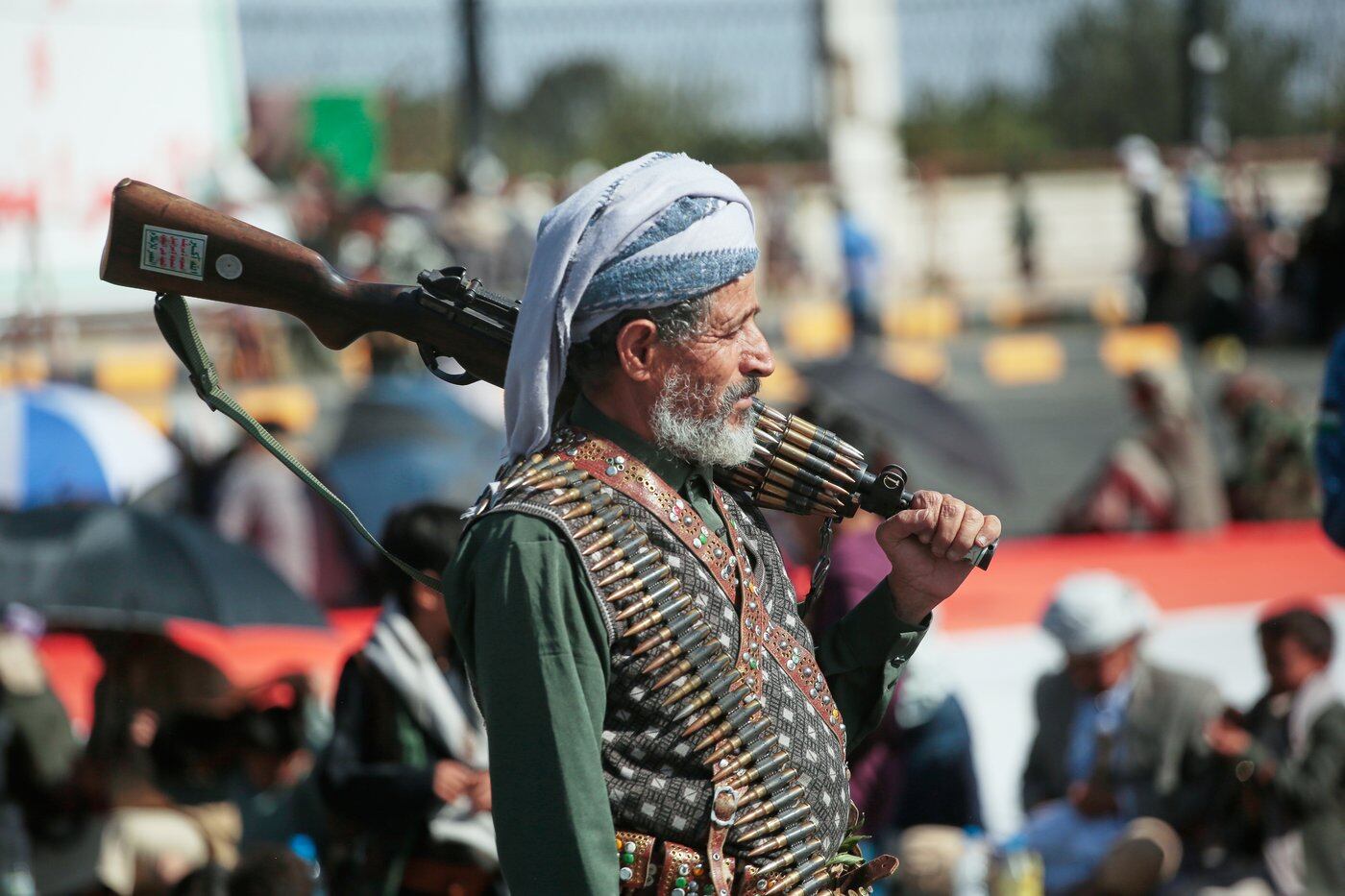

Taiz Siege in One of the Most Dangerous Countries Places Yemen Civilians at Grave Risk as Houthis Kill Two Teenage Girls
Iran-backed Houthi rebels struck a residential area in Yemen’s third-largest city of Taiz, killing two teenage girls, as the UN warned the group’s siege has placed civilians at grave risk amid an escalating civil war that has become a widening front in the Iran conflict in one of the most dangerous countries. The Houthis have largely encircled Taiz, cutting it off from most supply routes and leaving many residents without food and other necessities as prices soar [1].
Houthi Strike Kills Two Teenage Girls in Taiz in One of the Most Dangerous Countries
Heavy fighting between the Houthis and Yemeni government forces caused extensive damage in a densely populated residential area of Taiz [1]. The Houthis have largely encircled Taiz, cutting it off from most supply routes and putting civilians at “grave risk,” UN human rights chief Volker Turk said [1]. The UN says the siege of the strategically important city in southwestern Yemen has left many residents without food and other necessities as prices soar [1]. Resident Zainab Ali said she was away when the strike occurred but returned to find her home had been destroyed [1]. “We are a family of orphans, and we do not know what to do,” she said [1]. “Humanitarian aid must be immediately allowed to enter the city and its passage must be facilitated. Civilians wishing to leave must be allowed to do so freely and safely,” Turk said [1]. He urged the Houthis and Saudi-backed government forces to avoid using explosive weapons in areas where they could hit civilians and civilian infrastructure [1].
Deadly Attack on Military Training Camp
The attack on Taiz came a day after a Houthi strike on a government military camp killed 73 recruits, the deadliest strike since the resurgence of the conflict over the summer, according to a senior Yemeni government official [1]. The Monday strike on the al-Alam military camp hit while recruits were lining up in formation for a training session [1]. More than 200 recruits were wounded in the attack [1]. Videos from the area circulated online and analyzed by AP showed many motionless bodies lying on the sandy ground of the camp [1]. The recruits were all aged between 18 and 20 [1]. They were being trained to provide security in the province and not for combat operations, Shabwa governor Awad Ibn al-Wazir told AP [1].
Yemeni Army Claims Major Gains Against Houthis
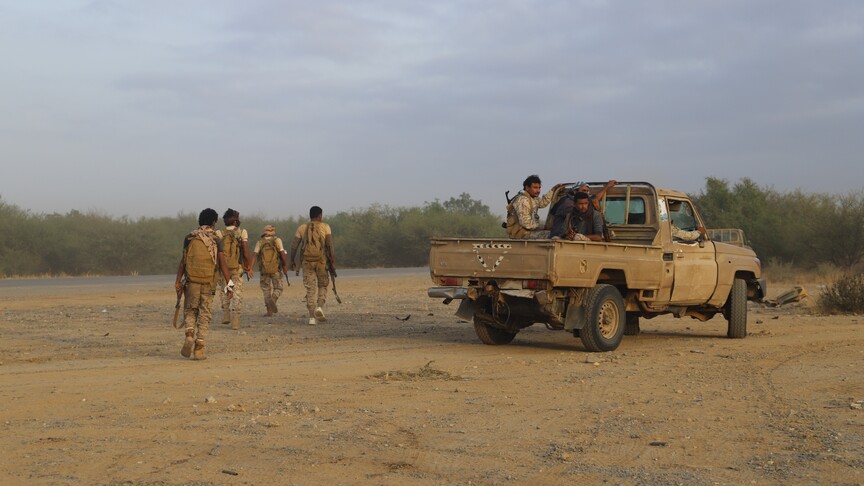
Yemen Silahlı Kuvvetleri yaptığı açıklamada, “Yemen Şafağı” operasyonu kapsamında son 24 saat içinde gerçekleştirilen 744 hassas ve doğrudan hedef alma operasyonunda Husi milislerinden 200 kişinin öldürüldüğünü, 90 askeri araç, zırhlı ve teçhizatın imha edildiğini ve kullanılamaz hale getirildiğini bildirdi [2]. Yemeni army says over 740 attacks ‘neutralized’ 200 Houthis in 24 hours [3]. Military says operations destroyed, damaged 90 vehicles, military assets [3]. Ordu Sözcüsü Albay Macid El-Nuzeyli, “X” sosyal medya platformundan yaptığı paylaşımda, Yemen güçlerinin savaş uçakları, insansız hava araçları (İHA), saha topçuları, roketatarlar ve keskin nişancı birliklerini kullanarak “Yemen Şafağı” operasyonu kapsamındaki taarruz faaliyetlerini geliştirmeyi sürdürdüğünü belirtti [2]. El-Nuzeyli; komuta kontrol merkezlerinin, ateş mevzilerinin, korunaklı noktaların, yedek kuvvet toplanma alanlarının, milis takviyelerinin ve ikmal araçlarının hedef alındığını kaydetti [2]. El-Nuzeyli, ordu birliklerinin Taiz’deki çatışma baskısını artırdığını ve bu durumun Husi milislerini geri çekilmeye zorladığını ifade etti [2].
International Military Support for Saudi Arabia
Britain said on Tuesday that it would expand its military support for Saudi Arabia to include “defensive” air patrols by Royal Air Force jets [1]. U.K. Defence Secretary Wes Streeting said the British government would expand its support to Saudi Arabia to include defensive patrols to protect Saudi cities from attacks [1]. It means British planes would attack missiles or drones in the air, but would not strike Houthi targets on the ground [1]. Britain had already offered to help with in-air refuelling of Saudi planes [1]. The Egyptian government also will deploy air defence systems and aircraft to help repel missiles and drones fired toward Saudi Arabia but won’t deploy ground troops to Yemen, according to a regional official who was briefed on the matter [1]. “Saudi Arabia is in a very difficult position,” but the United States is not prepared to send troops to help, Tom Barrack, the U.S. envoy to Syria and Iraq, told the Global Security Forum in Doha, Qatar [1]. Barrack said U.S. President Donald Trump “has been clear that he supports Saudi Arabia, and the backing that they need logistically we’ll supply, but America getting involved in a ground kinetic battle somewhere else seems fruitless” [1].
Broader Conflict and Humanitarian Impact
The conflict has intensified since forces from the internationally recognized government and Saudi-led coalition launched airstrikes on Houthi-held Sanaa International Airport in July, shattering a 2022 ceasefire deal that largely stopped fighting in the country’s civil war [1]. Yemen has become a widening front in the Iran war that began in February -- and the Houthis have increasingly launched attacks on Saudi Arabia because it supports Yemen’s internationally recognized government [1]. Yemen plunged into civil war in 2014, when the Houthis seized Sanaa and much of northern Yemen and forced the government into exile [1]. A Saudi-led coalition intervened the following year in an attempt to restore the government to power [1]. The conflict killed more than 150,000 people and created one of the world’s worst humanitarian disasters [1]. Houthi fighters began advancing again on Taiz last month, after capturing the port city of Mokha, an area vital to controlling shipping through the Red Sea [1]. The Houthis have besieged Taiz as part of their monthslong offensive, repeatedly targeting Yemeni government forces with missiles and artillery [1]. A strategic gateway to southern Yemen, Taiz has been a focal point of fighting since the civil war began more than a decade ago; it is also one of Yemen’s most important historic and cultural centres [1].
Maritime Threats in the Strait of Hormuz
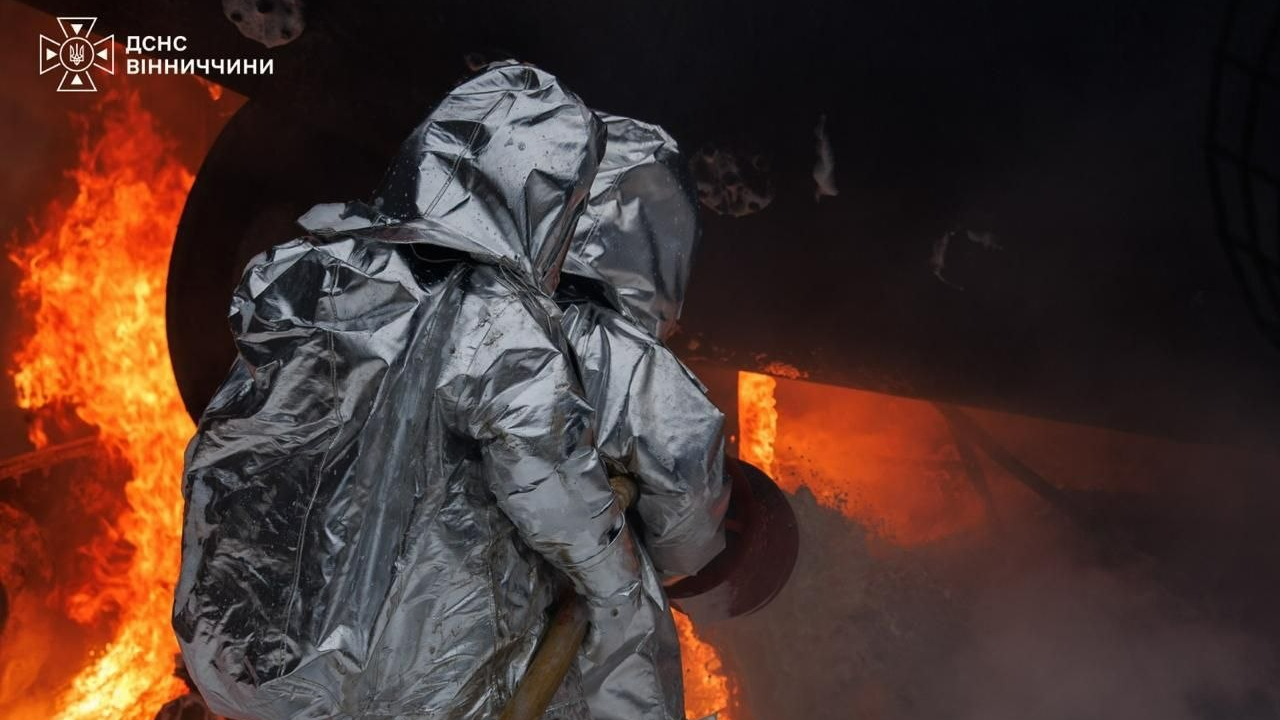
Sea mines have resurfaced as a threat in the Strait of Hormuz, where Iran claimed Oct.17 that two oil tankers caught fire after striking the explosives [4]. This came as the International Maritime Organization (IMO) warned that sea mines pose a serious threat to vessels navigating the strategic waterway and while Tehran continues to maintain its own unauthorized shipping corridor inside its territorial waters [4]. "The traffic separation scheme, the information that we have is that they still have mines. And of course, whilst the conflict is ongoing, it's very difficult for us to use third parties to verify that it is clear of these hazards," IMO Secretary-General Arsenio Dominguez told Fox News Digital [4]. Iran's Islamic Revolutionary Guard Corps (IRGC) navy said Saturday that two oil tankers caught fire after striking naval mines while crossing the Strait of Hormuz, Reuters reported, citing Iran's official Islamic Republic News Agency (IRNA) [4]. State media also said both tankers were carrying about 2 million barrels of crude oil, according to Reuters [4]. IRNA also reported that the vessels had switched off their positioning and radar systems and attempted to use a route through the strategic waterway that Iran had not authorized [4].
What to watch next: The matter of Egyptian air defence systems still requires parliamentary approval [1]. The route Iran proposed is not provided with an official confirmation or a decision of the organization [4].