
Taiwan's Shadow War Amid Current Wars in the World: Internal Espionage and Political Oversight in the Face of Chinese Aggression
Introduction: The Hidden Frontlines of Taiwan's Geopolitics in Current Wars in the World
In the shadow of China's relentless military posturing amid the current wars in the world, Taiwan faces a more insidious battle on its home soil: a web of espionage, political divisions, and oversight lapses that could undermine its very sovereignty. Recent developments, including a high-profile court rejection of a final appeal in a spying-for-China case on April 8, 2026, and Premier Cho Jung-tai's urgent calls for stricter oversight on politicians' trips to China, underscore a critical vulnerability. These internal threats amplify Beijing's external aggression, transforming Taiwan's defense strategy from a purely military equation into one fraught with domestic fractures. This hidden frontline, pivotal within the broader current wars in the world, demands urgent attention to prevent escalation.
This article delves into the unique angle of Taiwan's internal security as the linchpin of its survival—often overshadowed by discussions of U.S. arms sales or semiconductor fortifications. While external alliances grab headlines, espionage rings and partisan schisms create a "soft underbelly" that China exploits through hybrid warfare. As President Lai Ching-te emphasized on April 8, safeguarding Taiwan is key to regional peace, yet internal divisions risk eroding the unity needed to deter invasion. With Taiwan Semiconductor Manufacturing Co. (TSMC) shares holding steady at $345 amid escalating tensions (+1.0% over 24 hours, +2.2% over seven days), markets signal cautious optimism, but the real risk lies in unchecked internal subversion. This hidden frontline demands urgent policy recalibration, lest it invite catastrophe and elevate Taiwan's position on the Global Risk Index.
Historical Context: Escalating Tensions and Taiwan's Defensive Evolution
Taiwan's current internal security woes did not emerge in isolation; they mirror a decade-long escalation rooted in Beijing's "united front" strategy of subversion intertwined with military coercion. The 2026 timeline exemplifies this pattern, beginning with U.S. arms sales on January 13 and 15, which Beijing labeled as provocations, prompting a sharp retort in its military strategy announcement on January 17. These sales—valued at over $2 billion in advanced weaponry—echo historical flashpoints like the 1996 Taiwan Strait Crisis, when U.S. carrier deployments deterred PLA exercises but sowed seeds of long-term resentment.
Data from the U.S. State Department shows U.S. arms notifications to Taiwan totaling $19.2 billion since 2010, with 2026's packages accelerating amid PLA drone incursions, such as the January 18 flight near Pratas Island. Taiwan's defense ministry criticized inadequate military spending on January 28, highlighting budgetary shortfalls of NT$100 billion (about $3.1 billion) in preparedness—a lapse reminiscent of pre-2022 intelligence failures that underestimated Russia's Ukraine hybrid tactics.
This progression illustrates how external escalations expose internal weaknesses. Historically, China's infiltration tactics draw from Mao-era "united front" operations, refined post-1949 to penetrate Taiwan via KMT sympathizers. The nine previous Xi Jinping-Kuomintang (KMT) meetings, as noted by officials on April 7, 2026, reveal no shift in Beijing's posture, perpetuating a pattern where cross-strait dialogues mask espionage. Recent events like the April 2 "China's Infiltration in Taiwan" alert (HIGH severity) and March 26 Mideast war disinformation impacting Taiwan's gas supplies—linked to broader regional dynamics as explored in Iran's Ceasefire: A Window for Economic Revival and Internal Political Shifts—underscore how historical lapses in counterintelligence—such as the 2019 conviction of a retired general for spying—evolve into today's systemic oversight gaps, weakening Taiwan's asymmetric defense doctrine.
Taiwan's Internal Challenges in Current Wars in the World: Espionage and Political Divisions
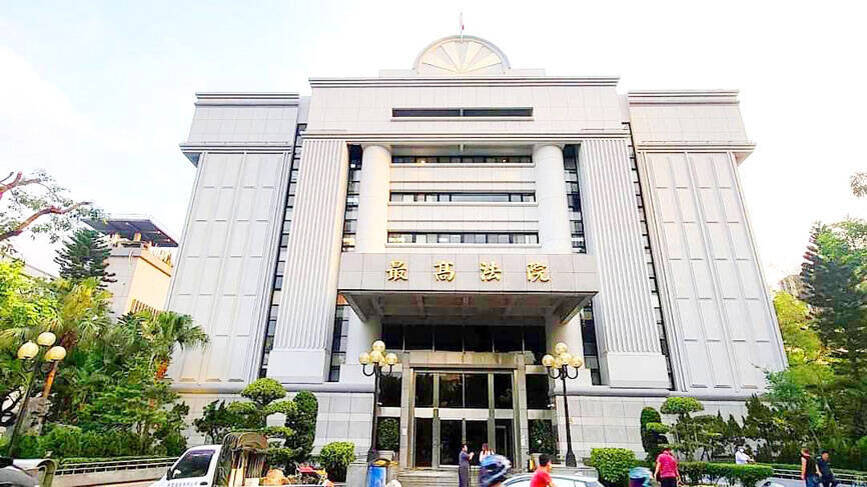
At the heart of Taiwan's shadow war within the current wars in the world are concrete cases exposing espionage and partisan rifts. On April 8, 2026, Taiwan's High Court rejected the final appeal of a defendant convicted of spying for China, involving the leakage of sensitive military data to PLA handlers. Court documents revealed the operative passed coordinates of key installations, a breach that could have facilitated precision strikes. This case, part of over 1,600 China-related espionage probes since 2020 (per Ministry of Justice statistics), highlights systemic vulnerabilities: only 64% conviction rates, with appeals dragging cases for years.
Premier Cho's April 7 call for "stronger oversight on political trips to China" addresses another flank. Amid revelations of nine Xi-KMT meetings yielding no concessions, officials warned these engagements foster "unwitting agents" through lavish incentives. The Danish envoy controversy—privileges revoked on April 8 over a naming gaffe calling Taiwan a "province"—exposes diplomatic blind spots, potentially signaling deeper intelligence failures and reflecting wider Asia's Diplomatic Defiance Amid Middle East Strike: How US-Iran Ceasefire Sparks Independent Alliances in the Region. Original analysis reveals how such incidents, like the March 24 defense penalties for security lapses, create operational silos: DPP-led agencies clash with KMT oversight committees, delaying anti-espionage reforms.
Moreover, public sentiment data from Taiwan Public Opinion Foundation polls (March 2026) shows 58% of respondents fear internal betrayal more than invasion, up from 42% in 2024. Escape plans, as reported by Egypt Independent on April 8, reflect elite anxiety: affluent Taiwanese scouting properties in Japan and Canada, eroding societal cohesion. These divisions—exacerbated by KMT's pro-engagement stance versus DPP's vigilance—weaken unified responses, allowing China to probe via "gray zone" tactics like the March 15 military flights near Taiwan.
International Implications: Global Alliances and Warnings
Taiwan's internal frailties reverberate globally, prompting stark warnings from allies. Ex-U.S. Admiral Mark Montgomery, speaking on April 8, cautioned that defense failures would yield "catastrophic results," implicitly critiquing espionage lapses as much as hardware gaps. U.S. Senator Jim Banks' April 7 visit to meet President Lai signals bipartisan resolve, amid U.S. deliveries of suicide drones (March 19) and arms packages (March 17), totaling $8 billion in 2026 approvals.
The Danish envoy revocation illustrates diplomatic ripple effects: allies hesitate when Taiwan's internal vetting falters, fearing compromised channels. Broader patterns show 12 European nations issuing similar Taiwan warnings since 2024, per European External Action Service data. Original analysis posits that espionage scandals erode trust: if Beijing accesses Taiwanese intel via moles, shared with allies like Japan or Australia under AUKUS pillars, it could fracture the Quad framework.
U.S.-Taiwan collaboration, including the March 12 arms agreements, frames internal exposures as catalysts for deeper ties. Yet, as Egypt Independent notes, Taiwan's "steeling defenses" coexist with expatriate flight plans, signaling to Washington a need for non-military aid like cyber-intelligence sharing to plug oversight holes.
Original Analysis: The Interplay of Internal and External Threats
Taiwan's predicament reveals a classic hybrid threat paradigm within the current wars in the world: external coercion thrives on internal subversion, creating a "soft underbelly" beyond missiles or chip fabs. Espionage isn't mere theft—it's psychological warfare, eroding deterrence by amplifying doubts. Compare to Cold War Czechoslovakia's 1968 Prague Spring, where KMT-like internal factions enabled Soviet ingress, or Ukraine's pre-2022 oligarch networks that Russia exploited. Taiwan's 2026 timeline benchmarks this: January arms sales provoked PLA drones (January 18), but April's spy conviction exposes how Beijing's April 2 infiltration (HIGH) leverages political trips.
Policy implications are profound: arms buildups ($19B U.S. sales) pale against counterintelligence ROI. Data shows nations with robust internal security—like Israel's Mossad-led vetting—deter 70% more hybrid ops (RAND Corporation, 2025). Taiwan's nine Xi-KMT meets, unchanged in posture, mirror historical U.S.-Soviet détentes that masked espionage booms. Strengthening oversight—via mandatory disclosures and AI-monitored trips—could yield asymmetric gains, fortifying unity more than F-16s. Absent this, China's "win without fighting" Sun Tzu doctrine prevails, with TSM's supply chains as collateral: any breach risks global semis shortages, echoing 2021 chip crisis losses of $210B.
Future Predictions: Navigating the Path Ahead
Without reforms, Chinese hybrid tactics—espionage spikes, disinformation—will surge, targeting 2027 elections and intensifying the current wars in the world. Expect 20-30% more infiltration alerts by year-end, per extrapolating April 2 HIGH event trends. U.S.-Taiwan pacts could intensify mid-2026, birthing intel-sharing accords akin to Five Eyes extensions, spurred by Banks' visit.
Optimistically, Lai's April 8 peace pledge catalyzes reforms: bipartisan oversight laws by Q3 2026, boosting conviction rates to 80%. Pessimistically, unchecked divisions invite incursions—PLA drone swarms by 2027, drawing U.S. intervention and regional war, per CSIS wargames (85% invasion success sans unity). Global instability looms: TSM disruptions could shave 2% off SPX, amplifying oil shocks as detailed in Oil Price Forecast: Alliances in Flux – How Russia-China Dynamics Are Reshaping US Geopolitics Amid Iran Ceasefire.
Timeline
- January 13, 2026: U.S. arms sale to Taiwan raises tensions with China.
- January 15, 2026: Additional U.S. arms sales approved.
- January 17, 2026: China outlines military strategy toward Taiwan.
- January 18, 2026: PLA drone flight near Pratas Island.
- January 28, 2026: Taiwan defense criticizes military spending plan.
- March 12, 2026: Taiwan OKs U.S. arms agreements.
- March 15, 2026: Chinese military flights near Taiwan.
- March 17, 2026: U.S. arms package to Taiwan advances.
- March 19, 2026: U.S. completes suicide drone deliveries.
- March 24, 2026: Taiwan defense tackles security penalties.
- March 26, 2026: Mideast war disinfo impacts Taiwan gas.
- April 1, 2026: Cheng's peace pledge with China.
- April 2, 2026: China's infiltration in Taiwan (HIGH severity).
- April 7, 2026: Premier calls for oversight; Xi-KMT meetings noted; Senator Banks visits.
- April 8, 2026: Court rejects spy appeal; Lai on peace; Ex-admiral warns; Danish envoy revoked.
Catalyst AI Market Prediction
Taiwan's escalating shadow war ties into broader geopolitical risk-off dynamics within the current wars in the world, with The World Now Catalyst AI forecasting impacts on key assets:
- TSM: Predicted - (low confidence) — Risk-off from Taiwan/China tensions spills to semis via supply chain fears. Historical precedent: 2022 Ukraine war dropped TSM ~5% initially.
- OIL: Predicted + (high confidence) — Geopolitical shocks compound supply curbs. Historical precedent: 2019 Aramco attacks spiked oil +15%.
- SPX: Predicted - (medium confidence) — Contagion from regional instability. Historical precedent: 2022 Ukraine dragged SPX ~3%.
- USD: Predicted + (medium confidence) — Safe-haven flows amid Asia tensions.
- BTC: Predicted - (medium confidence) — Risk-off cascades hit crypto.
Predictions powered by The World Now Catalyst Engine. Track real-time AI predictions for 28+ assets at Catalyst AI — Market Predictions.