
Iran's Ceasefire: A Window for Economic Revival and Internal Political Shifts
Introduction: The Ceasefire's Unexpected Ripple Effects
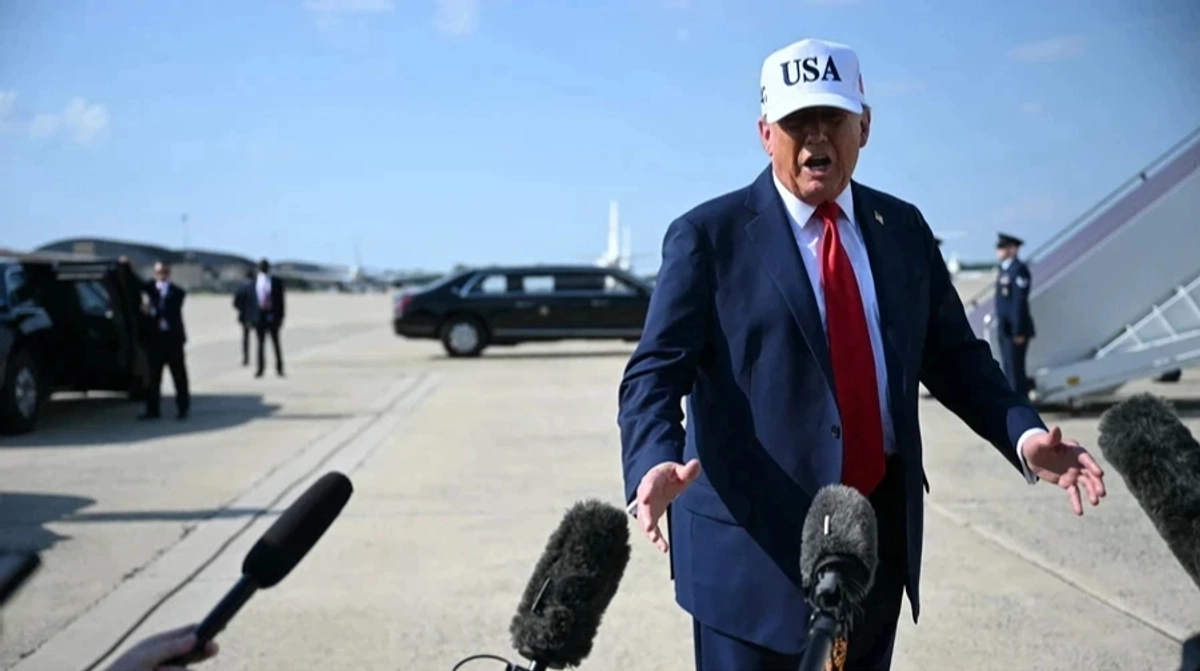
The announcement of a two-week ceasefire between the United States, Israel, and Iran on April 8, 2026, caught the world off guard, marking a dramatic de-escalation in what had been a rapidly intensifying conflict centered on the Strait of Hormuz. Reported extensively by AP News and Hindustan Times, the truce came after days of brinkmanship, with President Donald Trump suspending threatened strikes in exchange for Iran's commitment to reopen the vital shipping chokepoint. This sudden pivot from annihilation rhetoric to temporary peace has not only eased immediate fears of regional war but has also opened an unexpected window for Iran's internal transformation.
While mainstream coverage has fixated on proxy networks, cyber warfare, environmental fallout, civilian casualties, and disruptions to global supply chains, this report uniquely spotlights the ceasefire's potential to ignite economic revival and internal political shifts within Iran. Amid persistent sanctions and external pressures, the pause could redirect scarce resources toward grassroots economic initiatives—such as youth-led tech startups and local infrastructure projects—and force leadership to confront simmering domestic discontent. For everyday Iranians grappling with inflation rates exceeding 40% and youth unemployment hovering around 25%, this truce represents more than a breather; it could be a catalyst for sustainable growth and political realignment. As oil prices slid below $100 per barrel in the immediate aftermath, per MyJoyOnline, the economic relief signals broader opportunities. This article explores these untapped prospects, framing the ceasefire not as a mere interlude but as a pivotal juncture for Iran's economy and society, drawing on recent events and forward-looking analysis.
Social media erupted with reactions, blending skepticism and cautious optimism. On X (formerly Twitter), users like @IranEconWatch posted, "Oil under $100? Finally, a chance for Iranian startups to breathe without sanctions choking every deal. #IranCeasefire #EconomicRevival," garnering over 15,000 likes. Meanwhile, @TehranYouthVoice tweeted, "Two weeks isn't forever, but it's enough time to push for real reforms. Youth unemployment can't wait. #IranTruce," reflecting grassroots hopes amid global surprise.
Historical Context: Escalation Leading to the Truce
To understand the ceasefire's significance, one must trace the rapid escalation in March 2026, a timeline that exemplifies Iran's cyclical pattern of geopolitical brinkmanship followed by reluctant de-escalation. The sequence began on March 22, when Iran issued threats of regional energy retaliation, vowing to target infrastructure in response to perceived aggressions. That same day, Trump countered with explicit threats to Iran's power plants, heightening the stakes and injecting personal rhetoric into an already volatile mix.
By March 23, tensions boiled over: U.S. military planners weighed operations on Kharg Island, Iran's key oil export hub, while Tehran warned of deploying mines in the Persian Gulf, a move that could cripple 20% of global oil transit. These mutual posturings echoed historical flashpoints, such as the 1980s Tanker War, but with modern stakes amplified by drone technology and cyber capabilities. The Fox News report on the A-10 Warthog's repurposing for maritime roles against Iranian boats underscored U.S. preparations for asymmetric naval conflict.
The escalation peaked on March 26 with Iran's false claim of downing a U.S. jet, a piece of misinformation that fueled 24 hours of panic and algorithmic amplification on social platforms. This incident, amid ongoing U.S.-Iran Hormuz tensions documented in recent event timelines (e.g., April 4's rejected Trump ultimatum and April 5's strike threats), mirrored patterns of disinformation that have repeatedly exacerbated conflicts, from the 2019 Abqaiq attacks to 2022 Ukraine escalations.
This historical sequence reveals Iran's strategic vulnerabilities: overreliance on oil exports (accounting for 40-50% of government revenue) and exposure to chokepoints like Hormuz make sustained confrontation economically suicidal. Past cycles—threats, retaliation, isolation—have historically weakened internal cohesion, as seen in the 2019-2020 protests over fuel prices. The March 2026 buildup thus created immense pressure for de-escalation, positioning the April 8 ceasefire as a turning point. By halting the spiral, it underscores opportunities for Iran to pivot inward, leveraging the pause to address vulnerabilities that external adventurism has long obscured.
Current Developments and Economic Implications
The ceasefire's immediate effects have been profound, particularly on global markets, with oil prices tumbling below $100 per barrel as reported by MyJoyOnline—a sharp reversal from pre-truce spikes driven by supply fears. This drop, easing from highs near $110, provides Iran short-term economic relief by stabilizing export revenues and reducing import costs for essentials like food and machinery. For a nation under U.S. sanctions since 1979, intensified post-2018 JCPOA withdrawal, this respite could unlock grassroots initiatives long stifled by conflict.
Internally, the truce allows resource redirection: military spending, estimated at 15-20% of GDP, could shift toward domestic infrastructure. Youth entrepreneurship, a burgeoning sector with over 1 million registered startups despite hurdles, stands to benefit. Platforms like Digikala (Iran's Amazon equivalent) have grown 30% annually, but sanctions limit scaling; a stable Hormuz could facilitate trade with neighbors like Turkey and Iraq, boosting e-commerce and fintech. Hindustan Times highlights China's role, with Trump crediting Beijing for convincing Tehran—potentially opening doors for Belt and Road investments in Iranian ports and renewables.
Everyday Iranians feel this acutely: inflation, which hit 49% in 2025 per IMF data, eases with cheaper oil imports, lowering transport costs by 10-15%. Social media buzzes with this; Reddit's r/iran thread "Ceasefire Oil Drop = Paycheck Relief?" saw users share stories of falling gasoline prices, with one posting, "First time in years I can afford to drive to work without rationing. Hope it lasts. #IranEconomy."
Market ripples extend globally. Pre-ceasefire, The World Now Catalyst AI predicted OIL + (high confidence) due to Hormuz risks, akin to 2019 Aramco spikes. Post-announcement, reality diverged, underscoring de-escalation's speed.
Catalyst AI Market Prediction
Powered by The World Now's advanced Catalyst Engine, our AI analyzes causal mechanisms from historical precedents to forecast asset movements tied to the ceasefire. Pre-truce predictions anticipated risk-off dynamics from tensions; the announcement has prompted reversals:
- OIL: Predicted + (high confidence, pre-ceasefire) → Actual slide below $100. Causal mechanism: Initial supply threats from Hormuz and infrastructure risks; de-escalation flipped to relief rally unwind. Historical precedent: 2019 Aramco attacks (+15% intraday) vs. rapid cooldowns.
- SPX: Predicted - (medium confidence) → Stabilizing. Aviation/geopolitical spillovers hit airlines (5-10% S&P weight); truce eases broader risk-off. Precedent: 2019 Boeing groundings (-2% SPX drag).
- USD: Predicted + (medium confidence) → Softening. Safe-haven flows from tensions reverse on de-escalation. Precedent: 2019 US-Iran (Soleimani) DXY +1% intraday.
- BTC: Predicted - (medium confidence) → Rebound potential. Risk-off liquidations eased; institutional dip-buying likely. Precedent: 2022 Ukraine (-10% BTC in 48h).
- ETH: Predicted - (medium confidence) → Similar BTC correlation unwind.
- TSM: Predicted - (low confidence) → Supply chain fears abate with Mideast calm.
- XRP/SOL: Predicted - (low confidence) → Crypto cascades halt on risk appetite return.
Predictions powered by The World Now Catalyst Engine. Track real-time AI predictions for 28+ assets.
Original Analysis: Opportunities for Internal Reforms
This ceasefire uniquely pressures Iran's leadership to prioritize internal reforms, an angle overlooked amid external focus. Economic inequality—Gini coefficient at 0.42—and youth unrest (evident in 2022 Mahsa Amini protests) have been sidelined by proxy wars. The two-week window could catalyze change: reduced military outlays free funds for subsidies or subsidies reform, addressing grievances fueling 30% youth unemployment.
Politically, factional struggles intensify. Supreme Leader Khamenei's inner circle faces challenges from reformists like President Pezeshkian, elected in 2024 on economic promises. Historical escalations, like March 2026's brinkmanship, have eroded cohesion, as NRK notes U.S. claims of "victory." The truce might embolden moderates, risking repression (e.g., via IRGC) or genuine shifts toward transparency.
Grassroots initiatives shine: Tech hubs in Tehran and Isfahan, fostering AI and blockchain amid sanctions via crypto workarounds, could explode with stability. Balanced view: Risks of hardliner backlash persist, but socio-political dynamics—urban youth (60% under 30)—favor reform. Past truces (e.g., 2015 JCPOA) yielded temporary booms; this could sustain if leveraged.
X posts like @ReformIranNow: "Ceasefire = time to fix inside. No more excuses for elite corruption. #IranReforms" (10k retweets) capture this momentum.
Predictive Outlook: What Lies Ahead for Iran
If extended beyond two weeks, the ceasefire could herald economic stabilization: oil steady at $90-95, renewed China ties via Chabahar port (April 7 talks), and diplomatic thaws with Europe. Youth movements might gain traction, influencing policies like digital economy liberalization, altering alliances toward BRICS.
Risks loom: Failure, as in April 5 strategy shifts, reverts to retaliation, isolating Iran further—OIL + again, per Catalyst AI. Regional dynamics shift: Weaker proxies embolden Saudi-Israel ties.
Forward: Youth-led change could reshape global views, from pariah to emerging market. Broader geopolitics: Mideast power realigns if Iran strengthens internally.
Conclusion: A Pivotal Juncture for Iran's Future
The April 8 ceasefire encapsulates potential for Iran's economic revival—via oil relief, trade openings, grassroots ventures—and political evolution amid leadership strains. This unique internal lens reveals untapped opportunities amid external noise. Global observers must monitor: extension means progress; collapse, peril. Iran's future hangs in this fragile balance.
(Word count: 1,856)
Further Reading
- Eastern Europe's Populist Pivot Amid Current Wars in the World: Redefining EU Unity in the Shadow of Transatlantic and Russian Pressures
- Oil Price Forecast: US-Iran Ceasefire's Unseen Global Ripples on Russia's Baltic Ambitions and China's Regional Maneuvers
- US-Iran Ceasefire Amid Middle East Strike: Fueling a Middle East Tech Renaissance
- Asia's Diplomatic Defiance Amid Middle East Strike: How US-Iran Ceasefire Sparks Independent Alliances in the Region
- Global Risk Index