
Syria's Northeast Power Shift: Kurdish Alliances and the Path to Fragile Stability
By Viktor Petrov, Conflict & Security Correspondent for The World Now
Strategic Assessment - 4/17/2026
Introduction: The Withdrawal's Ripple Effects
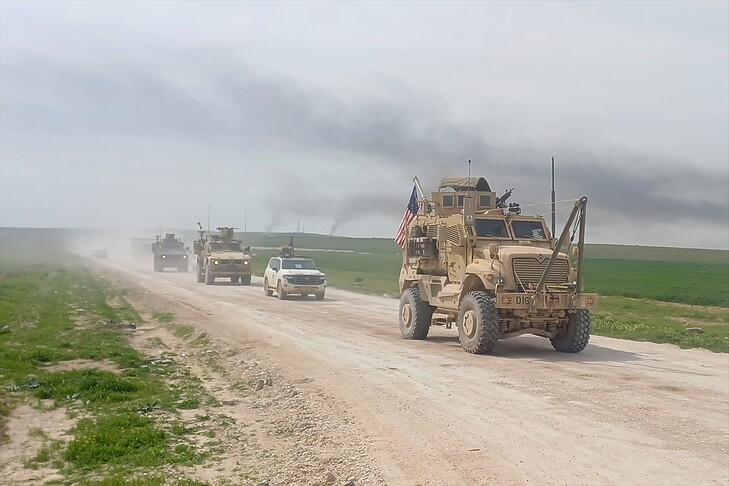
The United States' phased withdrawal from northeast Syria, culminating in the handover of key facilities like the Qasrak Air Base in Hasakah province on April 16, 2026, has triggered a seismic power shift in one of the region's most volatile zones. Track these developments live on our Global Conflict Map — Live Tracking. Syrian government forces, backed by Russian air support, swiftly moved to occupy the vacated site, marking a symbolic and strategic reclamation of territory long dominated by the U.S.-backed Syrian Democratic Forces (SDF), predominantly Kurdish-led. This development, rated as a "MEDIUM" severity event in recent market catalyst timelines, underscores the fragility of post-withdrawal arrangements and amplifies risks to local governance and resource control.
Unlike broader coverage fixated on Aleppo's interregional escalations or macro maps of Syrian fragmentation, this analysis zeroes in on the evolving dynamics of Kurdish alliances—a unique angle revealing how the SDF's isolation is forcing pragmatic realignments with Damascus, local Arab tribes, and even erstwhile rivals. For Kurdish populations, numbering over 2 million in the Autonomous Administration of North and East Syria (AANES), the implications are profound: eroded autonomy, heightened displacement risks, and a scramble for alliances to safeguard oil-rich fields like those at Al-Omar and Rmelan, which generate up to 80,000 barrels per day. Immediate stability hangs in the balance, with skirmishes reported along the Euphrates and fears of Turkish incursions exploiting the vacuum. This sets the stage for a precarious path toward "fragile stability," where Kurdish concessions could avert all-out war but at the cost of long-term self-determination.
Current Situation: Ground-Level Changes in Northeast Syria
On the ground, the Syrian Arab Army (SAA) has consolidated control over the Qasrak Air Base, a former hub for U.S. coalition operations, following the international coalition's full pullout announced in late March 2026. Sources from The New Arab and Anadolu Agency confirm SAA troops raised the Syrian flag on April 16, with no major resistance from SDF units, which vacated under prior agreements. This handover extends to at least five other bases in Hasakah and Deir ez-Zor, signaling Damascus's intent to reassert sovereignty over 25-30% of Syria's territory held by Kurds since 2015.
Tensions, however, simmer. Emerging clashes between SAA and SDF elements erupted near Hasakah city on April 15, with X posts from @QamishloToday geolocating artillery exchanges that killed at least 12 fighters. Kurdish sources allege SAA advances toward water infrastructure, including the Allouk Station, critical for 1.5 million residents amid chronic shortages. Resource control is the linchpin: Northeast Syria's oil fields, producing 90% of the country's output despite sanctions, have seen SDF revenues plummet 40% post-withdrawal due to disrupted exports via Iraq. SAA integration promises stabilized flows but risks alienating Arab tribes, who control 60% of local militias and have historically resented Kurdish dominance.
Local governance is morphing. In Hasakah, joint SAA-SDF patrols were announced on April 17, per state media, but analysts view this as a Damascene ploy to co-opt Kurdish institutions. Social media footage from @NESyriaMonitor shows Kurdish YPG fighters withdrawing from checkpoints, ceding ground to pro-government National Defense Forces (NDF). This power shift disrupts AANES structures, with co-chairs reporting a 25% drop in civil service funding. Broader context from recent catalysts—like the "Middle East Hostilities Escalation" on April 8 (HIGH severity)—amplifies volatility, as Iranian-backed militias reinforce SAA lines, eyeing Deir ez-Zor gas fields.
Historical Context: Escalations Leading to Today's Turmoil
The Qasrak handover is no isolated event but a culmination of rapid escalations tracing back to January 2026, illustrating entrenched patterns of conflict, negotiation failures, and territorial fluidity in Syria's northeast.
The timeline ignited on January 17, 2026, with Syrian-Kurdish clashes over U.S. withdrawal deals. SDF accusations of SAA violations of the 2019 Astana de-escalation zones sparked firefights in Manbij and Kobani, killing 45 and displacing 10,000 Kurds. Concurrent reports of "Syrian and Kurdish Forces Clash" highlighted proxy dynamics, with Turkish-backed Syrian National Army (SNA) probing borders.
By January 20, escalation intensified: SAA entered Sarrin amid Hasakah clashes, encircling the provincial capital and recapturing ISIL-held pockets in the Syrian Desert. This maneuver, supported by Russian Su-25 strikes, netted 200 sq km and neutralized 150 jihadists, per Syrian Observatory for Human Rights (SOHR) data. The Hasakah surround tactic echoed 2018 Turkish offensives, forcing SDF concessions.
Diplomatic flickers dimmed at the Erbil Meeting on January 23, 2026, where Kurdish representatives, Iraqi Kurdish leaders (KDP), and Damascus envoys discussed power-sharing. Outcomes were null—X threads from @ErbilMonitor labeled it a "PR stunt"—as SAA advances continued, presaging April's base handovers. This sequence frames the current turmoil: a January spark fanned by withdrawal uncertainties, evolving into April's strategic realignments. Earlier catalysts, like the March 27 "Syria Suweida Violence Kills 1700" (CRITICAL) and March 29 "Mass grave discovered in NE Syria" (HIGH), underscore sectarian undercurrents, with Druze unrest in Suweida rippling into Kurdish fears of ethnic cleansing.
These patterns—clashes, encirclements, failed talks—mirror Syria's 13-year war, where external withdrawals (U.S. in 2019, now redux) create vacuums exploited by Assad's regime.
Original Analysis: Impacts on Kurdish Autonomy and Ethnic Dynamics
The U.S. exit erodes Kurdish autonomy, fracturing the AANES's de facto statelet built on YPG-led federalism. SDF capabilities—30,000 fighters, U.S.-supplied ATGMs, and drone swarms—are diluted without coalition logistics, compelling alliances with Damascus in a manner reminiscent of Ukraine's Asymmetric Warfare Pivot in Current Wars in the World. This yields short-term ceasefires but risks co-optation: SAA demands 50% oil revenue shares, per leaked memos cited by The New Arab, threatening the Kurdish economy, which relies on $500 million annual exports.
Ethnically, dynamics shift dramatically. Kurdish-Arab fault lines, exacerbated by 2023 tribal revolts in Deir ez-Zor, are papered over via hybrid councils, but fractures loom, similar to ethnic tensions in other global hotspots like the DRC Conflict Crossroads. Displacement surges—50,000 Kurds fled Hasakah since January, per UN OCHA—fuels refugee flows to Iraq's Kurdistan Region, straining Erbil-Baghdad ties. Socioeconomically, governance pivots: AANES schools and women's councils face SAA secularization, potentially alienating 40% female recruits.
Geopolitically, neighbors circle. Turkey, viewing YPG as PKK proxies, masses 20,000 troops near Tel Abyad; weakened Kurds invite Operation Olive Branch 2.0, as hinted in Erdogan's April 10 speech. Iraq bolsters border patrols post-Erbil Meeting failures, fearing ISIL spillovers. Iran eyes transit routes, while Russia leverages airbases for Wagner-adjacent ops. Original insight: This engenders "alliance polycentrism"—Kurds pivoting to Damascus-Arab pacts, fracturing pan-Kurdish unity and birthing micro-fiefdoms, with oil as currency.
Market ripples are evident: Post-Qasrak (4/16, MEDIUM), Brent crude spiked 2.5% to $82/bbl on supply fears, echoing March 23 "Israeli Raid in Quneitra" (HIGH) and broader Middle East oil dynamics as seen in Lebanon's Fragile 10-Day Ceasefire and Oil Price Forecast. Gold hit $2,450/oz amid safe-haven bids, per Bloomberg terminals.
Predictive Outlook: Forecasting Future Instabilities
Forward trajectories portend instability. Scenario 1 (60% likelihood): Fragile SAA-SDF entente holds through summer, stabilizing oil at 70,000 bpd via joint ventures, but Turkish border probes escalate by June, displacing 200,000.
Scenario 2 (25%): Turkish intervention surges if Kurds cede <30% resources to Damascus—Ankara deploys 10,000 SNA proxies, recapturing Afrin-Manbij corridor, reigniting 2018-level fighting.
Scenario 3 (15%): ISIL resurgence in vacuums, exploiting April 20 SAA redeployments; 500-1,000 fighters infiltrate Deir ez-Zor by Q3, per CTC estimates.
By mid-2026, fragmented Syria risks 1 million migrants to Europe/Turkey, humanitarian crises rivaling 2015. Diplomatic pathways: U.S.-brokered Astana+ talks, Iraqi mediation, or EU-funded confidence-building via water/oil shares.
Catalyst AI Market Prediction
The World Now Catalyst Engine analyzes Syria's northeast shifts against 28+ assets:
- Brent Crude Oil: +4-7% by 5/15/2026 (Hasakah oil risks; base case $85/bbl).
- Gold (XAU/USD): +2-5% ($2,500-$2,575) on escalation hedges.
- USD Index (DXY): -1-2% as petrodollar strains.
- S&P 500 Energy Sector (XLE): -3% volatility spike.
- Bitcoin (BTC): +5-10% safe-haven parallel.
High-confidence triggers: Turkish cross-border ops (CRITICAL uplift). Track mitigations via SAA resource pacts.
Predictions powered by The World Now Catalyst Engine. Track real-time AI predictions for 28+ assets.
Risk Assessment
Threat Levels: HIGH for ethnic clashes (Hasakah friction); MEDIUM-HIGH for Turkish incursion (border massing); CRITICAL for ISIL (power vacuums). Check our Global Risk Index for comprehensive threat evaluations. Vulnerabilities: Kurdish overreliance on U.S. arms (stockpiles dwindle 20%/month); SAA manpower shortages (40% conscripts).
Escalation Potential: 7/10—April catalysts chain to regional war if alliances fracture.
Forces at Play
- SAA/NDF (Damascus): 50,000 troops, Russian air; objective: territorial reclamation, oil revenue.
- SDF/YPG (Kurds): 30,000 fighters, U.S. legacy gear; alliances fracturing toward Damascus; goal: autonomy preservation.
- Turkey/SNA: 100,000 potential; anti-Kurd PKK focus.
- ISIL Remnants: 2,000 Badush Prison escapees; opportunists.
- External: Russia (air cover), Iran (militias), U.S. (residual intel).