Sudan Conflict Sees RSF Barred from National Dialogue by Sovereignty Council Chief
The ongoing conflict in Sudan forms part of current wars in the world that continue to generate severe humanitarian consequences across the region. Sudan’s Sovereignty Council chief Abdel Fattah al-Burhan stated that the Rapid Support Forces will be excluded from any national dialogue and will have no role in the Sudanese state after the ongoing war between the Sudanese Armed Forces and RSF.
Overview of the Ongoing Conflict
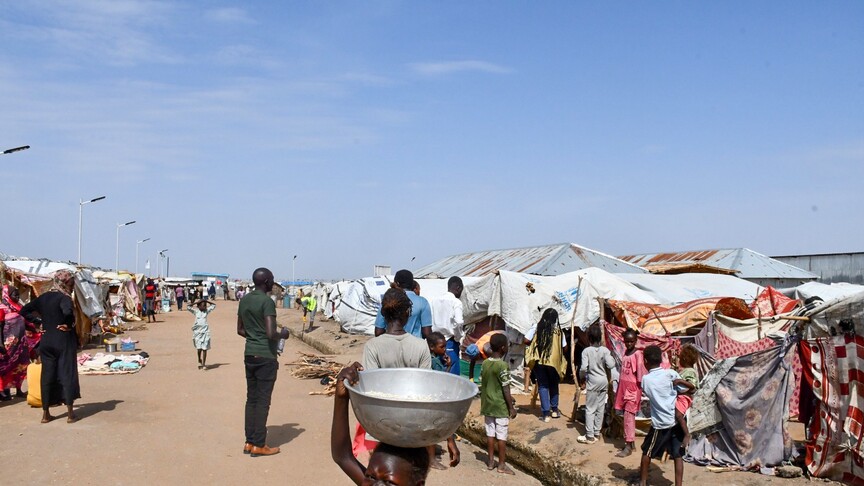
The conflict between the Sudanese Armed Forces and Rapid Support Forces continues to drive unprecedented levels of displacement, violence, and suffering, making the Sudan crisis one of the world's most severe humanitarian emergencies [1]. This situation stems directly from fighting between the Sudanese Armed Forces and the Rapid Support Forces [1]. The crisis has produced conditions that rank among the most acute humanitarian emergencies globally [1].
Exclusion of RSF from National Dialogue
Abdel Fattah al-Burhan says Rapid Support Forces will have no role in Sudanese state after war [3]. Sudan’s Sovereignty Council chief says RSF excluded from national dialogue [3]. These statements bar the Rapid Support Forces from participation in any national dialogue process [3]. The position rules out any post-war governance role for the group [3].
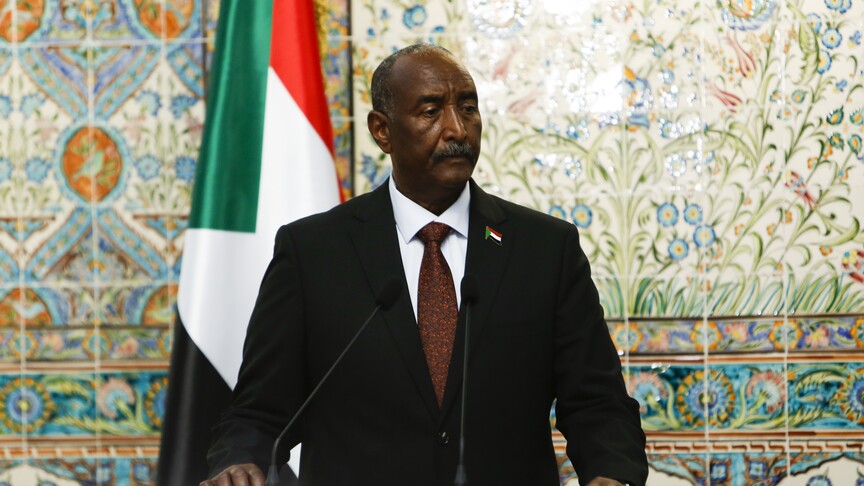
Sudan’s Sovereignty Council chief Abdel Fattah al-Burhan announces exclusion of RSF from national dialogue. — Source: anadolu
Chemical Weapons Allegations
Over the weekend, the New York Times and Washington Post both reported on a “dossier of evidence” that detailed the alleged use of chemical weapons by the Sudanese Armed Forces [5]. The dossier, “shared by a Middle Eastern intelligence agency”, included images, documents and intercepted messages between Sudanese military officers that described how the army “developed and produced chemical weapons over six months in 2024” [5]. Multiple Sudanese and US sources have told Middle East Eye that the “Middle Eastern intelligence agency” is Israeli [5]. The dossier it shared with the media was very similar to one Israel handed to the US government before it sanctioned Abdel Fattah al-Burhan, leader of the SAF, in January 2025 [5]. Allegations of chemical weapons use by the Sudanese Armed Forces in 2024 have surfaced, with a dossier of evidence including images, documents and intercepted messages reportedly shared by Israeli intelligence, similar to information given to the US government before sanctions on al-Burhan in January 2025 [5].
Humanitarian and Operational Conditions
A GANNET SituationHub report covering 24-30 August 2026 provides analysis of the operational environment and sectoral conditions affecting humanitarian response in Sudan [1]. The Sudan crisis continues to represent one of the world's most severe humanitarian emergencies, with the conflict between the Sudanese Armed Forces and Rapid Support Forces driving unprecedented levels of displacement, violence, and suffering [1]. This GANNET SituationHub report provides a comprehensive analysis of the operational environment and sectoral conditions affecting humanitarian response [1].
Sudan Sovereignty Council chief Abdel Fattah al-Burhan addresses exclusion of RSF from national dialogue. — Source: anadolu
Regional Context with South Sudan
The UN has separately warned that political failures in neighboring South Sudan are reproducing conditions for damaging violence, threatening civilians and the country's political transition [2]. Independent human rights investigators voiced deep concern over growing risks to both civilians and South Sudan's political transition following their latest fact-finding mission to the world's youngest nation [2]. The UN Commission on Human Rights in South Sudan warned that renewed violence, political tensions, shrinking civic space, entrenched corruption and persistent impunity continue to put the population and the planned transition to democracy at risk [2]. During the four-day visit, the Commission met a wide range of representatives from the Government, the political and security sectors, civil society and other stakeholders [2]. They called for the authorities to take urgent steps to protect civilians, allow humanitarian assistance to reach those in need and create conditions for inclusive political dialogue ahead of elections scheduled for December [2]. South Sudan is the world's youngest country having gained independence from Sudan in July 2011 [2]. Civil war erupted less than three years later, triggered by the power struggle between President Salva Kiir and Vice-President Riek Machar [2]. Fighting continues despite a 2018 peace agreement [2]. The Commission Chair, Yasmin Sooka, travelled to Jonglei state and met survivors of recent fighting in the north there [2]. She heard harrowing accounts of sexual violence, killings, displacement and separation from family members [2]. Some survivors also described being left without access to medical, psychosocial or other essential support, including those facing serious and urgent health needs [2]. "Visit after visit, we continue to hear from people who bear the consequences of violence, displacement, insecurity and the failures of those with political and security responsibilities to prevent and address those harms," she said [2]. "The patterns have changed little, while the human cost continues to grow. South Sudanese people deserve better than to have their lives shaped by recurring cycles of violence and uncertainty." [2] The Commission voiced concern over killings, displacement, civilian attacks, disruption of humanitarian operations and growing insecurity for aid workers [2]. Members noted that at a time of immense humanitarian needs, amid ongoing funding shortfalls, support for humanitarian operations and the UN Mission in South Sudan is critical [2]. They expressed alarm over a recent attack on an UNMISS patrol in Jonglei which killed two peacekeepers and left others injured, calling for an investigation and for those responsible to be held to account [2]. The visit comes at a pivotal moment as South Sudan gears up for planned elections [2]. The Commission recently warned that elections without essential safeguards, including genuine inclusive political dialogue, could spark renewed conflict and increase the risk of atrocity crimes [2]. Commissioner Barney Afako said that while implementation of the 2018 Revitalized Agreement has stalled, it remains essential for a democratic and peaceful South Sudan [2]. "Even as the country heads for elections, political and civic space has narrowed, while many of the safeguards and conditions for peaceful and credible polls are still missing," he said [2]. "South Sudanese do have a right to vote; that right must be protected by ensuring they can participate freely, compete fairly, and resolve any electoral disputes through credible adjudication. These are the safeguards that will prevent an election from becoming a trigger for violence and disruption." [2] The Commission again called for genuine and inclusive political dialogue [2]. This includes with the Sudan People's Liberation Movement-in-Opposition, led by Mr. Machar, as well as holdout groups, civil society, women and youth [2]. Corruption continues to be an obstacle to peace and security [2]. The Commission noted lack of progress since its 2025 report outlined how entrenched corruption as well as diversion and misallocation of public resources impact human rights [2]. "All these years, the Commission has documented serious violations and identified the same underlying problem: impunity. Too often, those responsible for grave abuses have not been held accountable, while institutions responsible for justice remain weak and under-resourced," said Commissioner Carlos Castresana Fernández [2]. UN warns worsening South Sudan crisis threatens civilians, political transition [4]. Political failures of South Sudan’s leaders continue to reproduce conditions for damaging violence, UN official says [4].
Broader Regional Linkages in Current Wars in the World
The UN Commission on Human Rights in South Sudan warned that renewed violence, political tensions, shrinking civic space, entrenched corruption and persistent impunity continue to put the population and the planned transition to democracy at risk [2]. These developments in South Sudan occur alongside the Sudan crisis, which continues to represent one of the world's most severe humanitarian emergencies [1].
What to watch next: The Commission called for the authorities to take urgent steps to protect civilians, allow humanitarian assistance to reach those in need and create conditions for inclusive political dialogue ahead of elections scheduled for December, while the GANNET SituationHub report continues to track operational environment and sectoral conditions in Sudan through late August 2026.