

Sudan Conflict Peace Efforts Stall Over RSF Withdrawal Demands
U.S.-brokered peace efforts for Sudan have encountered new obstacles as the Rapid Support Forces rejected demands to withdraw from cities under their control and the Sudanese Armed Forces insisted that any agreement must begin with the RSF's withdrawal. [3] The Sudan conflict continues amid these stalled efforts, with mediators attempting to revive talks despite entrenched positions on both sides.
Current State of Peace Negotiations
Mediators are working to revive talks for a proposed 90-day humanitarian truce in Sudan led by U.S. Senior Advisor Massad Boulos, but disagreements between the SAF and the RSF continue to stall progress. [3] The SAF is demanding a full RSF withdrawal, while the RSF says the conditions amount to surrender. [3] Mediators hope that a truce will create opportunities for aid deliveries and confidence-building measures. [3] However, ongoing fighting across several fronts complicates the prospects for progress in the Sudan conflict. [3]
Military Developments and Battlefield Updates

Map shows Sudan conflict control areas with SAF gains near El Obeid in North Kordofan during stalled peace talks. — Source: reliefweb The SAF has consolidated control of the Export Road linking El Obeid, the capital of North Kordofan State, with Khartoum, despite intensified drone attacks by the RSF. [3] Sudan’s army chief Yasser al-Atta vowed to defeat the RSF by year-end, stating that the army is implementing the theory of advancing in all directions with all fronts moving simultaneously as happened during the recapture of Khartoum state. [4] The military's recent gains in Kordofan have strengthened its position in the negotiations. [3] Since April 2023, fighting between the SAF and the RSF has killed tens of thousands of people and displaced millions both within Sudan and across its borders. [3]
Humanitarian Impact and Crisis Scale
The conflict between the Sudanese Armed Forces (SAF) and Rapid Support Forces (RSF) continues to represent one of the world's most severe humanitarian emergencies, driving unprecedented levels of displacement, violence, and suffering. [2] Sudan's humanitarian crisis is described as the world's largest, with 35 million Sudanese needing humanitarian assistance and an estimated 33.7 million people requiring aid this year according to the UN. [3] Sudan's humanitarian crisis has become one of the defining yet least visible crises of the twenty first century. [1] The conflict can no longer be understood merely through the lens of shifting frontlines or military developments. [1] Rather, it presents a picture of systemic societal collapse, in which war has hollowed out public services, displaced entire communities, accelerated disease, and created conditions of widespread suffering. [1]
Analyst Perspectives on Prospects for Truce
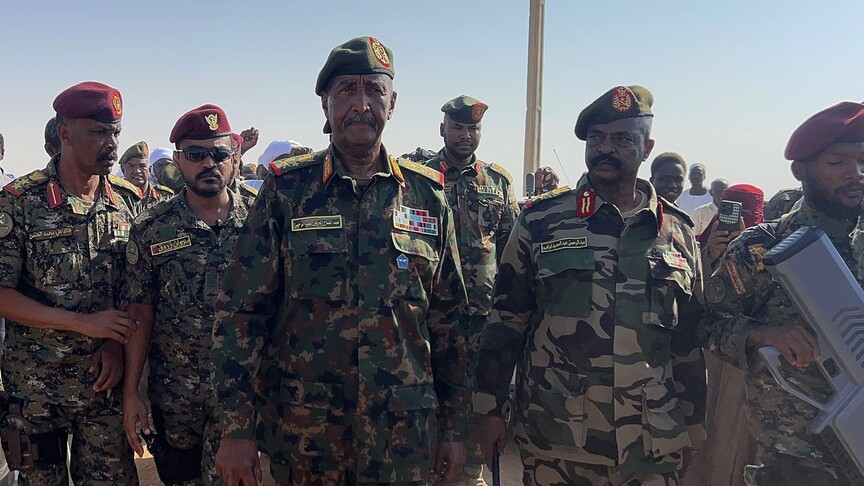
Sudan army chief vows to defeat RSF by year-end. — Source: anadolu "The military's recent gains in Kordofan have strengthened its position in the negotiations. They could also help civilians return to their homes and improve humanitarian access," said Mohiedeen Mohamed, an analyst. [3] "Recent fighting in Kordofan has reshaped the battlefield and prompted both sides to reinforce their positions. That shows neither is ready to make concessions, making a humanitarian truce unlikely to improve conditions on the ground," said Abdolmoniem Abuidrees, another analyst. [3] Ongoing fighting across several fronts complicates the prospects for progress. [3]
Operational Environment and Sectoral Conditions
This GANNET SituationHub report provides a comprehensive analysis of the operational environment and sectoral conditions affecting humanitarian response. [2] The Sudan crisis continues to represent one of the world's most severe humanitarian emergencies, with the conflict between the Sudanese Armed Forces (SAF) and Rapid Support Forces (RSF) driving unprecedented levels of displacement, violence, and suffering. [2] War has hollowed out public services, displaced entire communities, accelerated disease, and created conditions of widespread suffering. [1]
Broader Context of Displacement and Violence
Since April 2023, fighting between the SAF and the RSF has killed tens of thousands of people and displaced millions both within Sudan and across its borders. [3] An estimated 33.7 million people will need humanitarian aid this year, according to the UN. [3] The conflict between the Sudanese Armed Forces (SAF) and Rapid Support Forces (RSF) continues to represent one of the world's most severe humanitarian emergencies. [2]
What to watch next: Mediators continue efforts to revive talks for a 90-day humanitarian truce despite the SAF and RSF positions on withdrawal, while military gains in Kordofan shape the battlefield and affect prospects for aid access. [3]






