Strike on Ukraine: Russian Attacks Kill Four and Injure Over 30
Overnight Russian attacks on Ukraine resulted in the deaths of at least four people and injuries to over 30 others across multiple regions.[3] In this strike on Ukraine, the assaults marked a significant escalation in aerial bombardment, with reports detailing a large-scale operation involving drones and missiles targeting key areas.[1][2] Ukrainian authorities and international media outlets have provided initial assessments, highlighting the intensity of the strikes that unfolded during the night of 24-25 April.[3]
Overview of the Russian Attacks
The overnight Russian attacks on Ukraine represented a major assault, as characterized by multiple reports from reliable sources.[1][2][3] These strikes, occurring in the early hours of 25 April, involved coordinated launches of unmanned aerial vehicles and ballistic missiles, underscoring the persistent pattern of aerial warfare in the ongoing conflict.[1] Initial reports from Al Jazeera detailed the scope, noting that Russia targeted eight regions, with Dnipro specifically mentioned as a focal point.[1] The Straits Times similarly described the event as a "major Russian attack," emphasizing its breadth and the immediate human toll.[2] Ukrainian President Volodymyr Zelenskyy's statement further corroborated the timeline, specifying the night of 24-25 April as the period of the onslaught.[3]
This overview draws from on-the-ground assessments and official tallies, revealing a barrage that tested Ukraine's air defense capabilities. The combination of high-volume drone swarms and precision missiles aimed to overwhelm defenses, a tactic observed in prior operations but scaled up here with over 600 drones deployed.[1] Authorities in affected areas reported air raid alerts persisting for hours, forcing civilians into shelters and disrupting normalcy across the targeted zones.[1][3] The attacks' timing—overnight—likely intended to maximize surprise and minimize interception rates, as drones and missiles navigated through darkness to strike infrastructure and populated areas.[2] Multiple sources converge on the characterization of this as one of the larger recent barrages, with casualty figures emerging as defenses intercepted portions of the incoming threats.[1][2][3]
Details of the Assault
Russia launched more than 600 drones and 47 missiles in a comprehensive assault targeting eight regions, including Dnipro.[1] This scale of operation highlights the logistical depth of the attack, with the drone count alone suggesting a saturation strategy designed to exhaust Ukrainian air defenses before missile impacts.[1] The inclusion of Dnipro, a central industrial hub, points to strategic priorities, as the region has repeatedly faced strikes on energy and transportation infrastructure in past months.[1]
The assault's mechanics involved waves of Shahed-type drones, known for their low-altitude flight paths, paired with ballistic and cruise missiles for deeper penetration.[1] Ukrainian military statements, echoed in media reports, indicated partial successes in downing threats, but the sheer volume—over 600 drones—strained resources.[1] Dnipro's prominence in the targeting list underscores its role as a logistics node, where previous attacks have aimed to disrupt supply lines supporting frontline operations.[1] The 47 missiles complemented the drones, likely comprising Iskander and Kinzhal types based on patterns from similar strikes, though exact compositions remain unconfirmed in initial reports.[1] This combination reflects a multi-layered approach, where drones act as decoys or spotters for missile strikes, amplifying overall destructive potential.[1]
Reported Casualties
Reported casualties from the overnight attacks vary slightly across sources but consistently indicate significant human impact, with deaths ranging from four to five and injuries exceeding 30.[1][2][3] Ukrainian President Volodymyr Zelenskyy provided the most direct tally, stating that four people were killed and more than 30 injured across Ukraine.[3] Al Jazeera reported a figure of five killed and 30 injured, attributing the data to regional authorities.[1] The Straits Times aligned closely with Zelenskyy's numbers, noting four killed and dozens wounded in the major attack.[2]
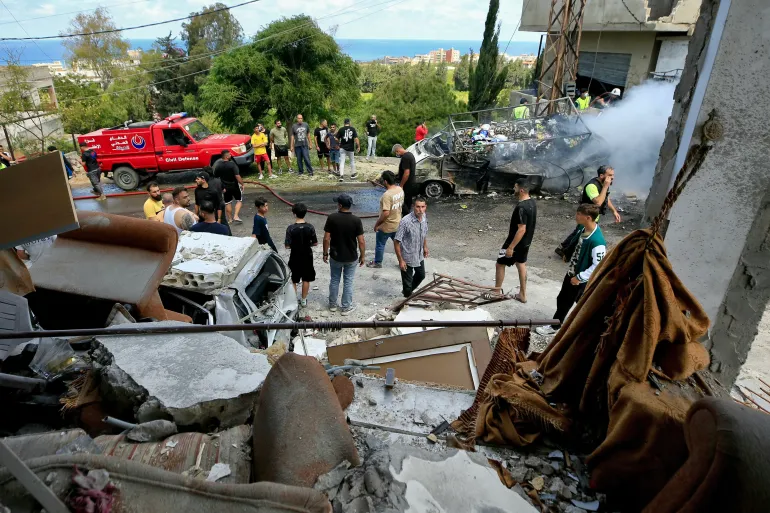
These figures encompass civilian and possibly military losses, with injuries described as widespread due to shrapnel, blast waves, and structural collapses in residential and public areas.[1][2][3] The variance—four versus five deaths—may stem from ongoing verifications or differing regional counts, as initial reports often evolve with hospital admissions and forensic confirmations.[1][3] Over 30 injured represents a conservative aggregate, with "dozens wounded" suggesting potential for higher numbers as medical assessments continue.[2] The human cost extends beyond immediate fatalities, as injuries likely include severe trauma requiring long-term care, straining Ukraine's healthcare system amid repeated strikes.[1][2][3] Sources emphasize that these tolls occurred despite air defense interceptions, illustrating the attacks' penetration success.[1]
Official Statements
Ukrainian President Volodymyr Zelenskyy issued a direct statement on the overnight Russian attack, confirming that a total of four people were killed and more than 30 were injured across Ukraine on the night of 24-25 April.[3] Zelenskyy's remarks, shared via official channels, provided one of the earliest comprehensive updates, framing the assault within the broader context of Russian aggression.[3] His report synthesized data from regional governors and emergency services, offering a national-level perspective on the strikes' reach.[3]
Zelenskyy's language underscored the attacks' brutality, calling attention to the civilian toll and the resilience of Ukrainian defenses.[3] By specifying the exact timeframe—night of 24-25 April—he anchored the event temporally, aiding in coordinated response efforts.[3] This statement serves as a key reference point for international observers, as presidential addresses often set the tone for diplomatic appeals and aid requests.[3] No direct quotes from Russian officials appear in available reports, leaving Zelenskyy's assessment as the primary authoritative voice on casualties.[3]
Affected Regions
The attacks impacted eight regions, with Dnipro explicitly highlighted among the targets.[1] This multi-regional focus dispersed the assault's effects, hitting areas from central Ukraine westward and eastward, though exact lists beyond Dnipro remain aggregated in reports.[1] Dnipro's inclusion is notable, given its status as a major city and industrial center, where strikes have historically targeted power grids and rail hubs.[1]
Other regions, while not individually named in the sources, collectively bore the brunt of the 600-plus drones and 47 missiles, suggesting a nationwide air defense alert.[1] The spread across eight areas maximized disruption, affecting civilian populations in urban and suburban zones.[1] Casualties distributed across these regions align with Zelenskyy's nationwide tally, indicating no single area dominated the death toll.[1][3] This broad targeting pattern complicates localized responses, requiring synchronized efforts from regional administrations.[1]
What to watch next: Updates on final casualty confirmations and Ukrainian air defense performance, as varying reports from authorities may refine the toll from the 24-25 April attacks.[1][2][3]