Conflict in Lebanon: Hezbollah Resists Israeli Forces Despite Ceasefire
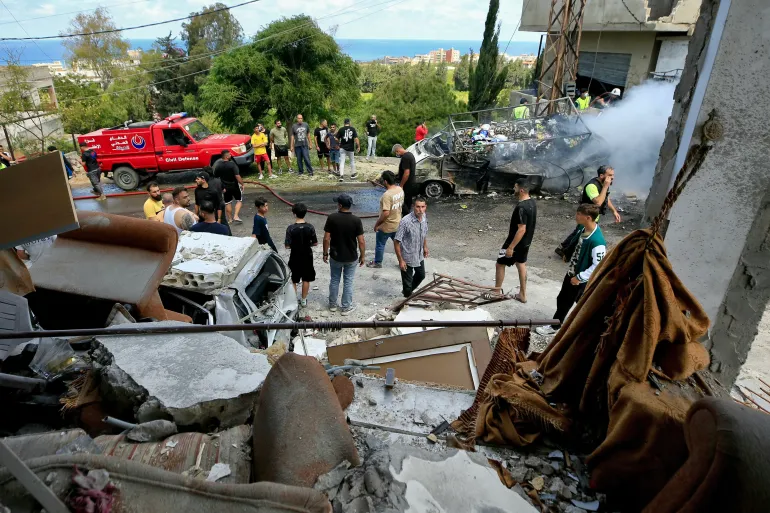
Hezbollah continues to resist Israeli forces despite a 10-day ceasefire that began on 16 April, highlighting divisions between Lebanon's leadership negotiating peace and the group's ongoing fighting.[1] In the ongoing conflict Lebanon faces, these tensions underscore a fractured national response to the Israeli military operations, as official negotiations proceed while Hezbollah maintains its retaliatory actions.[1]
Overview of the Ceasefire and Divisions in Lebanon
The ceasefire, initially set for 10 days starting on 16 April, represents a fragile pause in the escalating hostilities between Israeli forces and Hezbollah in Lebanon.[1] Despite this agreement, Israeli military operations have persisted, prompting continued resistance from Hezbollah, which has exposed deep divisions within the country.[1] Lebanon's official leadership has been moving toward negotiations with Israel, pursuing a path of diplomatic resolution, while Hezbollah remains committed to armed retaliation against the invasion.[1] This dichotomy paints Lebanon as a "house divided," with two sharply opposed visions: one favoring talks and de-escalation, and the other prioritizing direct confrontation.[1]
The extension of the ceasefire for an additional three weeks further complicates this landscape, as reported in recent humanitarian updates.[4] As of 23 April, population movements remain tentative and uneven, reflecting uncertainty about the truce's durability.[4] These internal divisions not only hinder a unified Lebanese strategy but also amplify risks in a volatile security environment, where official peace efforts clash with grassroots militancy.[1] The persistence of fighting despite the ceasefire agreement illustrates how such splits can prolong conflict, drawing out military engagements and complicating international mediation efforts.[1][4]
Hezbollah's Actions and Israeli Casualties
Hezbollah's ongoing resistance has directly resulted in significant Israeli military losses, even amid the ceasefire framework.[1] In the last 24 hours of reported operations, 37 Israeli soldiers were wounded, and two were killed, as Israeli forces pressed forward with their activities in Lebanon.[1] This toll highlights the intensity of Hezbollah's retaliatory efforts, which have not abated despite the 10-day truce that took effect on 16 April.[1]
These casualties provide stark evidence of the group's determination to counter the Israeli invasion, maintaining a posture of active defense.[1] The continued exchanges underscore the challenges in enforcing ceasefire terms when one side perceives ongoing threats from the other's operations.[1] Hezbollah's actions, framed as retaliation, have thus sustained a cycle of violence, contributing to the broader pattern of hostilities that the initial ceasefire aimed to interrupt.[1] Such developments emphasize the limitations of short-term truces in deeply entrenched conflicts, where military momentum on both sides resists diplomatic halts.[1]
Humanitarian and Displacement Impacts
The humanitarian toll in Lebanon remains severe, with displacement figures climbing amid the fragile ceasefire.[4] As of 23 April, a slight 3 percent increase brought the number of displaced people in collective shelters to 121,225.[4] This uptick occurs even as the ceasefire has been extended for another three weeks, indicating that many remain hesitant to return home due to persistent insecurity.[4]
The protection environment is described as highly fragile, exacerbated by elevated risks from ongoing insecurity, overcrowded shelter conditions, and limited access to essential services.[4] Collective shelters, strained by the influx, struggle to accommodate those uprooted by the escalation of hostilities.[4] These conditions not only affect immediate safety but also long-term recovery prospects for affected communities, as uneven population movements signal a lack of confidence in the truce's stability.[4] The reported figures paint a picture of a population caught in limbo, where the promise of extended ceasefires fails to translate into widespread returns or normalized life.[4]
International Involvement and Warnings
International actors are grappling with the repercussions of the conflict Lebanon has seen, including foreign military casualties and strict Israeli directives on civilian safety.[2][3] The Indonesian government is preparing to repatriate the remains of Private First Class Rico Pramudia, marking the fourth Indonesian soldier from the TNI (Indonesian National Armed Forces) killed in Lebanon.[2] This development highlights the broader involvement of international peacekeepers in the region, whose personnel face lethal risks despite peacekeeping mandates.[2]
Compounding these losses, the Israeli army has issued explicit warnings to civilians against returning to southern Lebanon villages, even with the ceasefire in place.[3] A spokesman stated that it is not permitted to approach areas such as the Litani River, the Salhani Valley, and the Saluki, signaling ongoing military concerns over these zones.[3] These restrictions aim to prevent civilian endangerment amid potential residual threats, but they also prolong displacement for local populations.[3] Together, the Indonesian repatriation efforts and Israeli advisories reflect the multinational dimensions of the crisis, where foreign troops and local residents alike navigate heightened dangers.[2][3]
Key Developments in the Conflict
Recent updates in the conflict Lebanon endures include critical extensions and precautions that shape the immediate trajectory.[1][3][4] The ceasefire's prolongation for three more weeks, announced amid tentative population shifts, comes as 121,225 individuals remain in collective shelters as of 23 April.[4] This extension seeks to build on the initial 10-day period from 16 April, yet Israeli operations and Hezbollah resistance persist, as evidenced by the 37 wounded and two killed Israeli soldiers in a single 24-hour span.[1]
Israeli warnings against civilian returns to frontline areas like the Litani River, Salhani Valley, and Saluki further define these developments, prioritizing security over repatriation.[3] Internally, Lebanon's divided house—leaders negotiating while Hezbollah fights—continues to influence the conflict's pace, with official diplomacy contrasting militant actions.[1] These elements collectively illustrate a conflict marked by incremental diplomatic gains overshadowed by operational realities and humanitarian strains.[1][3][4] The 3 percent rise in shelter populations underscores the uneven progress, as fragile protections and access issues persist.[4]
What to watch next
Monitor the enforcement of the three-week ceasefire extension, Hezbollah's retaliatory patterns, and displacement trends in collective shelters, as ongoing Israeli operations and civilian movement restrictions could signal further escalations or tentative stabilizations.[1][3][4]