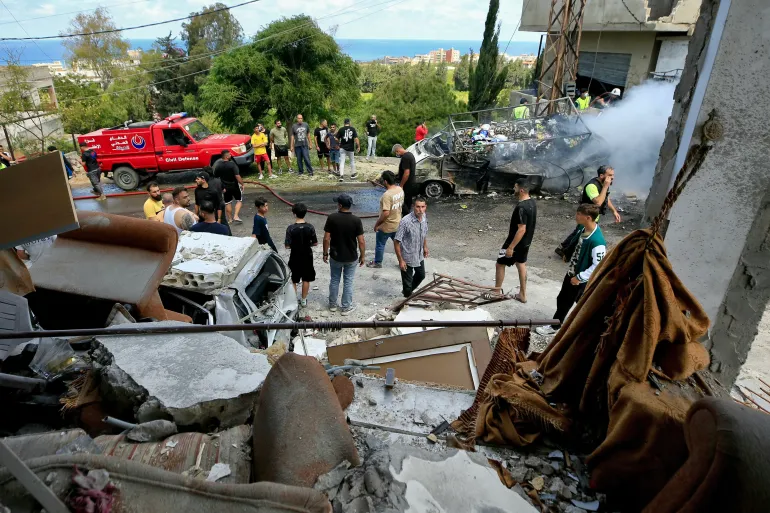
Strike in Lebanon: Second French Peacekeeper Dies in Ambush
A second French peacekeeper died in Lebanon from wounds sustained in an ambush blamed on Hezbollah, marking a tragic escalation in the strike Lebanon region amid ongoing tensions.[1]
The Ambush Incident
The ambush incident in Lebanon has drawn international attention due to its direct impact on UN peacekeepers, highlighting the volatile security environment in the area. On Saturday, a French soldier identified as staff sergeant Florian Montorio was shot dead during the attack on UN peacekeepers.[1] This initial casualty set the stage for further tragedy, as a second French soldier succumbed to wounds suffered in the same weekend ambush. President Emmanuel Macron announced the death of the second peacekeeper on Wednesday, underscoring the severity of the injuries sustained in the strike.[1]
UN peacekeepers, part of the multinational force deployed to maintain stability along the volatile border regions, have long faced risks from sporadic violence. The Saturday ambush targeted these personnel directly, resulting in the confirmed fatalities among French troops.[1] The French military's involvement in Lebanon stems from their contribution to the United Nations Interim Force in Lebanon (UNIFIL), which monitors ceasefires and supports the Lebanese armed forces. Macron's public statement not only confirmed the second death but also emphasized the context of the attack, framing it within the broader challenges faced by international forces in the region.[1] This event adds to the tally of losses for French personnel, prompting questions about the safety protocols and operational risks for peacekeepers operating in such contested areas. The precision and timing of the ambush suggest a calculated strike, though details on the exact circumstances remain tied to official reports from the French presidency.[1]
Diplomatic Developments
Diplomatic efforts between Israel and Lebanon continue amid the recent strike Lebanon incidents, with a second round of talks scheduled to commence in Washington. These negotiations, set to start on Thursday, represent a key opportunity for dialogue between the two nations, which have a history of border disputes and military confrontations.[2] The Washington meeting follows an initial round, indicating a structured approach to addressing ongoing issues, potentially including security arrangements and ceasefire enforcements.
The timing of these talks is particularly notable given parallel international dynamics. While Israel and Lebanon prepare for this engagement, broader Middle East tensions persist, including stalled discussions between Iran and the United States. Iran's accusations of a "lack of good faith" from the Americans in potential talks hosted in Pakistan have cast uncertainty over those prospects.[2] Although the Iran-U.S. dialogue appears dubious, the Israel-Lebanon talks proceed as planned, suggesting a compartmentalized diplomatic strategy. This second round could focus on de-escalation measures, border demarcations, or responses to recent violence, including ambushes affecting peacekeepers. The U.S. role as host underscores its interest in stabilizing the region, potentially influencing outcomes related to UNIFIL operations and Hezbollah's activities along the border.[2] Observers note that successful talks could mitigate risks to international forces, providing a counterpoint to the immediate aftermath of strikes and ambushes.
Allegations and Responses
Blame for the ambush has been directed at Hezbollah, with French authorities and reports explicitly linking the group to the attack on UN peacekeepers.[1] The incident, occurring on Saturday, resulted in the death of staff sergeant Florian Montorio on the spot and the subsequent passing of a second soldier on Wednesday from related wounds.[1] President Macron's announcement reinforced this attribution, describing the ambush as one blamed on Hezbollah, which has operated extensively in southern Lebanon.
Hezbollah has issued a firm denial of responsibility for the Saturday ambush.[1] This response from the militant group, which maintains significant influence in Lebanon, comes amid heightened scrutiny of its actions near the Israeli border. Denials from Hezbollah are not uncommon in such contexts, often accompanied by claims of unrelated militant activity or Israeli provocations. The group's military wing has been accused by various parties of targeting UNIFIL positions in the past, though it consistently rejects such allegations.[1] This pattern of attribution and denial complicates investigations and accountability efforts. French officials, through Macron's statement, have maintained their position without elaborating on specific evidence, leaving the international community to monitor for further developments or claims of responsibility.[1] The exchange underscores the challenges in verifying incidents in a conflict zone where multiple actors operate, including UN forces, Lebanese military, and non-state groups.
Commentary on Conflicts
An Orthodox Archbishop has commented on Israel's military actions in Lebanon, describing attacks on religious sites as "not surprising" due to a perceived long history of violations.[3] Elias Kfoury, speaking to Anadolu, highlighted the Israeli army's record of such incidents, framing recent events within a broader pattern.[3] This perspective from a religious leader adds a layer of cultural and historical context to the ongoing conflicts, emphasizing the targeting of sanctities—terms often used for holy or religious sites.
Kfoury's remarks point to repeated violations, suggesting a continuity in Israeli operations that have impacted places of worship or significance in Lebanon.[3] In the current environment, where strikes and ambushes proliferate, such statements resonate with local communities and religious figures who view these actions through the lens of historical grievances. The archbishop's assessment implies that while the attacks provoke outrage, they align with established precedents, potentially influencing public sentiment and calls for international intervention.[3] This commentary intersects with the peacekeeper casualties and diplomatic talks, as protections for civilian and religious infrastructure often feature in negotiations. Kfoury's interview provides insight into Lebanese religious leadership's stance, which could shape domestic responses to external military pressures.
Broader Context
The recent events in Lebanon connect to wider international tensions, particularly as Israel and Lebanon head into Washington talks while Iran-U.S. negotiations falter.[2] The second round of Israel-Lebanon discussions, starting Thursday, occurs against a backdrop of regional instability, including Iran's recent firing on three ships—details that highlight escalating maritime confrontations.[2] Iran's criticism of U.S. "lack of good faith" in potential Pakistan-hosted talks further complicates the diplomatic landscape, indirectly affecting Lebanon-related issues given Hezbollah's ties to Tehran.[2]
These dynamics illustrate how local ambushes and strikes in Lebanon ripple into global arenas. UNIFIL's role, now underscored by French losses, ties into efforts to enforce resolutions amid Israeli operations and Hezbollah activities.[1][2] The Orthodox Archbishop's observations on religious site violations add a humanitarian dimension to military engagements.[3] Collectively, the sources paint a picture of interconnected conflicts where peacekeeper safety, border talks, and proxy influences converge, demanding coordinated international responses.
What to watch next: The second round of Israel-Lebanon talks in Washington starting Thursday could yield progress on border security, while Hezbollah's ongoing denial and Iran's regional actions, including ship firings, may influence the fragile calm around UN peacekeepers.[2][1]