
Strike in Lebanon: Second French Peacekeeper Dies After Ambush
In a tragic escalation of the recent strike in Lebanon, a second French peacekeeper has died from wounds sustained during an ambush targeting UN forces, an incident widely blamed on Hezbollah.[1] This development underscores the precarious security environment for international troops in the region, where a first soldier, staff sergeant Florian Montorio, was fatally shot on Saturday.[1] President Emmanuel Macron confirmed the second death on Wednesday, highlighting the ongoing risks amid heightened tensions between Israel, Lebanon, and non-state actors like Hezbollah, which has denied involvement in the attack.[1] As Israel and Lebanon prepare for further diplomatic engagement, reports of ceasefire violations and infrastructure damage continue to surface, complicating efforts to stabilize southern Lebanon.[2][4]
Recent Incidents Involving UN Peacekeepers
The ambush on UN peacekeepers in Lebanon represents a critical flashpoint in the region's volatile security landscape, with the loss of two French soldiers drawing international attention.[1] According to reports from France 24, the incident occurred over the weekend, specifically on Saturday, when staff sergeant Florian Montorio was shot dead during the attack on UN personnel.[1] A second French soldier succumbed to his injuries on Wednesday, as announced by French President Emmanuel Macron.[1] This second death amplifies the severity of the ambush, which has been attributed to Hezbollah, though the group has categorically denied any responsibility for the assault.[1]
UN peacekeepers, operating under the United Nations Interim Force in Lebanon (UNIFIL), have long faced challenges in maintaining neutrality amid cross-border hostilities. The timing of this ambush coincides with broader regional frictions, including ceasefire agreements that appear fragile.[1][4] Macron's public statement not only confirms the casualties but also serves as a somber acknowledgment of the sacrifices made by French troops deployed to monitor compliance with UN resolutions in southern Lebanon.[1] The denial from Hezbollah adds a layer of contention, as it rejects claims of involvement despite the blame placed by French authorities and media outlets.[1]
This incident is not isolated but fits into a pattern of attacks on international forces, raising questions about the protection of peacekeeping operations in conflict zones.[1] The French military's involvement underscores Europe's stake in Lebanese stability, with Macron's announcement likely aimed at rallying domestic and international support for continued UNIFIL presence.[1] Details from the France 24 report emphasize the ambush's targeted nature against UN peacekeepers, suggesting deliberate actions that could undermine multinational efforts to de-escalate violence.[1] As investigations proceed, the focus remains on attributing responsibility accurately, given Hezbollah's swift rebuttal.[1]
The human cost is stark: two soldiers lost in quick succession, with Montorio's death immediate and the second following days later from sustained wounds.[1] This sequence of events illustrates the immediate and lingering dangers faced by troops on the ground, where even routine patrols can turn deadly.[1] French leadership's transparency in reporting these losses may pressure the UN Security Council to reassess operational protocols, though no such developments have been detailed in available accounts.[1] Overall, this ambush serves as a grim reminder of the challenges in enforcing peace amid accusations and denials from involved parties.[1]
Diplomatic Efforts and Regional Talks
Amid the fallout from the strike in Lebanon involving UN peacekeepers, Israel and Lebanon are advancing diplomatic channels with a second round of talks scheduled in Washington.[2] Newsmax reports that these negotiations are set to commence on Thursday, signaling a concerted push to address ongoing regional tensions despite parallel setbacks in other diplomatic arenas.[2] This follows an initial round, indicating a structured approach mediated by the United States to broker understandings between the two nations.[2]
The Washington talks occur against a backdrop of stalled Iran-U.S. discussions, which have reached a dubious state due to accusations from the Islamic Republic of American "lack of good faith" in negotiations.[2] While the focus remains on Israel-Lebanon dynamics, the limbo in Iran-U.S. talks in Pakistan underscores interconnected regional pressures that could influence outcomes.[2] Iran's recent actions, such as firing on three ships, further complicate the environment, though specifics tie back to broader maritime and negotiation disputes.[2]
These diplomatic engagements represent a potential pathway to de-escalation, particularly as ceasefire violations persist in southern Lebanon.[2][4] The choice of Washington as the venue highlights U.S. involvement in facilitating dialogue, possibly aiming to enforce compliance with recent truces.[2] Lebanon's participation, despite internal challenges from groups like Hezbollah, suggests a willingness to pursue state-level resolutions.[2] Israel's attendance aligns with its security interests, especially given reports of post-ceasefire demolitions.[2][4]
The timing of these talks—immediately following the peacekeeper ambush—adds urgency, as stakeholders seek to prevent further internationalization of casualties.[1][2] Newsmax's coverage frames this as "the latest" in a series of updates, emphasizing the fluid nature of diplomacy in the Middle East.[2] Prospects for progress remain guarded, with Iran's parallel impasse serving as a cautionary note on negotiation pitfalls.[2] Nonetheless, the commitment to a second round demonstrates persistence amid skepticism.[2]
{IMAGE_2}
Allegations of Violations by Israel
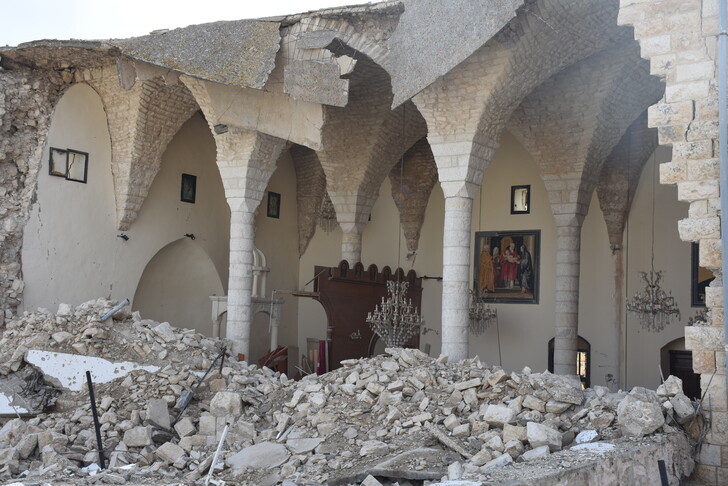
An Orthodox Archbishop has characterized Israel's military actions in Lebanon as unsurprising, citing a historical pattern of violations against religious sites.[3] Elias Kfoury, speaking to Anadolu Agency, stated that the Israeli army maintains a "long record of violations of religious sanctities" in Lebanon.[3] This assessment frames recent attacks on sanctities as consistent with past behavior, drawing from the cleric's perspective on Israeli operations.[3]
Kfoury's remarks highlight concerns over the protection of holy sites during conflicts, positioning such violations within a broader narrative of repeated infringements.[3] The archbishop's interview with Anadolu underscores a religious leader's viewpoint on military conduct, emphasizing that these incidents align with established precedents.[3] "Not surprising," Kfoury noted, reflecting a resigned acknowledgment of what he sees as habitual disregard.[3]
These allegations come at a time when ceasefire terms are under scrutiny, potentially complicating diplomatic talks.[2][3] The Orthodox Archbishop's statements provide ecclesiastical insight into the conflict's impact on Lebanon's diverse religious landscape, where sanctities hold deep cultural significance.[3] By referencing a "long record," Kfoury implies documented instances, though specifics are conveyed through his Anadolu interview.[3]
This perspective contrasts with ongoing demolitions and ambushes, enriching the discourse on accountability.[1][3][4] Kfoury's position as an Orthodox leader amplifies the voice of Lebanon's Christian community, which has historically navigated regional strife.[3] The Anadolu report positions his comments as a direct response to Israel's actions, reinforcing narratives of systematic violations.[3]
Destruction of Infrastructure in Southern Lebanon
Post-ceasefire demolitions by Israel have targeted housing in southern Lebanon, with 428 units completely destroyed over the past three days.[4] The Middle East Eye reports that the Israeli army continued these operations in Lebanese towns and cities south of the country, despite the truce that took effect last week.[4] Additionally, 50 more housing units sustained damage during the same period, according to Lebanon's National Council for Scientific Research.[4]
These actions indicate ongoing military engineering efforts, focusing on border areas amid security concerns.[4] The demolitions persist even after the ceasefire, raising questions about the agreement's enforcement mechanisms.[4] The council's data provides a precise tally, underscoring the scale of recent destruction in a short timeframe.[4]
Southern Lebanon's infrastructure bears the brunt, with towns and cities repeatedly affected.[4] This pattern follows intense prior fighting, transitioning into what appears as preventive or punitive measures.[4] The Middle East Eye's coverage details the three-day span, aligning with immediate post-ceasefire monitoring.[4]
{IMAGE_3}
Houses Destroyed in Village of Beit Lif
Specific destruction has been reported in the village of Beit Lif, located near Lebanon's southern border.[5] Xinhua news agency confirms that houses in this area have been destroyed, highlighting localized impacts from recent military activities.[5] Beit Lif's proximity to the border positions it as a focal point for cross-border operations and their consequences.[5]
The village's housing losses exemplify the ground-level effects on civilian areas, particularly in frontline communities.[5] Xinhua's report focuses on these demolitions, tying them to broader patterns observed in southern Lebanon.[4][5] Residents in such border villages face repeated threats, with infrastructure bearing direct hits.[5]
This incident in Beit Lif contributes to the cumulative toll, where individual communities suffer amid larger strategic maneuvers.[5] The agency's straightforward account emphasizes the factual occurrence without further elaboration, but it aligns with national tallies of damage.[4][5]
Broader Impact of Conflicts
The pre-ceasefire destruction in southern Lebanon was extensive, with 17,756 housing units completely destroyed and 32,668 others damaged over 46 days of conflict.[4] Lebanon's National Council for Scientific Research documented these figures, providing a comprehensive baseline for assessing the war's toll.[4] This scale illustrates the intensity of operations leading up to the truce, affecting thousands of structures across the region.[4]
Combined with post-ceasefire demolitions of 428 units and damage to 50 more, the overall infrastructure crisis deepens.[4] The 46-day period encapsulates a phase of heavy engagement, leaving a legacy of rebuilding challenges.[4] Middle East Eye's reporting contextualizes these numbers within the ceasefire's fragile implementation.[4]
These statistics reflect displacement and economic strain on southern communities, with housing losses central to recovery efforts.[4] The progression from pre- to post-ceasefire damage suggests sustained pressure on the Litani River line and beyond.[4]
What to watch next: Observers should monitor the outcomes of the second round of Israel-Lebanon talks in Washington starting Thursday, alongside any further reports on ceasefire compliance, including demolitions in southern Lebanon and responses to the UN peacekeeper ambush.[1][2][4]






