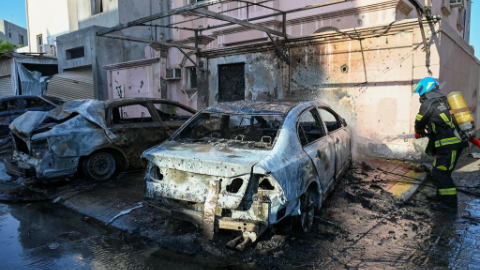
Strike in Lebanon: Israeli Attacks Kill 14 People Amid Ceasefire
Israeli strikes in southern Lebanon killed 14 people on Sunday, marking the deadliest day since the ceasefire began over a week ago.[1] Lebanon's health ministry reported 37 people wounded in the strikes,[2] as Israel warned residents to leave seven towns beyond the buffer zone.[2] Israel and Hezbollah are trading accusations of breaching the truce,[1] with Prime Minister Benjamin Netanyahu stating that the military is targeting Hezbollah.[1]
Recent Strikes and Casualties
The recent strike in Lebanon has drawn significant attention due to its severity, representing a sharp escalation in violence despite the ongoing ceasefire efforts. Lebanon's health ministry confirmed that Israeli strikes on Sunday resulted in 14 deaths in the country's south, making it the most lethal incident since the truce took effect over a week prior.[1] This toll underscores the fragility of the ceasefire, as hostilities have not fully subsided.[2] In addition to the fatalities, the ministry reported 37 people wounded, highlighting the widespread impact on civilian areas in southern Lebanon.[2]
These figures provide a stark illustration of the immediate human cost. The strikes occurred in a region already strained by prolonged conflict between Israel and Hezbollah, where infrastructure and communities remain vulnerable. The health ministry's data, drawn from hospitals receiving the casualties, paints a picture of overwhelmed medical facilities dealing with both fatal and non-fatal injuries from the attacks.[1][2] Analysts note that such casualty numbers in a single day signal a potential unraveling of de-escalation measures, as the deadliest episode post-ceasefire amplifies concerns over sustained peace.[1] The precision and timing of these strikes, coming shortly after the truce, suggest targeted operations amid accusations of provocations from both sides, though the sources emphasize the ministry's role in verifying the impact through official counts.[2]
Further context from on-the-ground reporting indicates that the strikes have exacerbated tensions in an area long contested, with the wounded likely including residents caught in crossfire or near military sites.[2] This event stands out not just for its lethality but for occurring in a period meant for stabilization, prompting questions about enforcement mechanisms under the ceasefire agreement. The health ministry's prompt reporting ensures traceability of these claims, reinforcing the reliability of the casualty assessments amid the fog of conflict.[1][2]
Accusations of Truce Violations
Israel and Hezbollah have exchanged sharp accusations of breaching the fragile truce, intensifying the rhetorical standoff following the deadly strikes. Prime Minister Benjamin Netanyahu asserted that the Israeli military was "vigorously" targeting Hezbollah positions, framing these actions as necessary responses to perceived violations by the Iran-backed group.[1] In parallel, Hezbollah has vowed to continue responding to what it describes as Israeli "violations," signaling no intention to stand down amid the escalating exchanges.[1]
This mutual blame game reflects deep-seated distrust between the two parties, with each portraying the other as the primary aggressor undermining the ceasefire. Netanyahu's statement positions Israel's military operations as defensive and proactive, aimed at neutralizing threats from Hezbollah, which has long maintained a presence in southern Lebanon.[1] Hezbollah's retort, emphasizing retaliation against breaches, suggests a readiness to mirror any perceived aggression, potentially perpetuating a cycle of tit-for-tat actions.[1] Such accusations are not isolated but part of a pattern observed since the truce's implementation, where minor incidents quickly escalate into claims of infidelity to the agreement.
The trading of barbs occurs against a backdrop of fragile negotiations and international calls for restraint, yet both sides appear entrenched in their narratives. This dynamic complicates third-party mediation efforts, as each party's public statements harden positions and justify further military postures.[1] The absence of independent verification mechanisms exacerbates the issue, leaving accusations to dominate the discourse and fuel uncertainty about the truce's viability.
Israeli Military Actions and Warnings
Israeli military actions have included fresh strikes and evacuation warnings, targeting areas in southern Lebanon amid ongoing hostilities. The strikes on Sunday not only caused significant casualties but were part of a broader pattern of operations, including efforts to cut off access to the southern town of Kafra by severing a key road.[3] These measures come as the Israeli military warned residents of seven towns beyond the buffer zone it occupied prior to the ceasefire to evacuate, signaling preparations for potential further engagements.[2]
The buffer zone, established before the truce, represents a strategic area where Israel maintains a presence to prevent Hezbollah incursions, and the warnings extend to communities just outside this perimeter.[2] Cutting off the road to Kafra illustrates tactical maneuvers to isolate potential militant positions, reflecting Israel's approach to controlling mobility in contested regions.[3] These actions underscore the military's operational tempo, which has not diminished despite the ceasefire, as evidenced by the continued strikes that wounded dozens.[2]
Such warnings and infrastructure disruptions aim to minimize civilian exposure while pursuing security objectives, though they have drawn criticism for their humanitarian implications in densely populated areas.[2][3] The specificity of targeting seven towns highlights a deliberate strategy, likely informed by intelligence on Hezbollah activities, positioning these moves as preemptive rather than reactive.[2] Overall, Israel's posture remains assertive, with these elements combining to pressure Hezbollah while safeguarding its own interests in the border region.[3]
Context of the Ceasefire
The ceasefire, which took effect on April 17, was intended to halt the Israel-Hezbollah war but has struggled to fully contain hostilities, as demonstrated by the recent deadly strikes.[3] Over a week since its inception, the truce has faced multiple tests, with Sunday's events marking the deadliest breach yet, according to Lebanon's health ministry.[1] Israel's warnings and strikes, including those cutting off access to Kafra, are framed by Tel Aviv as responses to continued violations by the other side.[3]
This agreement emerged from intense fighting, aiming to create a buffer and reduce cross-border attacks, yet persistent accusations reveal its tenuous nature.[1][3] The failure to fully halt operations points to gaps in compliance and enforcement, with both parties citing the other's actions as justification for their own.[2] Netanyahu's emphasis on targeting Hezbollah fits into this context, portraying strikes as enforcement of the truce's terms rather than infractions.[1]
The April 17 date anchors the timeline, with the subsequent week seeing simmering tensions erupt into significant violence.[3] This backdrop explains the heightened stakes of recent events, where the ceasefire's success hinges on mutual restraint that has so far eluded the combatants. International observers note that without robust monitoring, such as UN involvement, isolated incidents risk broader conflagration.[1][3]
Hezbollah's Response
Hezbollah has responded to the strikes and accusations by vowing to keep addressing "violations," maintaining a posture of defiance amid the truce's strains. The group's statements emphasize retaliation against Israeli actions, positioning their responses as legitimate defenses rather than breaches.[1] This rhetoric aligns with their narrative of resisting aggression, particularly in light of Netanyahu's claims of vigorous targeting by the Israeli military.[1]
Hezbollah's commitment to respond underscores their operational readiness and ideological stance, refusing to cede ground in southern Lebanon.[1] Such declarations serve both as warnings to Israel and reassurances to supporters, framing the conflict as ongoing despite the ceasefire. The group's Iran-backed status adds layers to their strategy, drawing on regional alliances to bolster resilience.[1]
In the immediate aftermath of the 14 deaths and 37 wounded, Hezbollah's words signal no de-escalation on their part, potentially inviting further Israeli countermeasures.[1] This response perpetuates the cycle of accusations, with Hezbollah portraying strikes as unprovoked while pledging measured but firm countermeasures.
What to watch next: As Israel continues targeting Hezbollah and the group vows responses to violations, the truce's stability remains in question, with potential for further strikes if accusations escalate.[1][2][3]