
Strike in Lebanon: Death toll from Israeli offensive reaches 2,659
Israel continues to conduct military strikes in southern Lebanon, with the death toll from the offensive reaching 2,659 as reported by the Lebanese Health Ministry.[4] In the latest strike Lebanon developments, at least 13 people, including four women and a child, have been killed in Israeli air strikes on southern Lebanon, according to the same ministry.[5] These actions come despite a ceasefire that has been theoretically in place since April 16, as Israel has launched new attacks targeting Hezbollah positions.[3] Nearly 8,183 people have also been injured in the offensive.[4] Separately, Israel faces accusations of destroying a Christian convent in Lebanon, with church leaders pointing to a pattern of attacks on Christian communities.[2] Meanwhile, US President Trump has stated he will review Iran's new 14-point plan amid the ongoing strikes.[1]
Overview of Recent Strikes
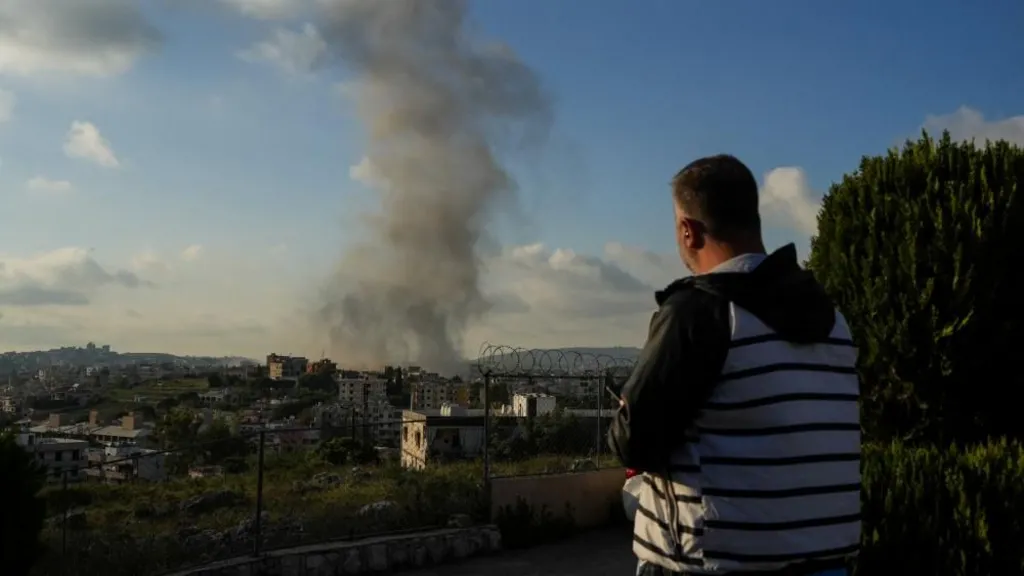
Israel's military operations in southern Lebanon persist, marked by a series of targeted strikes that have drawn significant attention amid fragile regional dynamics. Recent reports detail how Israel has launched new attacks across several parts of southern Lebanon, explicitly claiming these operations were aimed at Hezbollah infrastructure and personnel.[3] These strikes occurred despite the existence of a ceasefire agreement that was theoretically in place since April 16, highlighting the tenuous nature of de-escalation efforts in the region.[3] The Lebanese health ministry has confirmed the immediate human cost of one such recent barrage, noting that Israeli air strikes resulted in multiple fatalities in southern areas.[5]
The pattern of these military actions underscores a continuation of Israel's offensive posture, with strikes described as pounding the region in broader coverage.[1] Sources indicate that these operations are not isolated but part of an escalating latest offensive, where Israel maintains its focus on what it describes as Hezbollah targets.[3] The health ministry's reports provide a window into the frequency and intensity of these engagements, as the strikes have repeatedly hit populated southern zones.[5] This overview reveals a scenario where military activity shows little sign of abating, even as diplomatic frameworks like the ceasefire remain on paper.[3] Analysts observing the situation note that such strikes contribute to a cycle of confrontation, with each new wave prompting responses from local authorities and health officials who document the fallout.[5]
Further context from reporting emphasizes the geographic focus: southern Lebanon, particularly areas near the border, has borne the brunt of these operations.[3] The Lebanese health ministry's role in tallying impacts from these strikes illustrates the operational challenges on the ground, as medical teams respond to air-delivered munitions.[5] Israel's stated rationale—targeting Hezbollah—positions these as precision efforts, yet the broader offensive narrative suggests a sustained campaign.[3] As these strikes unfold, they intersect with the ceasefire's theoretical framework, raising questions about enforcement and compliance without venturing into unsubstantiated speculation.[3] This section consolidates the military actions' scope, from initial launches to their immediate regional reverberations, grounded in verified accounts of the engagements.[3][5]
Casualties and Human Impact
The human toll from Israel's latest offensive in Lebanon has reached stark figures, with the Lebanese Health Ministry reporting a total death toll of 2,659.[4] This number encapsulates the cumulative impact of ongoing strikes, reflecting a prolonged period of conflict that has strained Lebanon's medical infrastructure. In addition to the fatalities, nearly 8,183 people have been injured, underscoring the widespread physical and societal repercussions.[4] These statistics, drawn directly from official health ministry data, paint a picture of extensive harm across southern Lebanon, where strikes have repeatedly targeted areas with civilian presence.
A particularly grim episode within this offensive saw at least 13 people killed in Israeli air strikes on southern Lebanon, including four women and a child, as confirmed by the health ministry.[5] This incident highlights the vulnerability of non-combatants, with the inclusion of women and a child among the deceased emphasizing the strikes' penetration into everyday life.[5] The ministry's prompt reporting mechanism has been crucial in documenting these losses, providing a reliable tally amid chaotic conditions.[4][5] Injuries numbering close to 8,183 further compound the crisis, likely overwhelming hospitals and requiring long-term care for survivors.[4]
The human impact extends beyond raw numbers, as these casualties disrupt families and communities in southern Lebanon. Health ministry figures indicate a steady rise in the death toll, reaching 2,659 as the offensive progresses, which suggests a relentless pace of military activity.[4] The recent loss of 13 lives, with specific demographics noted, serves as a microcosm of broader suffering, where air strikes have claimed lives indiscriminately in reported cases.[5] Lebanon's health authorities continue to update these counts, reflecting their central role in mitigating the fallout from each strike wave.[4][5] This detailed accounting not only quantifies the losses but also informs international awareness of the offensive's scale, with injuries adding layers of ongoing hardship for thousands.[4]

White phosphorus munitions deployed in southern Lebanon during Israeli strikes. — Source: middleeasteye
Specific Incidents and Accusations
Among the notable events in the ongoing conflict, Israel has been accused of destroying a Christian convent in Lebanon, an action framed by church leaders as part of a growing pattern of attacks on Christian communities.[2] This incident, reported in detail, has sparked concerns from religious figures who warn of repeated targeting in Lebanon, Israel, and the occupied Palestinian territories.[2] Cardinal Bechara al-Rai, the Maronite Patriarch of Antioch, was highlighted in coverage praying behind an icon of the Virgin Mary with Child at a church in the predominantly Christian village of Jdeidet Marjeyoun, near the border with Israel in south Lebanon.[2] This imagery underscores the proximity of these sites to conflict zones and the perceived threat to religious institutions.
The destruction of the convent represents a specific flashpoint, with accusations leveled directly at Israel for the attack.[2] Church leaders' statements emphasize a pattern, suggesting this is not an isolated event but indicative of broader aggression toward Christian sites.[2] The location in southern Lebanon aligns with the region's exposure to strikes, where military operations have intersected with civilian and religious landmarks.[2] Submitted on Sat, 05/02/2026, the report by Elis Gjevori captures the immediacy of the claims, linking the convent's fate to wider worries about Christian communities' safety.[2]
These accusations add a layer of complexity to the conflict, as religious leaders voice alarms over systematic risks.[2] The prayer at Jdeidet Marjeyoun church symbolizes resilience amid vulnerability, with the village's border position amplifying exposure.[2] This incident stands out for its targeting of a convent, prompting warnings that echo across multiple territories involved in regional tensions.[2] Detailed reporting on such events provides critical insight into the strikes' reach, beyond military targets, into cultural and spiritual spaces.[2]
Broader Context and Related Developments
Amid Israel's strikes in Lebanon, US President Trump has announced he will review Iran’s new 14-point plan, a diplomatic move occurring parallel to the military escalation.[1] Trump stated he will “soon be reviewing the plan Iran has just sent to us,” though he expressed skepticism, noting he doesn’t think he can make a deal.[1] This development unfolds as Israel continues to pound Lebanon, linking regional military actions with high-level US-Iran engagement.[1]
The timing of Trump’s statement positions it within the context of the Lebanese offensive, where strikes persist despite other frameworks.[1] Iran’s 14-point plan, newly submitted, represents a potential avenue for negotiation, yet the president’s reservations highlight challenges in diplomacy.[1] Coverage from Al Jazeera frames this as a dual-track scenario: military intensification in Lebanon alongside US consideration of Iranian proposals.[1] Trump’s role as president underscores American involvement in Middle East dynamics, with the review process set to influence broader strategies.[1]
These related developments illustrate interconnected pressures, where Lebanon’s strikes coincide with nuclear or strategic talks involving Iran.[1] The plan’s details remain tied to Iran’s submission, with Trump’s forthcoming review as a key focal point.[1] This context enriches understanding of the offensive, showing how local military actions resonate with international diplomacy.[1]
{IMAGE_3}
Hezbollah Engagements and Ceasefire Status
Israel's strikes in southern Lebanon have specifically targeted Hezbollah, as stated in reports of new attacks launched despite the ceasefire theoretically in place since April 16.[3] This focus on Hezbollah positions frames the operations as counter-militant efforts, with multiple parts of the south affected.[3] The ceasefire's status remains precarious, described as theoretical amid ongoing military activity, indicating gaps between agreement and implementation.[3]
The targeting of Hezbollah underscores Israel's strategic priorities, with strikes aimed at degrading the group's capabilities in border areas.[3] Since April 16, the ceasefire has not halted these engagements, pointing to persistent hostilities.[3] This section details how such actions challenge de-escalation, with Israel's claims of precision targeting Hezbollah infrastructure central to the narrative.[3]
Current Situation Summary
The current situation in Lebanon encapsulates a deadly offensive by Israel, with a confirmed death toll of 2,659 and nearly 8,183 injured, per the Health Ministry.[4] Recent strikes have killed 13, including four women and a child.[5] Attacks continue on southern areas, targeting Hezbollah despite the April 16 ceasefire.[3] Accusations of a Christian convent's destruction highlight civilian site risks.[2] US President Trump's review of Iran’s 14-point plan adds a diplomatic layer.[1]
Consolidating these elements reveals sustained military pressure, fragile truce, and mounting casualties.[1][3][4][5] Health ministry data tracks the toll precisely, while strike details show operational continuity.[3][5] Broader patterns, including religious site attacks, complicate the landscape.[2] Trump's engagement signals potential shifts.[1]
What to watch next: Observers will monitor US President Trump's review of Iran’s 14-point plan, which he plans to assess soon amid Israel’s continued strikes in Lebanon,[1] alongside any enforcement of the theoretical ceasefire in place since April 16.[3]