Strike in Lebanon: Hezbollah and Israel Exchange Threats and Strikes
Hezbollah and Israel are swapping threats and strikes across Lebanon's border in the latest strike Lebanon developments, with the Iran-linked group using suicide drones and claiming hits on Israeli military equipment while Israeli actions have resulted in casualties despite a truce.[1][2][3][4]
Overview of the Conflict
The ongoing exchanges between Hezbollah and Israel highlight a tense border dynamic across Lebanon, marked by mutual threats and military actions. Hezbollah and Israel have been swapping threats and strikes across Lebanon’s border, as reported in recent coverage.[1] This pattern underscores a fragile situation where both sides continue operations despite calls for restraint. The Iran-linked Hezbollah has reiterated its defiance in the face of Israeli actions, signaling no immediate backing down from confrontations.[1] On the Israeli side, the defense minister has issued stark warnings, threatening to “burn all of Lebanon,” which amplifies the rhetorical escalation alongside physical strikes.[1] These developments fit into a broader context of border skirmishes, where violations of ceasefires have prompted retaliatory measures from Hezbollah, vowing responses to perceived aggressions.[2][3] The summary of these exchanges reveals a cycle of provocation and counteraction, with Hezbollah positioning itself firmly against Israeli incursions into Lebanese territory.[1] Israeli responses, including strikes, have persisted, contributing to the atmosphere of heightened alert on both sides of the border.[4] This overview captures the essence of the conflict as one driven by immediate military engagements and verbal posturing, with no clear de-escalation in sight based on the reported activities.[1]
Hezbollah's Drone Challenges
Hezbollah's deployment of suicide drones has emerged as a significant challenge for Israeli forces operating in Lebanon, complicating their military maneuvers along the border.[2] Israeli forces are being challenged by suicide drones launched by Hezbollah, which have been specifically used to target positions and equipment in contested areas.[2] This tactical use of drones represents a direct counter to Israeli presence, as Hezbollah has vowed to address what it views as ceasefire violations by Israel.[2] The drones pose difficulties due to their precision and expendable nature, allowing Hezbollah to engage without risking personnel in the same way as traditional assaults.[2] Reports indicate that these unmanned aerial vehicles are launched from Lebanese territory, striking at Israeli assets and forcing defensive adaptations from Israeli troops.[2] Hezbollah's strategy here leverages technology to maintain pressure, turning the border into a contested airspace where Israeli forces must contend with aerial threats amid ground operations.[2] The challenge is particularly acute in southern Lebanon, where proximity enables rapid drone deployment and response times that test Israeli air defenses and troop movements.[2] By committing to counter Israel's ceasefire violations through such means, Hezbollah demonstrates a sustained capability to disrupt operations, keeping Israeli forces on high alert.[2] This aspect of the conflict illustrates how asymmetric tactics like suicide drones are shifting the dynamics, providing Hezbollah with a tool to challenge superior conventional forces effectively.[2]
Hezbollah's Reported Attacks
Hezbollah has claimed successful strikes on Israeli military hardware in southern Lebanon, framing these as direct responses to ceasefire violations.[3] The group says it hit an Israeli tank and bulldozer in southern Lebanon, with the attacks carried out explicitly in response to Israeli ceasefire violations.[3] According to Hezbollah, these precision operations targeted key armored vehicles used by Israeli forces near the border, aiming to deter further incursions into Lebanese soil.[3] The Lebanese group emphasized that the strikes were retaliatory, underscoring their position that any breach of the truce warrants immediate action.[3] Details from Hezbollah's statements highlight the locations in southern Lebanon, a hotspot for cross-border activities where Israeli equipment has been maneuvering.[3] By hitting a tank and bulldozer, Hezbollah asserts its ability to inflict material damage, potentially slowing Israeli engineering and advance efforts in the area.[3] This reported success bolsters Hezbollah's narrative of active defense, as the group positions its actions within the framework of responding to aggressions rather than initiating unprovoked assaults.[3] The incidents contribute to the pattern of tit-for-tat engagements, where Hezbollah's strikes serve as a message of resolve against perceived violations.[3] Overall, these attacks exemplify Hezbollah's operational reach and willingness to engage Israeli assets directly when ceasefires are tested.[3]
Casualties from Strikes
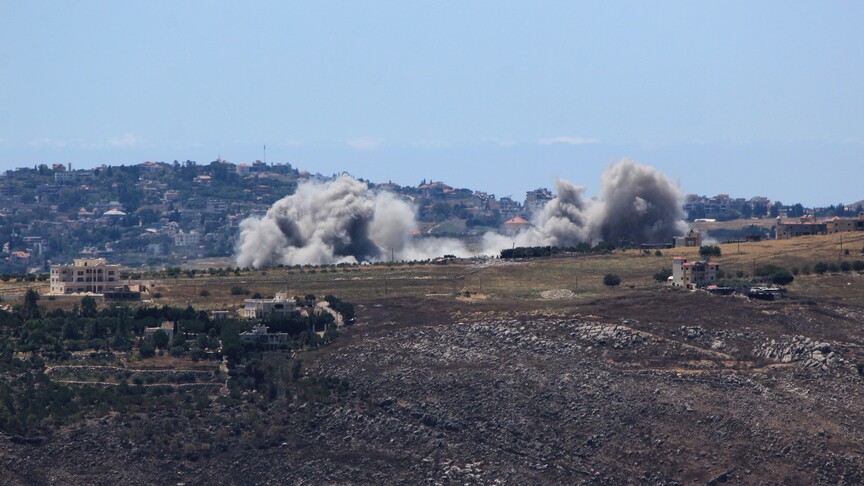
Israeli strikes in Lebanon have resulted in significant loss of life, even amid an existing truce, according to Lebanese reports.[4] Lebanon says Israeli strikes kill 14 despite truce, pointing to a series of attacks that have claimed these lives in recent exchanges.[4] These casualties occurred in the context of ongoing border tensions, where Israeli military actions continued irrespective of the ceasefire agreement.[4] The strikes targeted areas within Lebanon, leading to the deaths reported by Lebanese authorities, which highlight the human cost of the persistent conflict.[4] Despite the truce, these operations indicate that enforcement remains uneven, with Israeli strikes proceeding and causing fatalities.[4] Lebanon's account frames the 14 deaths as a direct outcome of these strikes, raising questions about adherence to the truce terms on the Israeli side.[4] The locations of these strikes align with the southern border regions active in the broader exchanges, where military activities have intensified.[4] This toll adds to the stakes of the strike Lebanon confrontations, as civilian and possibly combatant losses fuel further rhetoric and potential retaliation.[4] The persistence of such strikes despite the truce underscores the fragility of de-escalation efforts, with each incident risking wider involvement.[4]
Current Tensions
The current atmosphere along the Lebanon-Israel border is charged with defiance and threats from both Hezbollah and Israel, rooted in their ongoing swaps of strikes and warnings.[1] Hezbollah, the Iran-linked group, has reiterated defiance against Israel's actions, maintaining a posture of resistance amid the exchanges.[1] This defiance is echoed in their military responses, including drone launches and equipment strikes, as a counter to Israeli moves.[1][2][3] Israel, in turn, has responded with its own threats, exemplified by the defense minister's vow to “burn all of Lebanon,” which intensifies the verbal standoff.[1] These tensions are exacerbated by ceasefire violations cited by Hezbollah, prompting their vowed countermeasures.[2][3] Israeli strikes continuing to cause casualties further strain the situation, despite the truce in place.[4] The mutual accusations and actions create a feedback loop of escalation, where each side justifies its steps based on the other's perceived breaches.[1] Hezbollah's reiterated stance signals no retreat, while Israeli threats aim to project overwhelming resolve.[1] This backdrop of defiance and threats keeps the border volatile, with potential for broader conflict if the cycle persists.[1]
What to watch next: Monitor for further Hezbollah drone operations and responses to ceasefire violations, alongside Israeli strikes and ministerial threats, as both sides show no signs of relenting in their border exchanges.[1][2][3][4]