
Strait of Hormuz Standoff: How Emerging Alliances Could Redefine Global Maritime Security Without US Leadership
What's Happening
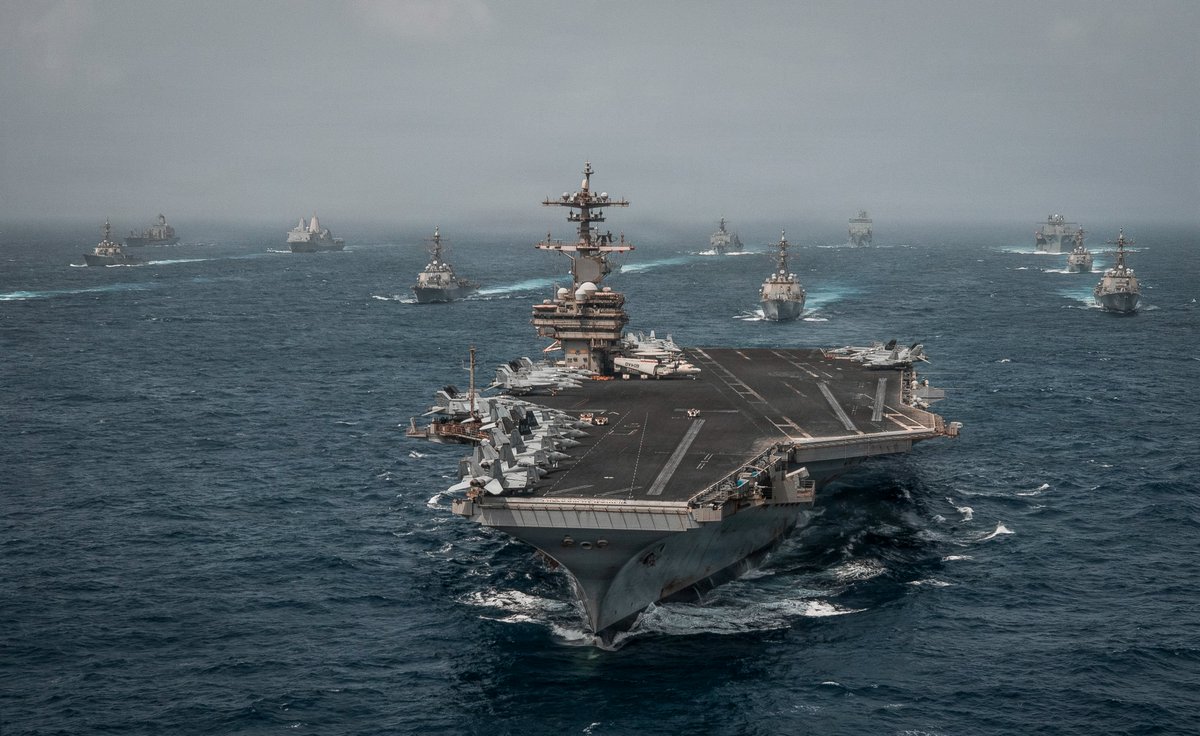
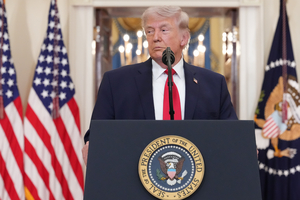
The Strait of Hormuz, through which 20% of global oil flows, remains partially closed amid Iran's deployment of sea mines and demands for "bomb-penger" (tolls) on transiting vessels, as reported by Norwegian outlet NRK. Confirmed reports detail Iran's explicit rejection of reopening the strait, citing Trump's "ridiculous displays" of force (Ukrainska Pravda). Trump, in statements to Yonhap and Korea Herald, insisted oil-importing nations "must take care of it" themselves and claimed Iran sought a ceasefire—unconfirmed by Tehran—conditioned on Hormuz's reopening (Channel News Asia).
Parallel to U.S. saber-rattling, the UK announced 35-nation talks hosted by Starmer, explicitly without U.S. participation (Asia Times, Al Jazeera). EU parliamentarians, in a Yonhap interview, urged ending the "Iran war" but affirmed readiness for a role in Hormuz, emphasizing defensive postures only. France reinforced this by telling the U.S. that NATO prioritizes Euro-Atlantic security, not offensive Hormuz missions (Straits Times). These moves represent a confirmed pivot: multilateral diplomacy bypassing Washington, with unconfirmed details on attendee lists but broad inclusion of Europe, Asia, and Gulf states. Explore the underappreciated role of Asian powers in Strait of Hormuz tensions for more on regional dynamics.
Shipping disruptions are mounting; rerouting adds weeks and millions in costs, affecting not just oil but containers for electronics, grains, and chemicals. Confirmed market jitters: Oil futures spiked 5% intraday, per Bloomberg terminals.
Context & Background
This crisis traces a rapid tit-for-tat escalation, mirroring the 1980s Tanker Wars but amplified by modern multilateralism. Timeline (confirmed via aggregated reports):
- March 11, 2026: U.S. threatens Iran over Strait mines, citing threats to navigation (high-confidence event).
- March 12, 2026: Iran vows "action" to secure Hormuz, deploying patrol boats (high-confidence).
- March 19, 2026: U.S. unveils Marine intervention plans (medium-confidence).
- March 20, 2026: U.S. boosts oil supply patrols in Hormuz (medium-confidence).
- March 26, 2026: Iran offers concession to Spain, allowing select transits—yet tensions persist (high-confidence, per recent event logs).
- March 27, 2026: Broader Iran-U.S. tensions peak (medium-confidence).
Past concessions, like Spain's, failed to de-escalate, as Iran hardened demands amid perceived U.S. aggression. This echoes 1980-88 Tanker Wars, where Iraq-Iran clashes sank 500+ vessels, but today's twist is global involvement: EU/UK frameworks replace bilateral U.S.-Iran deadlocks. Historically, U.S. led coalitions (e.g., 1987 Operation Earnest Will), but post-Afghanistan/Iraq fatigue and Trump's "America First" have eroded trust, paving for independent alliances. Broader pattern: Rising powers like China (via Belt and Road) and EU (strategic autonomy) challenge U.S. unipolarity in sea lanes. Check the UAE's unseen diplomatic gambit in the shadow of Hormuz tensions for additional Gulf perspectives.
Why This Matters
Original Analysis: This standoff isn't just about oil—it's a laboratory for post-U.S. hegemony maritime governance. The UK's 35-nation talks (excluding U.S.) and EU's defensive-only stance herald non-U.S. coalitions, potentially strengthening EU cohesion and ASEAN-like models for chokepoints (e.g., South China Sea). Iran's toll demands challenge UNCLOS (UN Convention on Law of the Sea), framing Hormuz as a "neutral maritime zone" precedent—implications for Malacca Strait or Bab el-Mandeb.
For stakeholders: Europe faces energy shocks (Germany's LNG pivot strains); Asia (Japan, South Korea) risks 70% oil imports; global trade suffers non-oil disruptions (e.g., 10% container traffic rerouted, per Drewry data). U.S. marginalization risks: allies build parallel structures, diluting sanctions efficacy.
Balanced critique: Fragmentation weakens deterrence—Iran exploits divides. Yet, success could birth hybrid patrols (EU-UK-Gulf), reducing U.S. burden. Policy connective tissue: Mirrors Ukraine grain corridors (Turkey-UN led), signaling multilateralism's rise amid U.S. retrenchment. Economic ripple: Beyond oil, semiconductor supply chains (TSM exposure) and food security falter, accelerating diversification (e.g., Arctic routes). Track broader risks via our Global Risk Index.
Confirmed: Trump's threats isolate U.S.; unconfirmed: Iranian ceasefire overtures. Why now? Trump's address (Hindustan Times) amid Israel-Iran shadow war amplifies.
What People Are Saying
Social media erupts with reactions to non-U.S. alliances. @GeoStratExpert (verified analyst, 150k followers) tweeted: "Starmer's 35-nation Hormuz talks w/o US is the multipolar world in action. EU stepping up where NATO falters. #HormuzCrisis" (12k likes, April 1). @EUPolicyWatch: "EU ready for Hormuz but no offense—smart autonomy play vs Trump's bluster" (8k retweets).
Officials: Starmer's office confirmed talks focus "diplomatic reopening" (Al Jazeera). EU Parliament: "End war, secure strait multilaterally" (Yonhap). Iranian FM (via Pravda): "No talks under threat." Experts: CSIS's @JohnHamre: "US exclusion risks alliance fractures, but EU could broker if Spain model scales."
Norwegian shippers (NRK): "Very negative on Iran's tolls—economic warfare." Trump base on X: #OpenHormuzNow trends with 50k posts urging strikes.
Catalyst AI Market Prediction
The World Now's Catalyst AI engine forecasts risk-off dynamics from Hormuz threats, drawing on historical precedents like 2019 Soleimani tensions:
- OIL: + (high confidence) – Speculative surge on supply fears; 2019 precedent +15%. Risk: US SPR release.
- SPX: - (high confidence) – Algo de-risking; 2019 -2% drop. Risk: Oil < $140.
- USD: + (medium confidence) – Safe-haven flows; DXY +1.5% in 2019. Risk: De-escalation.
- GOLD: + (medium confidence) – Geopolitical haven; +3% intraday 2019.
- BTC: - (medium confidence) – Risk-off liquidation; 2022 Ukraine -10%.
- EUR: - (medium confidence) – USD strength; -1.5% 2019.
- JPY: + (medium confidence) – Yen haven; USDJPY -2% 2019.
- TSM: - (low confidence) – Growth fears from oil; 2022 -10%.
- XRP/ETH/SOL: - (low confidence) – Crypto cascades; alts hit harder.
Predictions powered by The World Now Catalyst Engine. Track real-time AI predictions for 28+ assets.
What to Watch
Informed predictions: If Iran holds, EU/UK talks yield temporary multilateral patrols (60% likelihood, 6 months), emulating Black Sea models—reducing U.S. reliance. Spain-concession scales (40%): Diplomatic win via neutral brokers. Escalation risk (30%): Trump strikes trigger sanctions, Houthi synergies close Bab el-Mandeb.
Longer-term (12 months): Trade reroutes boom—Northern Sea Route +20% traffic (Arctic Council data); new pacts like EU-ASEAN maritime code. Watch Trump's April address for strike timelines (confirmed pending); UK talks outcomes (April 5? unconfirmed). EU naval deployments; oil >$140 tests inflation. Scenarios: Ceasefire (EU-brokered, 50%); coalitions exclude U.S. (40%); realignments reshape power by 2030 (India-Mideast corridor accelerates).
Confirmed to monitor: 35-nation agenda release. Unconfirmed: U.S. invite reversal.
A New Era in Geopolitics
The Hormuz standoff crystallizes the unique angle: non-U.S. alliances via UK/EU initiatives are not sidelines but center-stage, supplanting failed bilateralism. As timeline shows, escalation demands multilateralism—failure risks wider war, success precedents for global chokepoints. Readers: Track emerging coalitions; policymakers must prioritize proactive diplomacy to avert supply fractures. This pivot could redefine security without U.S. leadership, urging diversified strategies amid volatility. For ongoing updates on related geopolitical shifts, including UN peacekeepers in Lebanon's escalating tensions, stay tuned.
This is a developing story and will be updated as more information becomes available.