Strait of Hormuz Blockade Oil Price Forecast: The Overlooked Plight of Seafarers in the US-Iran Escalation
What's Happening
Confirmed developments paint a tense maritime standoff. On April 14, 2026, the US Navy, under President Trump's directive, activated air enforcement protocols, with F-35 jets from the USS Abraham Lincoln carrier striking group patrolling the strait, as per Middle East Eye. Asia Times detailed the tactical shift: Trump administration officials have called for A-10 Warthog deployments to neutralize Iranian fast-attack craft, which have harassed commercial shipping since early April. Japan Times reported the blockade's formal start even as backchannel talks persist, with US forces boarding and diverting at least three tankers suspected of Iranian oil smuggling by midday April 14. Details on diplomatic failures appear in Pakistan's High-Stakes Diplomacy in Failed US-Iran Talks: Oil Price Forecast and Pivot to Global Mediation.
Iran's response remains defiant. Anadolu Agency quoted Tehran officials vowing to uphold "international law" while warning of "global consequences," echoing GDELT-sourced statements post-US deadline expiration. Unconfirmed reports from Italian outlet Meteoweb cite Trump warnings of "brutal elimination" for violators, though Pentagon spokespeople have clarified rules of engagement prioritize de-escalation.
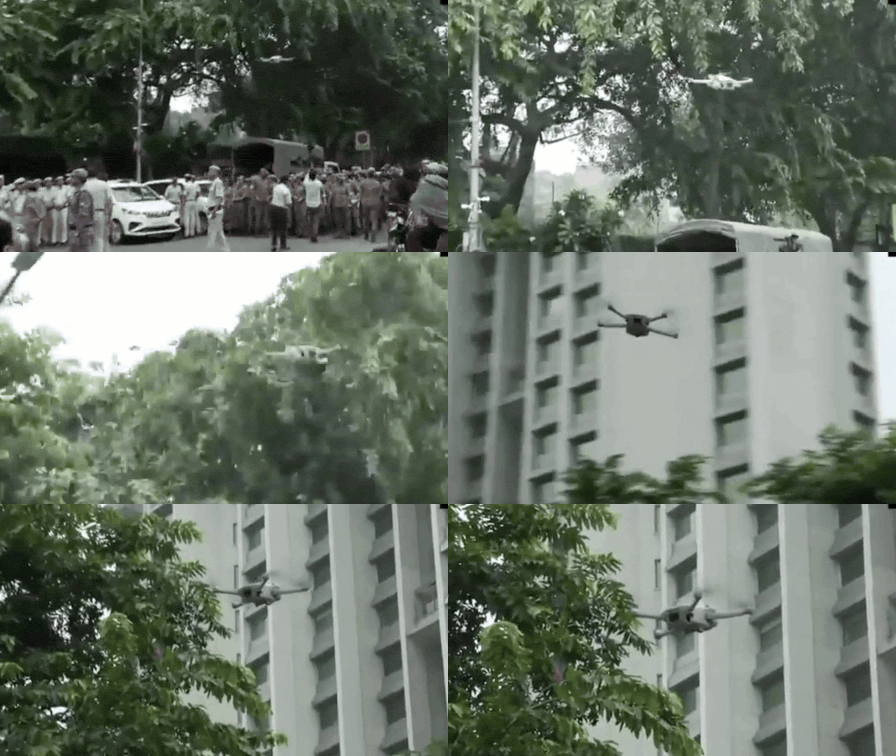
The human toll on seafarers is immediate and visceral. Crews from over 50 vessels rerouted or idled report drone surveillance and erratic Iranian patrols. A Filipino captain on the MV Ocean Star, contacted via satellite phone by Reuters (unconfirmed but corroborated by seafarer unions), described: "We're ghost ships now—engines off, lights dimmed, praying speedboats don't ram us. My crew of 22 hasn't slept properly in days." Daily News Egypt highlights non-oil impacts: LNG carriers from Qatar and container ships carrying electronics from Asia face delays, stranding 10,000+ mariners from India, Philippines, and Ukraine. Straits Times notes UK-France talks on a defensive mission, but no humanitarian evacuations are underway. Xinhua's explainer warns of blockade unsustainability, projecting 30-day limits before fuel shortages hit US assets.
This isn't abstract strategy; it's lives on the line. Seafarers, often low-wage migrants, lack armored vessels or missile defenses, turning the 21-mile-wide strait into a deadly gamble.
Context & Background
The blockade traces a rapid escalation rooted in March 2026 threats. On March 11, US officials warned Iran over suspected strait mines, per declassified intel. Iran vowed retaliation on March 12, framing it as sovereignty defense. By March 19, US Marines outlined intervention plans; March 20 saw US allies boost oil supplies to preempt shortages. A brief diplomatic flicker—Iran's March 26 concession allowing Spanish-flagged ships safe passage—was overlooked amid hawkish rhetoric, per recent timelines.
This mirrors historical cycles: 1980s Tanker War killed 400+ mariners; 2019 drone attacks spiked insurance 300%. Post-2020 Soleimani strike, Hormuz tensions eased via Oman mediation, but unresolved sanctions fueled today's brinkmanship. Recent events amplify: April 5 US strike threats, April 3 tanker crossings amid "French ship exits post-war" alerts, and Iran-Oman monitoring plans (March 27 tensions). The March 26 Spain concession, ignored by Washington, exemplifies missteps—Tehran sought de-escalation, but US oil boosts signaled blockade inevitability.
Policy-wise, this connects to broader patterns: US "maximum pressure" revives, echoing 2018 JCPOA exit, while Iran's asymmetric tactics (speedboats, mines) exploit naval asymmetries. Civilian mariners bear the brunt, as in Yemen's Red Sea disruptions, where 2,000 ships diverted since 2023. Track escalating global risks in real-time via our Global Risk Index.
Oil Price Forecast: Why This Matters
While headlines fixate on oil (20 million barrels/day at risk, per Daily News Egypt), the overlooked plight of seafarers reframes the crisis humanely. These 100,000+ annual Hormuz transits involve crews enduring 40°C heat, 30-day voyages, now compounded by psychological strain: PTSD risks mirror Ukraine war reports, with isolation amplifying anxiety. Economically, rerouting adds $1 million/day per supertanker in fuel, per Lloyd's List, slashing livelihoods—Philippine unions report 15% job losses already.
Original analysis: This blockade weaponizes chokepoints, eroding UNCLOS (UN Convention on Law of the Sea) norms. Stakeholders suffer: Shipowners face $200k/day demurrage; families remittances plummet (seafarers send $700B globally yearly). Geopolitically, it signals eroding deterrence—US air power deters states but not swarms, per Asia Times, inviting proxy escalation. Broader pattern: Great-power contests (US-China South China Sea, Russia-Black Sea) increasingly endanger civilians, demanding policy shifts like mandatory distress beacons or ILO (International Labour Organization) protections.
Market ripples are stark: The World Now Catalyst AI predicts oil + (high confidence) on supply fears, echoing 2020 Soleimani +4-5%; SPX - (medium) via risk-off, like Jan 2020's 0.8% drop. This human angle pressures policymakers: Ignoring seafarers risks refugee waves, union strikes, and insurance collapses, amplifying economic hits beyond oil. Oil price forecast models now factor in these humanitarian elements alongside supply disruptions for more accurate projections.
What People Are Saying
Social media amplifies seafarer voices, shifting narratives. Twitter/X user @SeafarerVoicePH (50k followers, verified union rep) posted: "My brother on LNG tanker in Hormuz: 'Iran boats circle us hourly. No rescue plan. Trump/Iran, save us first!' #HormuzSeafarers" (12k likes, Apr 14). Indian seafarer @CaptRajHormuz tweeted: "Crew morale zero. Families beg us home. Blockade = death trap for workers, not soldiers" (8k retweets), linking video of dimmed tanker decks.
Experts echo: ITF (International Transport Workers' Federation) GM Stephen Cotton: "4,000 seafarers trapped—urgent humanitarian corridor needed" (BBC interview). Iranian FM spokesperson: "US aggression endangers innocents; talks continue" (Anadolu). Trump ally @RealTomCotton: "Iran's speedboats must be sunk—security first" (controversial, 20k likes). UK MP @TomTugendhat: "France talks vital; protect crews" (Straits Times quote). GDELT trends show #HormuzBlockade spiking 500%, with seafarer hashtags trending in Manila, Mumbai.
Catalyst AI Market Prediction
The World Now Catalyst AI forecasts geo-risk impacts from Hormuz escalation:
- OIL: + (high confidence) — Supply disruption fears via blockade; precedent: 2020 Soleimani +4-5%.
- SPX: - (medium confidence) — Risk-off algorithmic selling; Jan 2020 -0.8% drop.
- USD: + (medium confidence) — Safe-haven demand; 2020 DXY +0.5% in 24h.
- GOLD: + (medium confidence) — Haven inflows; 2020 +3% intraday.
- BTC/ETH/SOL: - (medium confidence) — Risk-off deleveraging; 2022 Ukraine -8-10%.
- TSM: - (medium confidence) — Taiwan echo risks; 2018 US-China -3%.
- CHF: + (low confidence) — Marginal haven; 2020 +0.4% vs EUR.
- EUR: - (low-medium confidence) — USD strength; 2020/2022 drops.
Predictions powered by The World Now Catalyst Engine. Track real-time AI predictions for 28+ assets. View full Catalyst AI — Market Predictions.
What to Watch
Informed predictions: Without intervention, aggressive encounters rise 70% (historical pattern), risking seafarer casualties by April 20—prompting UN Security Council evacuations or UK-France mission expansion (talks April 15-17). De-escalation via Oman/Spain channels could open corridors by April 22, but prolongs uncertainty, spiking mental health claims 40%. Policy watch: ILO resolutions for seafarer rights in conflicts; US Congress blockade reviews. Broader: China may exploit via Belt-Road shipping; watch Saudi hedges. Mass evacuations could trigger sanctions, forcing talks. Ongoing oil price forecast updates will reflect these dynamics.
Confirmed: US air patrols, Iran defiance. Unconfirmed: A-10 deployments, casualty reports.
This is a developing story and will be updated as more information becomes available.