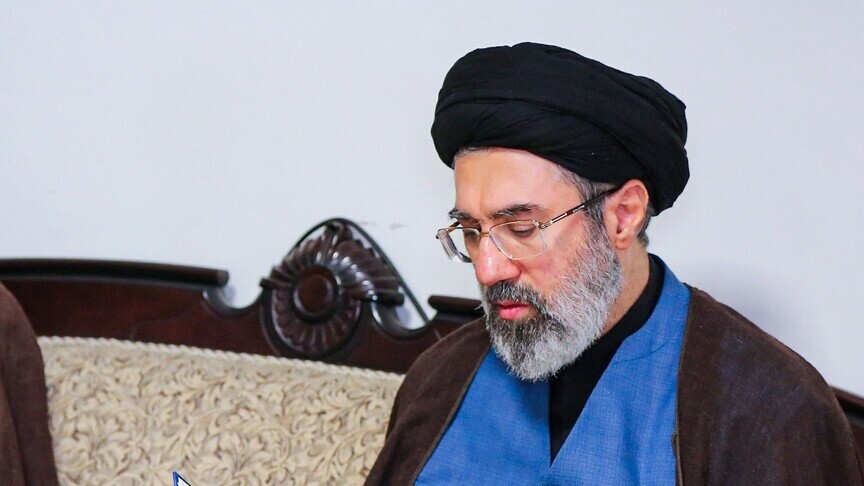

Iran Tensions Rise as New Supreme Leader Vows to Avenge Ali Khamenei
Iran tensions have escalated sharply as Ayatollah Mojtaba Khamenei, Iran's new supreme leader, has vowed to avenge the death of his predecessor Ali Khamenei, killed in an airstrike on the first day of the war, while the US and Iran continue tense negotiations over the Strait of Hormuz amid a broken ceasefire and renewed strikes.
New Supreme Leader Vows Revenge
Ayatollah Mojtaba Khamenei stated that avenging Ali Khamenei is the "demand of the nation" and "must certainly" be carried out, according to a message released at the funeral. [1] Iran's supreme leader vows to avenge slain predecessor Ali Khamenei, with the new leader pledging that the act is a national demand that must certainly be carried out. [2] The message from Ayatollah Mojtaba Khamenei directly addresses the killing of Ali Khamenei and frames revenge as an obligation tied to public sentiment. [1] Multiple reports confirm the new supreme leader's call for action in response to the airstrike that ended his predecessor's life on the opening day of the conflict. [4] This pledge arrives as Iran tensions continue to shape diplomatic and military calculations between Tehran and Washington.
Funeral and Public Sentiment
At the funeral of Iran's slain Supreme Leader Ayatollah Ali Khamenei on Thursday, a huge crowd of mourners packed a courtyard, some bearing banners reading "We Will Kill Trump." [3] The large turnout reflected widespread public mourning and anger over the airstrike that killed Ali Khamenei on the first day of the war. [3] Banners displayed at the event explicitly called for action against US President Donald Trump, underscoring the charged atmosphere surrounding the proceedings. [3] The funeral served as the platform for the new supreme leader's message, linking public displays of grief directly to demands for accountability. [1] Observers noted the scale of attendance as evidence of the depth of national feeling following the loss of the previous leader. [3]
Diplomatic Efforts in Oman
Iran's Foreign Minister Abbas Araqchi traveled to Oman to discuss safe passage through the Strait of Hormuz, with the US demanding a public pledge of free and secure transit without tolls. [3] Araqchi arrived in Oman on Saturday to discuss arrangements for the safe passage of ships through the Strait of Hormuz, according to Iranian state media. [3] Washington seeks a public pledge of free, secure transit without tolls through the waterway that carried one-fifth of global oil supplies before the war. [3] A high-level US team including Vice President JD Vance, Secretary of State Marco Rubio, special envoy Steve Witkoff and Trump's son-in-law Jared Kushner was expected to lead negotiations with Araqchi. [3] Iran tensions remain central to these talks, as both sides navigate demands for guarantees on the strategic waterway.
Trump's Threats and Ceasefire Declaration
US President Donald Trump declared the ceasefire over but agreed to continue talks, while warning of massive missile strikes if Iran attempts to assassinate him, citing Israeli intelligence about such a plot. [3] Trump posted that the United States had stated in no uncertain terms that the Cease Fire is OVER, even as the two sides agreed to keep talking. [3] He ordered the US military to be prepared to launch strikes against Iran if Tehran carried out or attempted an assassination of the president, stating that 1000 Missiles are Locked and Loaded and aimed at the Islamic Republic of Iran. [3] The Wall Street Journal and other US media reported that Israel had shared intelligence with Washington that Iran had recently devised a plan to assassinate Trump. [3] Iran disputed Trump's interpretation, saying it had not requested talks with the US but had agreed to host a Qatari mediator. [3] These statements have intensified Iran tensions in the wake of the broken interim agreement.
Recent Attacks and Casualties
Recent attacks on commercial tankers in the Strait of Hormuz, which Iran has not claimed but uses for leverage, prompted US strikes on Iranian sites and Iranian responses on US military locations, killing at least 17 and wounding 115. [3] Three Qatari and Saudi commercial tankers came under fire earlier in the week, prompting the US to hit Iranian sites, and Iran to respond with strikes on US military sites in Gulf states. [3] At least 17 people were killed in US strikes on six cities in Iran on Wednesday and Thursday, while 115 people were wounded. [3] While Iran has not claimed responsibility for the ship attacks, analysts say Tehran uses such actions to gain leverage in negotiations. [3] Senior US officials told reporters that Iran had informed US officials that recent attacks on shipping in the strait were from an "errant part of their system." [3] Both sides accuse each other of violating an interim agreement aimed at ending a five-month conflict. [3]
Status of US-Iran Agreement
Both sides accuse each other of violating an interim agreement aimed at ending a five-month conflict that has disrupted global oil supplies and raised prices. [3] Last month's interim deal was meant to pave the way to the end of a conflict now in its fifth month, which has killed thousands, throttled worldwide energy supplies and raised fears of a global economic downturn. [3] The US revoked the license authorizing the sale of Iranian crude on Tuesday after the vessels were hit. [3] Araqchi accused the United States of violating the ceasefire agreement, writing that there can only be mutual compliance. [3] Even so, US officials said conversations between the two countries had been productive in recent days. [3] The flareup cast further doubt over the future of an interim agreement and pushed oil prices higher. [3] Renewed fighting in the Gulf has increased the pain for US consumers, with crude oil prices posting their biggest weekly rise in eight weeks after weeks of steady declines. [3] Less than three weeks after Washington and Tehran began implementing a 60-day memorandum, the ceasefire is broken, yet the two sides are still talking. [5]
What to watch next: Qatari negotiators are set to continue efforts to de-escalate tensions and discuss the Strait of Hormuz, while US officials monitor whether Iran issues the demanded public pledge on free transit without tolls.