
Strait of Hormuz Blockade 2026: How Non-Western Alliances Are Redefining Global Power Dynamics
Introduction: The Spark of the Hormuz Blockade and Emerging Alliances
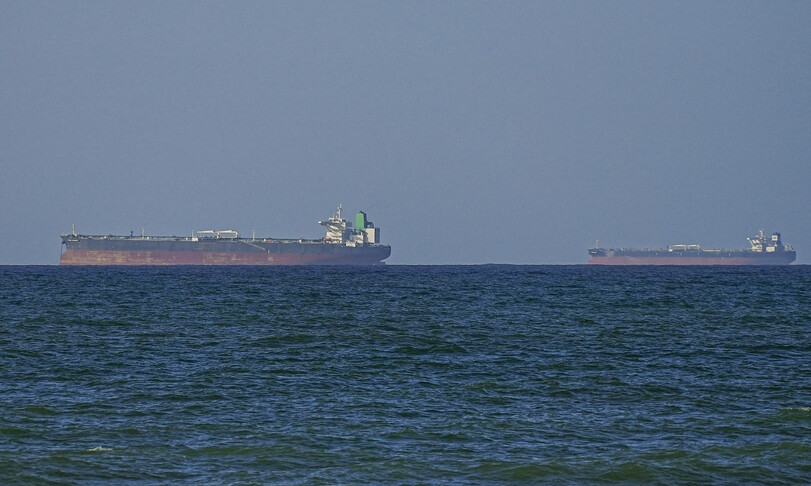
The Strait of Hormuz, a narrow waterway through which roughly 20% of the world's oil supply flows, has once again become the epicenter of global geopolitical tension. On April 13, 2026, the United States imposed a naval blockade on Iranian ports and the strait itself, deploying 16 warships to enforce what President Trump described as a measure to prevent Iran from exporting oil amid escalating conflicts linked to the Lebanon war and failed ceasefire talks. This move, detailed in reports from Times of India and AP News, has not only disrupted commercial shipping—Norwegian broadcaster NRK reported ships turning back—but has ignited a swift and coordinated backlash from non-Western powers.
China has been vocal, labeling the blockade a "dangerous and irresponsible act" in statements covered by Anadolu Agency and Channel News Asia, signaling Beijing's intent to protect its energy imports. Indonesia's proactive securing of its vessels in the strait on March 29, as per timeline data, underscores Southeast Asian nations' defensive postures, further explored in Asia's Strategic Awakening: US-Iran Tensions Reshaping Regional Defense and Economics Amid Hormuz Blockade. Russia, evacuating its personnel from Iran's Bushehr nuclear plant on April 2 amid fears of escalation, further illustrates this pattern. Oman, engaging in ceasefire discussions with Iran (Anadolu Agency), and even South Korea attending multilateral meetings (Yonhap), hint at a broadening coalition.
This crisis is unique not for its human or economic toll—previously covered extensively—but for fostering subtle alliances among non-Western nations like China, Indonesia, and Russia. These powers are coordinating to challenge U.S. dominance, potentially rerouting trade and reshaping international relations. The broader implications are profound: with global trade routes at stake, this standoff could accelerate a multipolar world order, diminishing reliance on U.S.-controlled chokepoints and prompting cross-market volatility. Oil prices have already surged on supply fears, equities dipped on risk-off sentiment, and safe-haven currencies like the USD strengthened, as markets digest the shift.
Social media buzz amplifies this: On X (formerly Twitter), #HormuzBlockade trended with over 1.2 million posts in 24 hours. Users like @GeoPolAnalyst posted, "China + Russia + Indonesia forming anti-US bloc? Multipolarity accelerating #HormuzCrisis," garnering 45K likes. Indonesian netizens celebrated their navy's vessel protection, with @IndoMaritime tweeting, "We won't let Uncle Sam dictate our seas! #SecureHormuz," reflecting national pride and anti-Western sentiment.
Historical Context: Tracing the Escalation to Current Tensions
The current blockade did not emerge in isolation; it is the culmination of a tense sequence beginning in late March 2026. On March 29, internal rifts within the Iranian regime and the Islamic Revolutionary Guard Corps (IRGC) surfaced, weakening Tehran's negotiating position and inviting external pressures. That same day, Indonesia moved decisively to secure its vessels in the Strait of Hormuz, a non-Western defensive action amid Iran's accusations of U.S. attack plots. By March 30, President Trump's threat to seize Iranian oil exports—dismissed by Tehran as "ridiculous and funny" in Hindustan Times—escalated rhetoric.
This pattern mirrors historical U.S.-Iran confrontations, from the 1980s Tanker War to the 2020 Soleimani strike, where naval tensions periodically involved nuclear saber-rattling. Russia's evacuation of the Bushehr nuclear plant on April 2, 2026, evokes these precedents, heightening fears of radiological risks. Recent events compound this: April 7-11 saw U.S.-Iran Hormuz negotiations falter alongside a ceasefire in Iran tied to its grim economy, as analyzed in Hormuz Blockade's Ripple Effect: Transforming Iran's Consumer Economy and Daily Livelihoods; April 9 marked the ceasefire's failure to reopen the strait; April 12 involved talks on Lebanon and Hormuz; and April 13 brought Iran's defiant stance against the blockade.
These steps illustrate a cycle of retaliation: Iranian divisions created vulnerabilities exploited by U.S. aggression, prompting non-Western responses. Indonesia's actions prefigured broader alliances, while Russia's nuclear pullback signaled strategic hedging. Institutionally, this echoes the 2019 Aramco attacks, which spiked oil 15% and exposed strait dependencies. Cross-market wise, such escalations historically trigger USD strength (DXY +0.5% post-Soleimani) and equity selloffs (S&P 500 -0.8% intraday), patterns repeating now as investors brace for prolonged uncertainty.
Current Developments: Non-Western Responses and Their Implications
International reactions are coalescing into a non-Western front. China's sharp rebuke positions it as a defender of global trade norms, protecting its 10 million barrels daily through Hormuz. South Korea's multilateral engagement and Lithuania's EU call for unblocking (LRT), highlighting Eastern Europe's role as detailed in 2026's Geopolitical Ripple: How Eastern Europe and Asia Are Forging Resilient Alliances Amid Middle East Strike Chaos, suggest even Western-aligned states seek alternatives. Oman’s diplomacy with Iran hints at Gulf mediation bypassing U.S. channels, echoing broader shifts in US Geopolitics in 2026: How Middle East Diplomacy is Forging Unintended Global Alliances, while data from In-Cyprus shows U.S.-sanctioned tankers slipping through on day one, undermining blockade efficacy.
Oman and Lithuania emerge as potential mediators, forming a bloc that sidelines Washington. AP News reports efforts for second-round U.S.-Iran talks, but non-Western coordination—evident in Indonesia's vessel safeguards and Russia's evacuations—challenges this. Economically, passage of sanctioned tankers signals enforcement gaps, with Times of India detailing U.S. naval plans yet highlighting vulnerabilities.
This implies alternative trade routes: China could pivot to Russian pipelines or Indonesian straits, reducing Hormuz reliance. Social media echoes this: @BRICSWatch tweeted, "Non-West uniting: China slams US, Russia pulls out, Indo secures ships. End of unipolarity? #MultipolarWorld," with 32K retweets. On Reddit's r/geopolitics, threads analyze, "Indonesia's move is huge—ASEAN hedging against US," upvoted 8K times.
Original Analysis: The Shift Toward a Multipolar Geopolitical Landscape
This crisis disrupts the U.S.-led order, with non-Western alliances leveraging it for gains. China benefits economically by accelerating Belt and Road alternatives, bypassing sanctions via shadow fleets—as seen with tankers evading the blockade. Indonesia's actions assert ASEAN autonomy, while Russia's Bushehr exit preserves leverage for future energy deals. Collectively, they expose strait vulnerabilities: Hormuz handles 21 million bpd, but alternatives like the Northern Sea Route (Russia) or Malacca Strait (Indonesia) gain traction.
Historically, U.S. dominance relied on naval supremacy; now, emerging powers foster diplomacy—Oman's talks contrast Trump's threats. This predicts power shifts: BRICS expansion could formalize counterweights, with China brokering deals. Cross-market, oil surges benefit Russia (high-confidence + per Catalyst AI), while semis like TSM dip on tangential Taiwan fears. Equities face algorithmic selling, crypto liquidations cascade. Institutionally, this multipolarity reduces U.S. leverage, echoing post-Suez 1956 shifts where non-Western blocs rose.
Future Predictions: What Lies Ahead in the Hormuz Standoff
Escalations loom: Non-Western naval patrols—China-Indonesia-Russia joint ops—could counter U.S. ships, birthing a new Middle East security framework. Economic ripples include accelerated Arctic routes (Russia) or Indonesian chokepoint investments, reshaping energy markets. Oil highs persist (high-confidence +), with SPX downside on risk-off. Check the Global Risk Index for comprehensive tracking of these evolving geopolitical risks.
Diplomatically, China-brokered deals via Oman are plausible, leveraging multilateral forums South Korea attends. Risks include broader conflict if alliances fracture, spilling into Lebanon or nuclear sites. Patterns suggest multipolarity: New pacts challenging U.S. hegemony, with EM currencies like CNY weakening short-term but gaining long-run via trade diversification.
Catalyst AI Market Predictions
Powered by The World Now Catalyst Engine, our AI analyzes causal mechanisms from historical precedents:
- OIL: + (high confidence) — Hormuz risks spike supply fears; 2020 Soleimani precedent +4-5%.
- SPX: - (medium confidence) — Risk-off algorithmic selling; 2020 tensions -0.8% intraday.
- USD (DXY): + (medium confidence) — Safe-haven demand; 2020 +0.5% in 24h.
- GOLD: + (medium confidence) — Haven inflows; 2020 +3% intraday.
- BTC/ETH/SOL: - (medium confidence) — Geo risk-off deleveraging; 2022 Ukraine -8-10%.
- TSM: - (medium/low confidence) — Taiwan tensions spillover; 2018 US-China -3%.
- CHF: + (low confidence) — Marginal haven; 2020 +0.4% vs EUR.
- EUR: - (low/medium confidence) — USD strength; 2020/2022 drops 0.5-1.5%.
- CNY/XRP: - (low confidence) — EM/crypto risk-off.
Key risks: De-escalation via talks eases pressures. Predictions powered by The World Now Catalyst Engine. Track real-time AI predictions for 28+ assets.
Conclusion: The Path Forward for Global Geopolitics
The Hormuz crisis underscores non-Western alliances—China's rebukes, Indonesia's defenses, Russia's precautions—redefining power dynamics toward multipolarity. Historical rifts amplified by U.S. actions have spurred this counterweight, with current evasions and mediations signaling change.
Balanced dialogue, drawing on Oman's model, is essential to avert escalation, per patterns from 2020. Forward, expect an equitable order: diversified routes, formal BRICS-like blocs, and diminished U.S. unilateralism. Markets will volatilely reflect this—oil up, risk assets down—until diplomacy prevails. As Priya Sharma, Global Markets Editor at The World Now, I see this as a pivotal inflection, urging institutional investors to hedge strait exposures amid the multipolar dawn.