South Korea's Ruling Party Pledges Support for U.S.-North Korea Dialogue After Drills Scaled Back
Ruling Party Backs Dialogue Push
Ruling Democratic Party leader Kim Min-seok said Friday his party will support President Lee Jae Myung's efforts to facilitate dialogue between the United States and North Korea. [1] Kim's remarks came after a key military exercise between Seoul and Washington was scaled back following U.S. President Donald Trump's order, a move widely seen as a conciliatory gesture toward the North Korean leader. [1] "As the positions of the United States, China and North Korea are going through complex changes, the situation on the Korean Peninsula is changing in various ways," he said during a meeting of the party's supreme council. [1] "We will immediately push ahead with party-to-party diplomacy by visiting the U.S, China and Japan by the end of this year as the U.S. midterm elections are scheduled for November," he added. [1] Kim Min-seok spoke during the meeting of the party's supreme council at City Hall in Gangneung, Gangwon Province, northeastern South Korea. [1]
Early End to Joint Military Drills
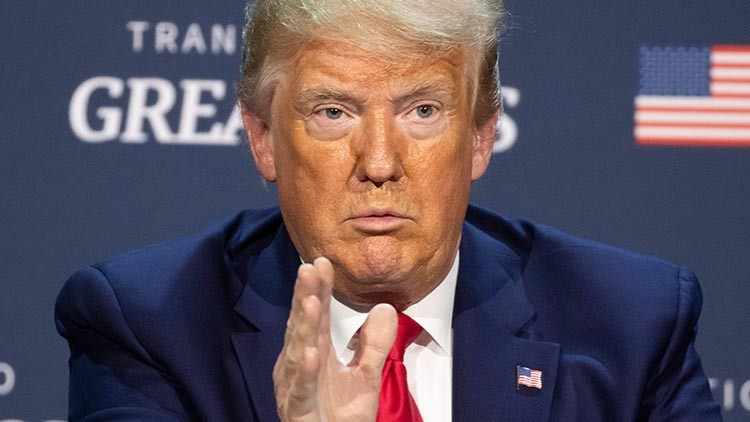
South Korea and the U.S. were set to wrap up the Ulchi Freedom Shield exercise Friday, nearly a week ahead of its original schedule. [1] The U.S. and South Korean militaries were wrapping up their annual drills six days earlier than initially scheduled on Friday in a conciliatory gesture toward North Korea. [4] U.S. President Donald Trump had earlier abruptly ordered the Pentagon to “substantially reduce” the Ulchi Freedom Shield exercises just before they began Monday. [4] Trump cited what he described as a good relationship with North Korean leader Kim Jong Un and South Korea’s refusal to support him over the war in Iran. [4] The Ulchi Freedom Shield is one of the main military exercises conducted by the U.S. and South Korea annually to enhance their ability to cope with potential North Korean aggression. [4] Its downsizing has caused worries about joint U.S.-South Korean readiness. [4]
North Korea's Dismissive Response
North Korea, however, has shrugged off the sharp reduction, saying it does not change the aggressive nature of the exercise. [1] Kim Yo Jong, the influential sister of North Korean leader Kim Jong Un, brushed aside Trump’s overture on Wednesday, saying “the provocative, aggressive nature of the drills” won’t change only with the reduction of their duration and size. [4] Kim Yo-jong accused Seoul of being "in a poor plight of canceling 'war games' it liked very much" over Washington's scaling down of a joint South Korea-U.S. military exercise. [2] Kim also accused South Korean President Lee Jae Myung of making "double-dealing remarks," referring to Lee's comments that he respects the scaling down of the drills while also pledging to pursue an "independent buildup of military capabilities." [2] The next day, North Korea fired about 10 short-range ballistic missiles toward the sea, apparently following through with its previous threat to respond to the U.S.-South Korean drills that it views as an invasion rehearsal. [4] The U.S. Pacific Command said the events didn’t pose an immediate threat to U.S. territory or its allies. [4] Kim Yo Jong still used relatively measured language, avoided typical harsh North Korean rhetoric and touched upon what she called an “excellent” relationship between her brother and Trump. [4]
Seoul Urges Halt to Criticism
The presidential office on Friday urged Pyongyang to halt its "derogatory remarks" against South Korea, one day after the sister of North Korean leader Kim Jong-un issued a statement seen to be aimed at belittling Seoul and its president. [2] "Derogatory remarks toward our government and president do not help in building mutual trust," the presidential office said in a brief press release. [2] "We call on the North to halt unnecessary criticism and march together toward peaceful coexistence on the Korean Peninsula," it added. [2] The message came after Kim Yo-jong issued her statement. [2] The presidential office reiterated its commitment to a policy seeking peaceful coexistence between the two Koreas based on mutual trust. [2]
Lee's Role as Pacemaker
President Lee has said he respects Trump's push to create the conditions for dialogue with the North, vowing to do his best to fulfill his role as a "pacemaker" by supporting Trump's efforts as a "peacemaker." [1] "As a party directly involved in building peace on the Korean Peninsula, the government will continue its close cooperation with the U.S. while making proactive efforts to help resume North Korea-U.S. dialogue as a 'pacemaker,'" the presidential office said. [2] Kim Yo Jong denied Trump’s claim that Kim Jong Un had responded to his request for a conversation. [4] When asked by reporters Wednesday if he would be meeting with Kim Jong Un this year, Trump said that “Yeah, I will be.” [4] Kim Jong Un has used the diplomatic stalemate to increase his leverage by modernizing his nuclear and missile programs and aligning with Russia over its war against Ukraine. [4] Kim Jong Un suggested last year that he won’t return to talks unless the U.S. drops its demand for North Korean denuclearization as a precondition for diplomacy. [4]
What to watch next: The ruling party's planned visits to the U.S., China and Japan by the end of this year ahead of the U.S. midterm elections, along with any further signals from North Korea on whether it will return to talks after the recent missile launches.