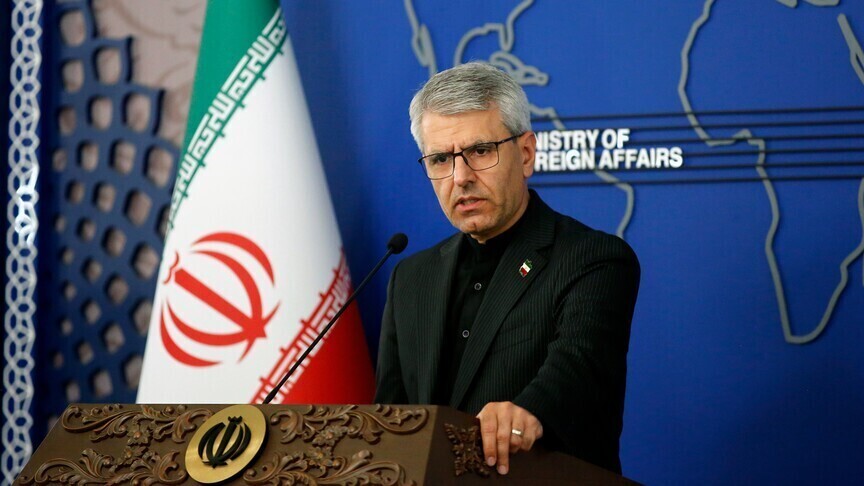

South Korea's Energy Diplomacy in the Shadow of North Korean Brinkmanship and Middle East Strike
Introduction: The Intertwined Threads of Geopolitics and Energy Security
In the volatile landscape of 2026, South Korea stands at a precarious crossroads where North Korean brinkmanship collides with escalating Middle East strike tensions, amplifying threats to its national security and economic stability. Recent drone incursions into North Korean airspace, acknowledged by Seoul as having an "official role," have reignited inter-Korean hostilities, while U.S. President Trump's pointed remarks on potential Iranian conflicts have sent ripples through global energy markets as part of the broader Middle East strike scenario. These events are not isolated; they underscore South Korea's acute vulnerability as a nation importing over 90% of its energy needs, primarily from the Middle East, where Middle East strike risks loom large.
This article uniquely explores how South Korea is leveraging energy diplomacy with Middle Eastern nations—such as high-level trips to Oman, Saudi Arabia, and Kazakhstan for oil and naphtha supplies—as a strategic buffer against North Korean threats and broader geopolitical instability tied to the Middle East strike. This interplay between regional security and global energy markets represents an underexplored dimension of Seoul's policy toolkit, positioning the country not merely as a responder to crises but as a proactive shaper of alliances. The implications extend far beyond the Korean Peninsula: as a linchpin in global supply chains for semiconductors and automobiles, South Korea's energy security directly influences worldwide economic stability, potentially tipping scales in U.S.-China rivalry or exacerbating inflation in advanced economies. For deeper insights into how the Middle East Strike: The Overlooked Disruption to Asian Supply Chains and Trade Routes impacts nations like South Korea, see related analysis.
Historical Context: Escalating Tensions and Military Postures
South Korea's current strategies are deeply rooted in a cyclical pattern of provocation and retaliation that has defined inter-Korean relations since the Korean War armistice in 1953. The 2026 timeline exemplifies this recurrence, building on historical precedents like the 2010 Yeonpyeong Island shelling and the 2015-2016 artillery exchanges, where North Korean aggression prompted robust South Korean countermeasures.
Key events in early 2026 trace this escalation:
- January 14, 2026: South Korea initiates legal action over North Korean drone incursions, marking a formal escalation from rhetorical warnings to judicial measures.
- January 18, 2026: Deployment of the Hyunmoo-5 missile, a bunker-busting weapon with a 8-ton warhead, signals Seoul's readiness for asymmetric threats, echoing the 2021 unveiling amid North Korea's missile tests.
- January 20, 2026: Investigations reveal South Korean spies allegedly funding North Korean drone operations, exposing internal vulnerabilities and mirroring Cold War-era espionage cycles.
- January 27, 2026: North Korea launches a projectile toward the sea, a provocative response tested in prior years like 2022's record ICBM salvos.
- February 25, 2026: Joint U.S.-South Korea military drills commence, involving over 20,000 troops and advanced assets like F-35 stealth fighters, reminiscent of Freedom Shield exercises that provoked Pyongyang's nuclear saber-rattling.
These incidents mirror broader historical patterns: North Korea's "fire-for-fire" doctrine, as articulated by Kim Jong-un, has historically led to de-escalation only after U.S. involvement, as in the 2018 Singapore Summit. However, 2026's drone focus introduces unmanned aerial threats, straining South Korea's air defenses and prompting diplomatic outreach. This has shaped Seoul's defensive posture—bolstered by the U.S. nuclear umbrella—while accelerating energy diplomacy to mitigate economic fallout from prolonged tensions. Check the Global Risk Index for real-time updates on these escalating risks.
Recent developments, such as the March 9 U.S.-South Korea military drill and March 16 agreements on Hormuz Strait security, further contextualize this shift, blending military deterrence with energy hedging. The Middle East Strike Looms: Strait of Hormuz Standoff and the Underappreciated Threat to Global Supply Chains in Iran's Geopolitical Gambit highlights the critical chokepoints affecting South Korea's imports.
Current Challenges: Navigating North Korean Relations and Middle East Strike Volatility
South Korea grapples with dual fronts: North Korean unpredictability and Middle East strike volatility. President Lee's chief of staff's April 2026 trips to Kazakhstan, Oman, and Saudi Arabia for oil and naphtha underscore urgent diversification efforts amid Red Sea disruptions and Iranian threats. Seoul's defense chief has urged "seamless responses" to these crises, linking energy security to military readiness.
North Korean responses add complexity. Kim Yo-jong praised Lee's "regret" over drone incursions as "wise" and "frank," hinting at tentative trust-building, while Pyongyang distances itself from Iran, signaling openness to U.S. talks per Seoul's assessment. Yet, Lee's top aide views this as a willingness to restore inter-Korean dialogue, amid probes into spy funding.
Middle East strike tensions exacerbate strains: Trump's Iran remarks prompted Seoul's cautious note-taking, while Lee plans cross-party talks on economic fallout. Original analysis reveals resource strains—South Korea's 2025 defense budget hit 2.7% of GDP (up 5% YoY, per SIPRI data), diverting funds from energy reserves. Alliances fray: U.S. focus on Ukraine and Taiwan risks diluting extended deterrence, pushing Seoul toward Middle Eastern hedging. Economic fallout looms, with Kospi volatility (e.g., March 24 rebound on US-Iran pause) highlighting market sensitivity. Explore U.S. innovations in this space via Quiet Revolution in US Defense Innovation: Technological Upgrades Redefining Geopolitical Stance Amid Middle East Strike Tensions Against Iran.
Original Analysis: The Role of Energy Diplomacy in Geopolitical Strategy
South Korea's energy diplomacy emerges as a masterstroke countermeasure to North Korean instability, drawing parallels to its post-1973 Oil Crisis pivot toward Saudi ties. Importing 70% of crude from the Gulf (Kpler data, 2025), Seoul faces existential risks from Hormuz chokepoints—disruptions could spike import costs 20-30%, per KEPCO estimates, especially amid Middle East strike threats.
This strategy's effectiveness is mixed. Trips like Lee's secure short-term supplies (e.g., 5 million barrels from Oman), buffering against 15% oil price surges forecasted amid Iranian threats. Yet, risks abound: Yemen's Houthi attacks have already raised shipping premiums 200% (Drewry Index). Ripple effects on South Korea's economy—refining 2.5 million bpd—could inflate CPI by 1-2 points, eroding competitiveness in exports ($700B annually).
Originally, this diplomacy redefines alliances, bypassing U.S. hegemony via LNG deals with Qatar (2025 MOU for 4MTPA) and nuclear tech swaps with UAE. It fosters "energy multilateralism," potentially creating a Seoul-Riyadh-Washington triangle that stabilizes Indo-Pacific security, while hedging China's Belt and Road dominance.
Original Analysis: Economic and Social Implications
Geopolitical tensions exact a heavy domestic toll. Energy costs, up 12% YoY (Statistics Korea, Q1 2026), fuel inflation at 3.2%, squeezing households—average utility bills rose 15%, per KERI. Semiconductor giants like Samsung face 5-7% margin compression from higher naphtha prices, risking Kospi drops akin to 2022's 20% plunge.
Socially, polls show 68% of South Koreans view North Korea as top threat (Realmeter, April 2026), boosting support for Yoon's hardline stance but polarizing politics—opposition demands dialogue. Public anxiety manifests in gold hoarding (up 18% imports) and emigration spikes (10% YoY). Fresh perspective: Integrating renewables—wind/solar at 12% of mix (target 30% by 2030)—mitigates risks, but requires $200B investment, potentially via Gulf sovereign funds, blending green diplomacy with security.
Catalyst AI Market Prediction
The World Now Catalyst AI forecasts market turbulence from intertwined Korean and Middle East strike risks:
- OIL: + (high confidence) — Ukrainian strikes on Russian oil and Trump’s Iran threats curb supply; precedent: 2019 Aramco attacks (+15% spike).
- USD: + (high-medium confidence) — Safe-haven flows amid oil shocks; 2022 Ukraine saw DXY +2% in 48h.
- SPX: - (medium-high confidence) — Risk-off from aviation/geo events; Boeing precedents dragged indices 2-5%.
- BTC/ETH/SOL/XRP: - (medium-low confidence) — Crypto liquidations as high-beta assets; 2022 Ukraine drops of 8-15%.
- TSM: - (low confidence) — Semi supply chain fears from Asia/Mideast disruptions.
- CHF: + / EUR: - (medium confidence) — Safe-haven shifts.
Predictions powered by The World Now Catalyst Engine. Track real-time AI predictions for 28+ assets.
Predictive Elements: Future Scenarios and Strategic Adaptations
By mid-2026, North Korean provocations may intensify post-drills—e.g., submarine-launched missiles (70% probability, per CSIS models)—prompting Seoul's preemptive strikes. Middle East strike disruptions, like Hormuz blockades (20% risk, EIA), could halve supplies, spiking oil to $100/bbl.
South Korea may deepen Gulf ties: new FTAs with Saudi (Q3 2026 forecast) and joint ventures in hydrogen (Oman pilots). By 2027, diversified sources (Russia/LNG up 15%) and U.S. THAAD upgrades enhance resilience. Long-term: Success yields de-escalation via "energy peace dividends," but failure risks conflict spillover, drawing in U.S. forces.
Opportunities exist—Pyongyang's Iran pullback suggests talks if Seoul offers aid packages.
What This Means: Looking Ahead for South Korea's Energy Security
The convergence of North Korean brinkmanship and Middle East strike volatility demands a multifaceted response from South Korea. Policymakers must balance immediate energy diversification with long-term renewable investments and diplomatic overtures. As global supply chains remain vulnerable, Seoul's proactive energy diplomacy could serve as a model for other import-dependent economies facing similar geopolitical pressures. Monitoring tools like the Global Risk Index will be crucial for anticipating shifts in these dynamics.
Timeline
- Jan 14, 2026: South Korea legal action over drone incursion.
- Jan 18, 2026: Hyunmoo-5 missile deployment.
- Jan 20, 2026: Probes into spies funding NK drones.
- Jan 27, 2026: NK projectile launch.
- Feb 25, 2026: US-SK joint drills.
- Mar 9, 2026: Additional US-SK military drill.
- Mar 13, 2026: SK warns on Dokdo.
- Mar 16, 2026: US-SK Hormuz agreement; energy caps eased.
- Mar 23, 2026: US-Korea defense battery pact.
- Mar 24, 2026: Kospi rebounds on US-Iran pause.
- Mar 31, 2026: SK-US Mideast meeting; oil swap.
Conclusion: Charting a Path Forward in a Volatile World
South Korea's energy diplomacy stands as a pivotal, underappreciated pillar amid North Korean brinkmanship and Middle East strike, buffering threats through pragmatic Middle East outreach. Key findings: Historical cycles demand hybrid deterrence-diplomacy; current strains necessitate diversification; economic/social costs urge sustainability.
Balanced approaches—bolstering alliances while pursuing renewables—are essential. Policymakers should prioritize Gulf nuclear pacts and AI-driven supply forecasting. Further research into "energy deterrence" models could illuminate paths to stability, ensuring South Korea's pivotal role in global order.