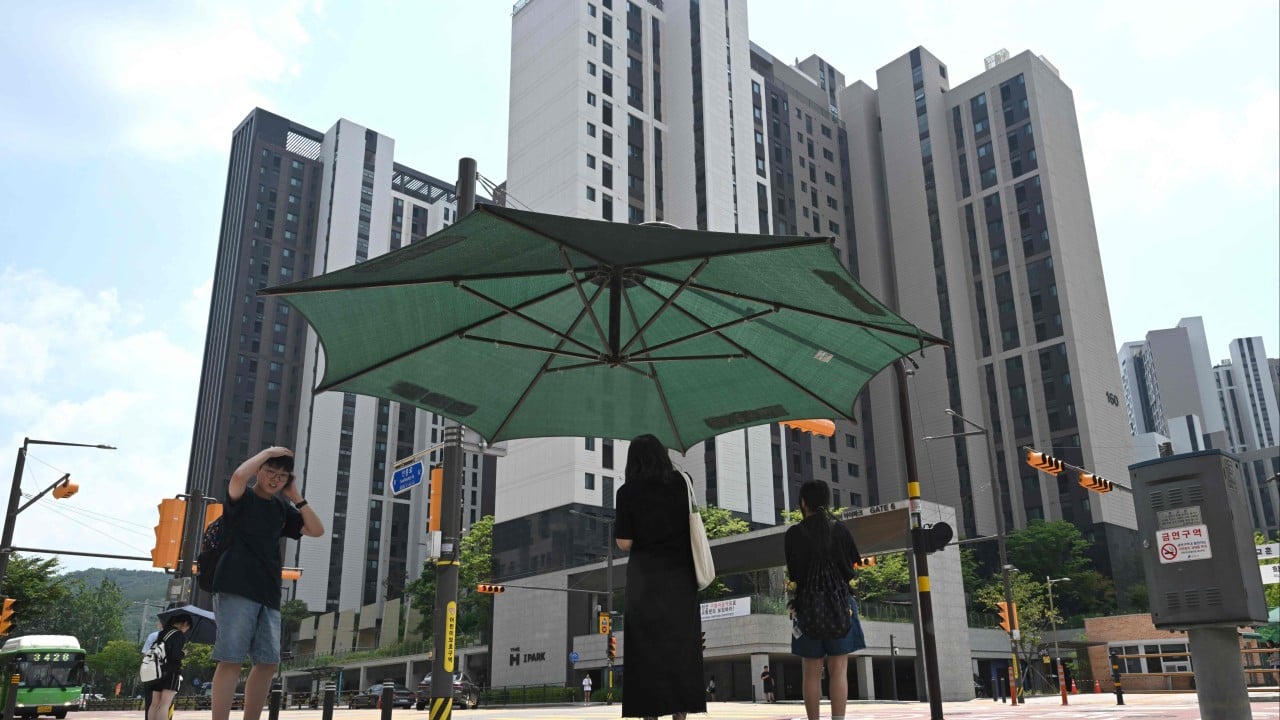

South Korea severe weather claims 19 lives as record 42.5 C heat prompts first Seoul emergency warning
South Korea severe weather has led President Lee Jae-myung to declare the ongoing record heatwave a national disaster after it was linked to 19 deaths. The Korea Meteorological Administration issued its first-ever serious heat wave warning for all of Seoul and parts of Gyeonggi Province as temperatures reached as high as 42.5 C.
Presidential Declaration of National Disaster
President Lee Jae-myung urged authorities to step up support for people affected by the record heatwave, calling it a national disaster after scorching conditions were blamed for 19 deaths. [1] Speaking at a cabinet meeting, Lee ordered officials to take necessary measures to protect the daily lives of people and inspect power systems as demand for air conditioning surges. [1] “An even greater concern is that abnormal weather conditions make it highly likely that extreme weather will continue for a considerable period,” said Lee, who wanted a major redesign of the disaster response system to cope with the hazardous conditions. [1] The president’s statements came as South Korea severe weather continued to intensify across multiple regions.
Record Temperatures and Heat Warnings
The nation’s weather agency said Yangsan, a southeastern inland city sitting in a basin, recorded a temperature of 42.5 degrees Celsius on Sunday, the highest temperature measured in 122 years of weather observations. [1] The Korea Meteorological Administration also issued its first-ever heatwave warning for parts of Seoul and neighbouring Gyeonggi on Monday, extending this to all of the capital on Tuesday. [1] The highest-level heat wave warning was issued for all of Seoul for the first time Tuesday, as continued scorching heat is expected to push the capital's daytime temperature to 38 C. [4] The serious heat wave warning had been additionally issued for the northeastern and northwestern areas of Seoul as of 11 a.m., according to the Korea Meteorological Administration. [4] With serious heat wave warnings already issued for Seoul's southeastern and southwestern areas the previous day, all of Seoul came under the warning, which was first introduced to the nation's heat wave advisory system on June 1. [4] In many parts of Gyeonggi Province, which surrounds Seoul, serious heat wave warnings had taken effect as of 11 a.m. Tuesday. [4] They included Osan, Hanam, western Yeoju, Goyang, Anseong, southern Paju and Yongin. [4] The newly introduced warning is issued in areas already experiencing heat wave warning conditions when the daily maximum apparent temperature is forecast to reach at least 38 C, or the actual daytime high is expected to reach at least 39 C, even for a single day. [2] Temperatures approached or reached 39 degrees Celsius in parts of Gangnam-gu and Guro-gu in Seoul. [2]
South Korea records 19 heat-related deaths amid record 42.5 C temperatures and first Seoul emergency warning. — Source: korea-herald
Heat-Related Illnesses and Fatalities
South Korea recorded 186 heat-related illness cases, including two deaths, on Monday, the highest daily figure reported so far this year, the Korea Disease Control and Prevention Agency said Tuesday. [2] The figure was nearly five times the 38 cases reported on the same date last year. [2] Both suspected deaths were reported in Wanju, North Jeolla Province. [2] A woman in her 90s was found in a field, while a man in his 80s was found near the side of a road, both after suffering suspected heat-related illnesses. [2] Each of them had underlying medical conditions, according to the KDCA. [2] Gyeonggi Province reported the largest number of cases at 39, followed by Seoul with 23, South Gyeongsang Province with 21, Gwangju and South Jeolla Province with 18 each, Incheon with 15 and South Chungcheong Province with 13. [2] The KDCA has operated an emergency room surveillance system for heat-related illnesses at 516 medical institutions nationwide since May 15. [2] As of Monday, a cumulative 2,221 heat-related illness cases and 19 suspected deaths had been reported this year. [2] Heat-related illnesses are acute conditions caused by prolonged exposure to high temperatures and may involve headaches, dizziness, muscle cramps and extreme fatigue. [2] Without prompt treatment, symptoms can progress to loss of consciousness and become life-threatening. [2] As the heat wave has intensified, 18 additional heat-related illness cases were reported in Seoul on Monday, government data showed, bringing the city's cumulative total since May 15 to 185, including two deaths. [4]
Impact on Sports and Daily Life
Two baseball games scheduled for Tuesday evening were canceled due to severe heat. [5] The Korea Baseball Organization announced the game between the NC Dinos and the Doosan Bears in Seoul, and another between the KT Wiz and the Kia Tigers in the southwestern city of Gwangju will not be played as earlier scheduled. [5] The Korea Meteorological Administration issued the highest-level serious heat wave warning for both cities earlier in the day. [5] With the warning in place, the KBO may choose to cancel games by no later than 1 p.m. on a given day. [5] For Tuesday, the KBO made the announcement at 12:45 p.m. [5] Scorching conditions wiped out three KBO games in the southeastern region over the weekend — two in Changwon and one in Busan. [5] Of the three remaining games for Tuesday, one will be played in Busan and another will be contested in Daegu, which saw a record high temperature of 40.9 C on Sunday. [5] The third game will be in Incheon, just west of Seoul. [5] The Seoul metropolitan government said it was closely monitoring the rise in heat-related illnesses and has launched an all-out response, including watering roads and protecting vulnerable groups, like residents living in cramped housing. [4] The city government also designated about 4,000 locations, including community centers, senior citizen centers and welfare centers, as heat shelters. [4] The interior ministry also sent a text message to citizens on the day, urging them to refrain from going out and engaging in outdoor activities, drink plenty of water, rest in cool places and look after the safety of their families. [4]

Severe heat forces cancellation of two baseball games in South Korea. — Source: yonhap
Forecast and Ongoing Response
The extreme heat is expected to persist through at least Aug. 13, according to the KMA. [2] The highest-level heat wave warning was also issued for many regions in the southwestern Jeolla provinces, including Jeonju, Jangseong and northern Gokseong. [4] It was declared in Boseong, Yeosu and Gwangyang on Saturday and Suncheon, southern Gokseong and eastern Gwangju on Monday, the agency noted. [4] A heatwave alert advises people to suspend outdoor activities such as farming, sports and work on construction sites. [1]
Public Health Measures and Advice
Health authorities advised people to limit outdoor activities during periods of extreme heat, take frequent breaks in shaded or cool areas and drink water regularly before feeling thirsty. [2] The KDCA said anyone experiencing persistent symptoms after heat exposure should seek medical attention immediately or call emergency services. [2] Visitors to Gwangmyeong Cave, just south of Seoul, cool off on Aug. 4 by walking through water mist sprayed from a cooling fog system. [4] A photo of Seoul's Yeouido district captured by a thermal imaging camera on Aug. 3 showed higher temperatures displayed in red, while lower temperatures are in blue. [4] A child cools off in a fountain in the southeastern city of Daegu on Aug. 3 with the temperature topping 40 C. [5]
What to watch next: The extreme heat is forecast to continue through at least Aug. 13, with additional serious heat wave warnings possible in other regions as the Korea Meteorological Administration monitors conditions.