
Saudi Arabia Turkey and Pakistan Sign Mutual Defense Pact in Mecca
Saudi Arabia, Turkey and Pakistan signed a joint defense agreement in Mecca that treats an attack on one as an attack on all, as Iran demands US concessions before reopening the Strait of Hormuz and Israel weighs a partial Gaza withdrawal.
New Defense Pact Signed in Mecca
Saudi Arabia, Turkey and Pakistan signed the Mecca Joint Defense Agreement on Friday, declaring a shared commitment to further strengthening their collective security and to promoting peace, security and stability in the region and beyond. [2] The pact states that an attack on any member would be regarded as an attack on all, and it is intended to strengthen collective deterrence. [2] Turkey's President Recep Tayyip Erdogan met Saudi Crown Prince Mohammed bin Salman in Mecca, while Pakistani Prime Minister Shehbaz Sharif and army chief Asim Munir also traveled to the Gulf kingdom for the signing. [2] Ankara stated that the agreement was not aimed at any particular country and was not in contradiction with Turkey's existing international alliances, including those at the heart of NATO. [2] Riyadh said the agreement does not represent an effort to establish a military axis or a sectarian bloc, nor is it linked to any nuclear ambitions or arms race. [2]
Context of Regional War and Alliance Shift
The agreement was signed amid violence in the region from Houthi attacks and the US-Iran war, which began on 28 February. [2] Riyadh is looking to strengthen its security ties against the backdrop of the war between the US and Iran, which has drawn in surrounding nations and disrupted shipping through the Strait of Hormuz and the Red Sea. [2] The war has emboldened Iran and its Houthi allies in Yemen, both of which have attacked Saudi Arabia, while analysts say Washington is now seen as an increasingly unreliable partner. [2] Since the onset of the regional war, Saudi Arabia has grown closer to Turkey, Egypt and Pakistan, which have been pushing for mediation and a resolution to the conflict. [2] An expert on Saudi foreign policy at the University of Birmingham said the alignment is clearly oriented toward Iran and meant to address Iran's new strategic approach which is geared toward dominance of the broader Gulf region. [2] Andreas Krieg of King's College London said the deal showed a clear desire to diversify alliances beyond the US, as Saudi Arabia, Turkey and Pakistan are building the capacity to protect their interests when Washington cannot or will not do so. [2] The fact that Turkey and Pakistan border Iran means they could exercise a different kind of leverage on Tehran. [2]
Iran's Conditions for Reopening Hormuz
Iran issued six demands for reopening the Strait of Hormuz, including that the US never threaten Iran or insult the people's sanctuaries, stop aggression against Iran and its allies in Lebanon, Palestine, Yemen and Iraq, lift the sea blockade and withdraw military forces from areas around Iran, pay full compensation for damages from the two aggressive wars against Iran, lift the sanctions against the Iranian people, and unconditionally free Iran's blocked assets. [3] Iranian authorities stated that the Strait of Hormuz will not be opened before the US changes its behavior. [3] Iran's Foreign Minister Abbas Araghchi said the country is very close to an agreement with Oman on a new shipping route through the strait, but reopening it would depend on other conditions, including US compensation to Iran. [5] The secretary of Iran's top national security body listed other demands including ending US threats against Iran, stopping aggression against Iran and its allies, lifting a blockade and sanctions on Iran and freeing Iranian assets. [5] The UAE accused Iran of targeting a tanker belonging to its state-owned oil firm in the Strait of Hormuz. [5]
Ongoing Yemen Fighting and Truce Collapse
A truce between Riyadh and the Houthi rebels in neighboring Yemen has broken down. [2] The Houthis have launched attacks on Saudi soil and declared a maritime blockade against Saudi Arabia, which they have attempted to enforce by attacking Saudi tankers. [2] The Houthis, backed by Iran, have added pressure to Gulf energy exporters already under strain from Tehran's blockade of the Strait of Hormuz by threatening Red Sea shipping. [2] On Thursday, the Houthis killed at least 58 Yemeni government troops in missile and drone attacks, a military source said, in one of the conflict's deadliest days in years. [2] Saudi Arabia has led a military coalition backing Yemen's internationally recognized government against the Houthis since 2015. [2]
Israel Considers Partial Gaza Pullout
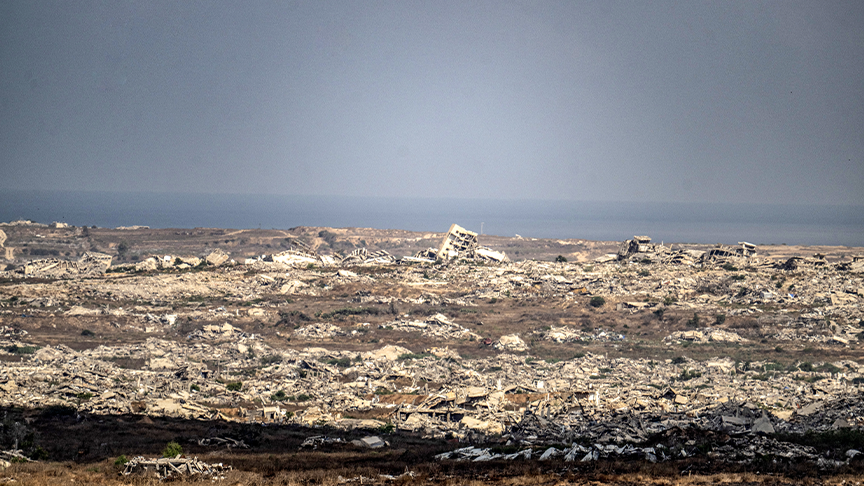
Israel is considering a partial withdrawal from Gaza and replacement of its troops in some areas with an International Stabilization Force, according to Channel 12. [1] Security officials are discussing a plan to replace Israeli troops in some parts of Gaza with the force. [1]
US Military Seeking Off-Ramp
US Gen. Dan Caine is looking for an off-ramp to avoid further escalation in the Iran war. [4] Caine recently made clear to other US officials that available military options may not be enough to achieve US President Donald Trump's stated war objectives. [4] Israel and the US launched Operations Roaring Lion and Epic Fury on February 28, with the stated aim of creating conditions for regime change. [4] Ayatollah Ali Khamenei was killed by an Israeli strike on a Tehran bunker, and Iran's defense minister and several IRGC generals were also killed. [4] Iran retaliated by firing across the Middle East at Gulf nations and US military bases. [4] Thirty-nine IDF soldiers and 23 civilians have been killed, and at least 7,693 more injured in ballistic missile attacks across Israel since February 28, while 18 US soldiers have been killed. [4]
What to watch next: Iran and Oman are very close to reaching an accord on a new shipping route through the Strait of Hormuz, though reopening the waterway would still depend on additional US concessions.