Russian Strikes Target Ukrainian Hospitals and Clinics, Killing Civilians Ahead of Paris Peace Talks

Latest from X
Russian Strikes Target Ukrainian Hospitals and Clinics, Killing Civilians Ahead of Paris Peace Talks
Kyiv, Ukraine – Russian forces launched deadly strikes on Ukrainian medical facilities on January 5, 2026, killing and wounding several civilians in what Ukrainian officials described as a deliberate escalation. A hospital in the southern city of Kherson and a private medical clinic in the capital Kyiv were among the targets hit, according to reports from France 24. The attacks occurred just one day before a high-stakes meeting of European and U.S. leaders in Paris on January 6, aimed at forging a path toward ending Europe's deadliest conflict since World War II.
The strikes mark a intensification of aerial assaults in recent days, following a Russian drone attack on the Black Sea port city of Odesa on December 31, 2025. That earlier barrage, which began around 3:13 p.m. GMT, heightened fears of broader infrastructure targeting amid winter conditions. Ukrainian air defenses have intercepted many incoming threats, but the precision hits on civilian health infrastructure underscore the ongoing vulnerability of non-military sites.
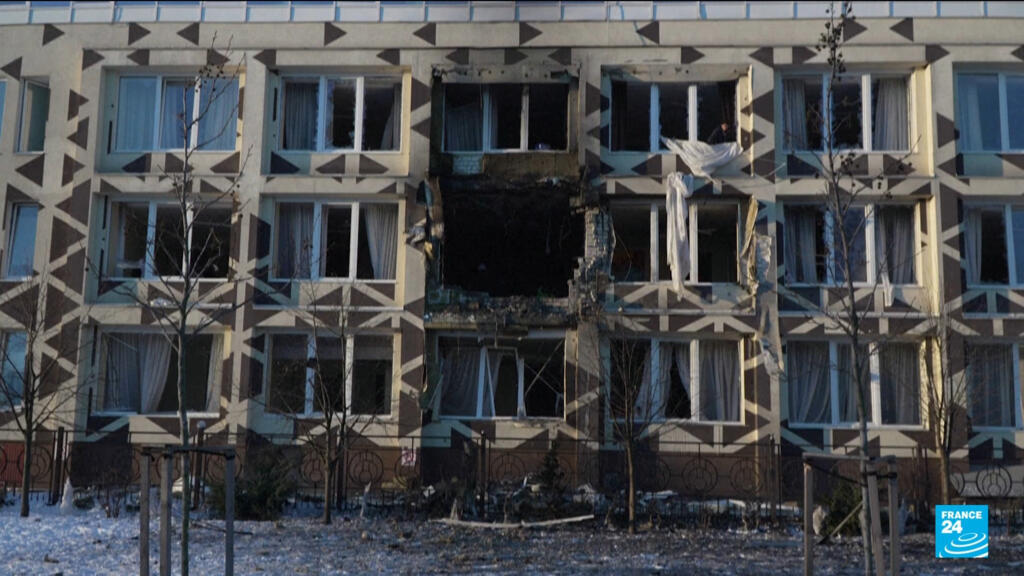
Details of the January 5 attacks remain fluid as emergency services assess the damage. In Kherson, a regional hospital suffered direct impacts, with local authorities reporting casualties among patients and staff. Similarly, the clinic in Kyiv was struck, exacerbating pressure on the capital's overburdened healthcare system. France 24 footage showed scenes of destruction, including rubble-strewn wards and rescue teams evacuating the injured. Ukrainian President Volodymyr Zelenskyy condemned the strikes as "barbaric," stating in a televised address that they were designed to terrorize civilians and derail diplomatic momentum.
These incidents fit into a pattern of intensified Russian drone and missile campaigns over the past week. Posts on X (formerly Twitter) reflected widespread alarm, with users reporting massive drone barrages – one claim mentioned up to 165 drones and ballistic missiles launched overnight, leading to deaths in Kyiv. While such social media reports capture public sentiment and unverified eyewitness accounts, official tallies from Ukraine's Air Force confirm frequent interceptions, though breakthroughs occur regularly.
Escalation Amid Stalemate
The attacks come against the backdrop of Russia's full-scale invasion of Ukraine, launched on February 24, 2022, which has resulted in hundreds of thousands of military and civilian casualties, displaced millions, and reshaped global security dynamics. Russian forces have increasingly relied on Iranian-designed Shahed drones and North Korean-supplied munitions to overwhelm Ukrainian defenses, targeting energy grids, ports, and now medical sites. Odesa, a vital grain export hub, has been repeatedly hit since the war's outset, with the December 31 strike damaging warehouses and residential areas, further straining Ukraine's economy.
Ukrainian defenses, bolstered by Western-supplied systems like Patriot missiles from the U.S. and NASAMS from Norway, downed dozens of drones in recent nights. However, the sheer volume of attacks – often numbering over 100 per wave – tests these capabilities. The Kherson and Kyiv strikes highlight a shift toward "dual-use" targets, where civilian infrastructure doubles as logistical hubs, though international observers, including the United Nations, have repeatedly accused Russia of violating protocols against medical facilities under the Geneva Conventions.
Russia's Defense Ministry claimed the strikes targeted "military objectives" near the sites but provided no evidence. Moscow has framed its operations as responses to Ukrainian incursions, including drone strikes on Russian territory. Independent verification by groups like the OSCE has been limited due to access restrictions.
Diplomatic Context and Outlook
The timing of the assaults is particularly poignant, coinciding with preparations for the Paris summit. Hosted by French President Emmanuel Macron, the gathering includes U.S. representatives, German Chancellor Olaf Scholz, UK Prime Minister Keir Starmer, and others. Discussions focus on long-term security guarantees for Ukraine, potential cease-fire lines, and reconstruction aid estimated at over $500 billion. Zelenskyy, attending virtually, called for "unwavering support" to counter Russian aggression.
Previous diplomatic efforts, such as the 2022 Istanbul talks and Switzerland's 2024 peace summit, faltered over Russia's demands for territorial concessions, including Crimea and eastern Donbas regions annexed in 2014 and 2022. With U.S. elections looming in November 2026 and European fatigue from aid commitments exceeding €100 billion, pressure mounts for compromise. Analysts note that winter offensives often precede negotiations, as both sides consolidate positions.
As rescue operations continue in Kherson and Kyiv, the international community has renewed calls for accountability. U.S. State Department spokesperson Matthew Miller described the hospital strikes as "indefensible," while EU foreign policy chief Josep Borrell urged de-escalation. Ukraine reports over 10,000 civilian deaths since 2022, with medical facilities hit at least 1,200 times per WHO data.
The Paris talks offer a glimmer of hope, but the fresh strikes serve as a stark reminder of the conflict's brutality. With Russian drone production ramping up and Ukrainian forces pressing in Kursk Oblast, a breakthrough remains elusive. As one Kyiv resident told France 24, "We treat the wounded by day and fear the skies by night – peace feels distant."
(Word count: 712)
Track this story live
Live World Map
Monitor global events in real time with a live activity map and hotspot summaries.
Global Conflict Map
Follow active conflict zones, strike activity, and emerging geopolitical hotspots.
Current Wars
Track all active wars and armed conflicts happening in the world right now.
Iran War
Track the Iran war in real time with proxy network monitoring, Strait of Hormuz risk, and market impact.
Original Sources
- •
Editorial process: This article was synthesized from the original sources cited above using The World Now's AI editorial system, with byline accountability from our editorial team. We grade every story for source grounding, factual coherence, and on-topic match before publication. Read more about our editorial standards and contributors. Spot something inaccurate? Let us know.
Last updated: January 19, 2026