Conflict in Mali: Junta Leader Vows Crackdown Following Coordinated Insurgent Attacks
Mali's military ruler Assimi Goita has vowed to crack down on insurgents following coordinated attacks in Bamako and the north, marking his first public appearance since the assaults. In the ongoing conflict in Mali, these incidents underscore the persistent challenges facing the military government as jihadist and separatist groups intensify their operations across the country.[1]
Recent Insurgent Attacks in Mali
The recent insurgent attacks in Mali represent a significant escalation, with coordinated assaults striking both the capital Bamako and northern regions over the weekend. These operations involved jihadist and separatist groups, highlighting their ability to synchronize efforts across diverse geographic areas.[1] The assaults shook the stability of key urban and rural zones, demonstrating the insurgents' expanded reach and tactical coordination. In Bamako, the attacks disrupted normalcy in the heart of the nation's political and economic life, while strikes in the north targeted areas long contested by rebel factions. This dual-front strategy not only inflicted immediate damage but also exposed vulnerabilities in Mali's defensive postures, as the militants operated with apparent impunity during the initial phases.[1][5] The timing of these attacks, coming amid ongoing instability, amplified their impact, drawing international attention to the fragility of state control in urban centers previously seen as secure. Analysts note that such coordinated actions are rare and signal a maturing insurgent capability, moving beyond sporadic violence to more structured offensives that challenge the government's authority on multiple fronts.[5] The weekend events thus serve as a stark reminder of the persistent conflict in Mali, where insurgents continue to test the limits of military governance.[1]
Junta Leader's Response and Appearance
Assimi Goita, the leader of Mali's military junta, broke his public silence on Tuesday by meeting with Russia's ambassador, an event confirmed via a post on his office's social media account.[2] This marked his first appearance since the coordinated insurgent attacks over the weekend, signaling a deliberate reassertion of leadership amid heightened tensions.[1][2] During this engagement, Goita pledged to "neutralise" those responsible for the assaults, vowing a comprehensive crackdown on the perpetrators.[1] The choice of venue— a diplomatic meeting—underscored efforts to bolster international partnerships, particularly with Russia, as the junta navigates its security challenges. His office's public disclosure of the meeting served multiple purposes: reassuring domestic audiences of active governance, projecting resolve against the insurgents, and maintaining visibility after a period of relative seclusion following the attacks.[2] Goita's commitment to neutralization implies a strategy of targeted operations and heightened military mobilization, aimed at restoring deterrence in affected areas like Bamako and the north. This response comes at a critical juncture, as the junta's legitimacy hinges on its ability to deliver on security promises originally cited as justification for its 2020 and 2021 coups.[1][2]
Context of the Insurgency
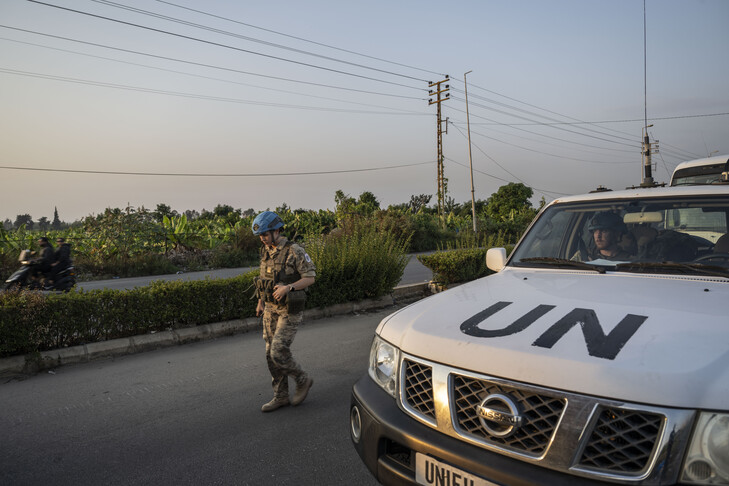
The insurgency in Mali encompasses a complex array of actors, primarily Tuareg rebels seeking greater autonomy in the north and jihadist groups like JNIM (Jama'at Nasr al-Islam wal Muslimin), which are pursuing broader ambitions across the Sahel.[3][4] Tuareg separatists have long advocated for self-determination in resource-rich northern territories, leveraging ethnic grievances and historical marginalization to sustain their campaigns. Meanwhile, JNIM and affiliated jihadists have methodically expanded their operational capacity, transforming from localized threats into regional powerhouses capable of coordinated, multi-site attacks.[3][4] This dual dynamic—separatist autonomy drives intertwined with jihadist caliphate goals—creates a multifaceted conflict in Mali, where tactical alliances occasionally form between these groups despite ideological differences. Expert analysis from Nina Wilen, Director of the Africa Programme at the Egmont Institute, emphasizes that the current violence is not merely an uptick in attacks but a deeper reconfiguration of authority.[3][4] Insurgents have steadily gained ground, filling vacuums left by retreating state forces and diminishing international interventions, such as the withdrawal of French and UN troops. JNIM's growth, in particular, reflects successful recruitment, logistics improvements, and exploitation of ungoverned spaces, enabling strikes as far as Bamako. The Sahel-wide scope amplifies the threat, as these groups share resources, intelligence, and fighters across borders, perpetuating a cycle of instability that defies containment.[3][4]
Implications for Mali's Military Government
The military junta seized power promising enhanced security, yet the shock of the recent rebel offensive has cast serious doubts on its effectiveness.[5] Originally positioned as a corrective to civilian governance failures, the junta under Assimi Goita has struggled to curb insurgent advances, with the weekend attacks in Bamako and the north serving as a public repudiation of its security narrative.[5] These events question the junta's operational capabilities, revealing gaps in intelligence, rapid response, and territorial control that allow coordinated assaults to penetrate even the capital.[1][5] For the military government, the implications extend beyond immediate tactical setbacks; they erode public confidence and invite scrutiny from regional bodies like ECOWAS, which have already imposed sanctions over delayed transitions to civilian rule. The junta's reliance on foreign partnerships, as evidenced by Goita's meeting with the Russian ambassador, highlights internal limitations, potentially signaling a pivot toward non-Western allies for military support.[2][5] Persistent insurgent successes could precipitate internal dissent within the armed forces or fuel demands for political reforms, complicating the junta's hold on power. As the government pledges crackdowns, the real test lies in translating vows into verifiable gains, lest the conflict in Mali further undermine the military's foundational security mandate.[5]
Broader Regional Dynamics
Across the Sahel, the insurgency in Mali exemplifies shifting power balances, where insurgents are reshaping authority structures to their advantage.[3][4] According to Nina Wilen of the Egmont Institute, what unfolds is a reconfiguration rather than isolated violence: Tuareg rebels and JNIM have expanded operational capacities, steadily encroaching on territories once held by state and international actors.[3][4] The departure of French Barkhane forces and the UN's MINUSMA mission has accelerated this trend, creating power vacuums that jihadists and separatists exploit with alarming efficiency. Recent coordinated attacks illustrate this momentum, as militants demonstrate interoperability across Mali's urban-rural divide and into neighboring states.[3][4] State influence wanes as insurgents establish parallel governance in remote areas, taxing populations and enforcing edicts, which further entrenches their legitimacy among disenfranchised communities. International actors, previously pivotal, now grapple with reduced leverage, prompting questions about future engagement models. This regional dynamic portends prolonged instability, with JNIM's caliphate aspirations linking Mali's conflict to Burkina Faso, Niger, and beyond, fostering a transnational jihadist ecosystem.[3][4]
What to watch next: Observers will monitor the junta's follow-through on its neutralization pledge amid questions over its security record, as insurgents continue reshaping Sahel power dynamics.[1][3][5]