
Terrorism in Nigeria: Islamic State Claims Responsibility for Attack Killing 29 in Adamawa
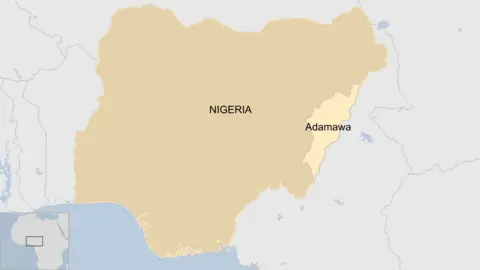
Islamic State claims responsibility for an attack in Adamawa State, Nigeria, that killed at least 29 people.[1][4][5] The assault, carried out by militants affiliated with the group, targeted civilians in a northeastern village, highlighting the persistent terrorism Nigeria faces amid multiple insurgencies.[5] In a related development, police in Akwa Ibom state recovered explosives at a custodial center, preventing what could have been another tragedy.[3] These incidents underscore the ongoing security challenges in the country, with no official statements yet from military or police on the Adamawa attack.[2]
Overview of the Attack
The attack in Adamawa State unfolded as a brutal assault on civilians, resulting in at least 29 deaths.[1][4][5] Gunmen, identified by Islamic State as their fighters, opened fire on people gathered at a football pitch in the northeastern region.[4] This location, typically a site for community gatherings, became a scene of violence that claimed numerous lives and emphasized the vulnerability of everyday spaces to such incursions.[4] Authorities reported the incident as a deadly overnight raid on a village, where militants struck without warning, killing at least 29 individuals.[5] The timing and method of the attack—striking at night and targeting a public area—illustrate the tactical approach often seen in operations by groups like Islamic State affiliates in Nigeria's northeast.[4][5] This event fits into a pattern of violence that disrupts normal life, leaving communities in fear and contributing to the displacement and hardship faced by residents in Adamawa and surrounding areas.[1][5] The precise casualty figure of at least 29 has been consistently cited across reports, reflecting the scale of the tragedy and the immediate human cost.[1][4][5] Such attacks not only result in direct fatalities but also amplify the atmosphere of insecurity, as militants exploit remote or semi-rural settings to carry out their operations with relative impunity.[4] In Adamawa State, known for its mix of communities, this assault targeted civilians indiscriminately, underscoring the ruthless nature of the operation.[5]
ISWAP's Claim of Responsibility
ISWAP, the Islamic State West Africa Province faction, explicitly claimed responsibility for the attack on the Adamawa community.[2] In their statement, the group detailed that its fighters killed Christians and destroyed a church, while also targeting nearly 100 motorcycles.[2] This claim provides a window into the militants' objectives, focusing on religious sites and symbols of mobility within the community, which could hinder local response or escape efforts.[2] The specificity of the actions—destruction of a church and the burning or seizure of motorcycles—suggests a deliberate strategy to instill fear and disrupt communal infrastructure.[2] ISWAP's public assertion of responsibility aligns with their pattern of using propaganda to amplify their reach and recruit, positioning the attack as a success against perceived adversaries.[2] Military and police authorities have not issued official statements about the incident, leaving the group's narrative unchallenged in the immediate aftermath.[2] This lack of counter-narrative allows ISWAP's version to dominate initial reporting, potentially influencing perceptions both locally and internationally.[2] The claim emerged shortly after the attack, as reported by monitoring outlets, indicating the group's swift effort to associate itself with the violence.[2]
Related Security Incident
In a separate but concurrent security development, police in Akwa Ibom state recovered explosives at a custodial center, averting what was described as an imminent tragedy.[3] Timfom John, the police spokesperson in Akwa Ibom, disclosed this in a statement issued on Monday in Uyo, the state capital.[3] The discovery of the explosives within a facility holding detainees points to a potential plot to undermine state institutions from within, possibly aiming to facilitate escapes, cause mass casualties, or send a broader message of instability.[3] By neutralizing this threat, authorities prevented a disaster that could have compounded Nigeria's security woes, demonstrating proactive measures amid rising threats.[3] Custodial centers, meant to secure suspects, have become focal points for such risks, as insurgents or their sympathizers seek to exploit vulnerabilities in the justice system.[3] The recovery highlights the diverse tactics employed by non-state actors, shifting from open assaults to covert placements of improvised devices.[3] This incident in southern Nigeria, away from the northeast's traditional hotspots, illustrates the expanding geographic scope of terrorism Nigeria contends with, where even detention facilities are not immune.[3] Police action in this case underscores the importance of vigilance and intelligence in thwarting plots before they materialize into violence.[3]
Broader Context in Nigeria
The Adamawa attack represents the latest escalation in Nigeria's complex security crisis, where the country has long battled multiple insurgencies.[5] Islamic State militants' involvement marks a persistent threat in the northeast, with violence underscoring the deepening challenges that affect Africa's most populous nation.[1][4][5] Adamawa State, part of the volatile northeastern region, continues to see such raids, which disrupt livelihoods and exacerbate humanitarian needs.[4][5] The assault on a village and a football pitch gathering reflects how terrorism Nigeria endures infiltrates daily life, from rural communities to public events.[4] Ongoing conflicts with groups like ISWAP have led to a protracted struggle, with authorities facing resource strains and operational difficulties in remote areas.[5] This incident fits into a larger landscape of insurgencies that have persisted for years, claiming countless lives and displacing populations.[1][5] Concerns over forgotten conflicts, such as those in Sudan, parallel Nigeria's situation, where sustained attention is crucial amid global distractions.[1] The reach of Islamic State affiliates remains a key factor, adapting to counter-efforts while maintaining operational capacity.[5] Nigeria's security apparatus grapples with these multi-front threats, from northeast militancy to potential southern infiltrations, demanding coordinated responses.[3][5]
Current Official Response
No official statements have been issued by military or police authorities regarding the Adamawa incident.[2] This silence persists in the wake of ISWAP's claim, creating a information vacuum that the militants have filled with their detailed account.[2] The absence of confirmation or denial from official channels leaves questions about the exact sequence of events, casualty verification, and any pursuit of perpetrators unanswered publicly.[2] In such scenarios, authorities often conduct internal assessments before commenting, prioritizing operational security over immediate media engagement.[2] However, the lack of response has drawn attention to potential communication gaps between security forces and the public, especially in high-profile attacks.[2] ISWAP's unrefuted narrative circulates freely, potentially emboldening the group while eroding confidence in state capabilities.[2] As reports emerge from monitoring sources, the official void highlights the challenges in real-time crisis management in Nigeria's insurgency zones.[2]
What to watch next: Monitor for official statements from Nigerian military or police on the Adamawa attack, potential investigations into the Akwa Ibom explosives recovery, and any escalation in northeastern insurgencies as highlighted by recent militant claims.[2][3][5]