Russian Strikes Kill at Least 31 Civilians Across Ukraine in Two Days
Russian strikes over the past two days killed at least 31 civilians and injured more than 150 across Ukraine, damaging homes, health facilities, data centers and humanitarian warehouses in Kyiv and other regions.
Civilian casualties and infrastructure damage from recent strikes
OCHA says that attacks over the past two days have caused civilian casualties and damaged civilian infrastructure across Ukraine. [1] The capital Kyiv was particularly affected. [1] According to local authorities, at least 31 civilians were killed and more than 150 injured during the last two days. [1] In the capital Kyiv, attacks damaged homes, health facilities, petrol stations, businesses, a market, a university and a warehouse. [1] Civilian casualties were also reported in the regions of Kharkiv, Sumy, Zaporizhzhia and Dnipro. [1] In the Kharkiv region, an attack on a farm reportedly killed two people and injured 12 others. [1]
Attacks on internet and data center infrastructure
Russian strikes have hit multiple data centers and internet providers in Kyiv over the past two days, disrupting service for around 100,000 households as Moscow expands its attacks on Ukraine's internet infrastructure. [2] Ukraine's Digital Transformation Ministry said around 100,000 households in Kyiv and Kyiv Oblast experienced internet problems following the Sept. 23 drone attack, as specialists worked to assess the damage and restore stable service. [2] "This is the beginning of a phase where, since September, they have started taking it out systematically," Anatolii Frolenkov, a representative of the 1-IX internet exchange point, told the Kyiv Independent. [2] Frolenkov added that attacks on Ukraine's communications infrastructure are not new, pointing to earlier strikes on energy and telecommunications networks. [2] But the recent escalation of attacks on data centers and communication nodes marks a shift in intensity, he said. [2] Several providers reported direct damage to their infrastructure. [2] UTELS reported damage to a Kyiv data center housing its core equipment, leaving it without power, while Pavutyna said one of its data centers was hit, causing outages for some customers. [2] Crazy Network said a strike damaged a central internet traffic exchange in Kyiv, disrupting internet and telephone services in the capital and in Vinnytsia and Khmelnytskyi oblasts. [2] The disruption continued into Sept. 24. [2] Kyiv-based provider Etherlink said an attack damaged its main network node, knocking some customers offline and forcing the company to relocate the core of its network. [2] Other companies reported more extensive losses. [2] Hosting provider MiroHost said the data center in Ukraine that housed its infrastructure was destroyed in the attack, company founder Oleksandr Olshansky told dev.ua. [2] Around 90-95% of MiroHost customers use infrastructure outside Ukraine and were unaffected, he added. [2] CityHost also said equipment it stored at a Kyiv data center had been destroyed, disrupting some of its services. [2] Russia's Defense Ministry explicitly claimed responsibility for strikes on two Kyiv data centers on Sept. 23, New-Telco and United DC. [2] Moscow alleged that New-Telco handled internet traffic for Ukraine's Defense Ministry and that United DC provided communications and data-processing services for Ukrainian security agencies. [2] Those claims about the facilities' military use could not be independently verified. [2] Ukrainian Foreign Minister Andrii Sybiha rejected Moscow's characterization of the facilities. [2] "Russia has targeted major Ukrainian data centers, seeking to disrupt the flow of information. Rapid alerts about missile and drone threats are essential – they save lives," Sybiha said. [2] "This is critical civilian infrastructure that ensures people can access life-saving information. It is not a military target. It is essential to keep everyday life functioning." [2] "As Russia is not achieving its goals on the battlefield, it is seeking new ways to destabilize life in Ukraine and terrorize civilians," he added. [2] The latest strikes follow earlier damage to telecommunications infrastructure in Kyiv. [2] A key data center was damaged in a Russian attack on July 2, causing disruptions for several providers, while infrastructure belonging to mobile operator Kyivstar was damaged in separate attacks in September. [2] Despite the recent damage, Frolenkov said knocking out internet access across Ukraine would be extremely difficult. [2] Providers can limit the impact of individual strikes by duplicating network equipment, maintaining backup communications routes, and distributing infrastructure across different locations, including outside Ukraine, he said. [2] But that strategy is expensive, leaving many providers without sufficient backup infrastructure, more vulnerable when equipment is destroyed. [2] "The internet will not disappear completely," Frolenkov said. [2] "There will be outages, there will be problems. It won't work as smoothly or as quickly, things may glitch, and operators may go down for a couple of hours because the infrastructure is being physically destroyed." [2] So far, the strikes have caused significant but scattered outages rather than a nationwide internet blackout. [2]
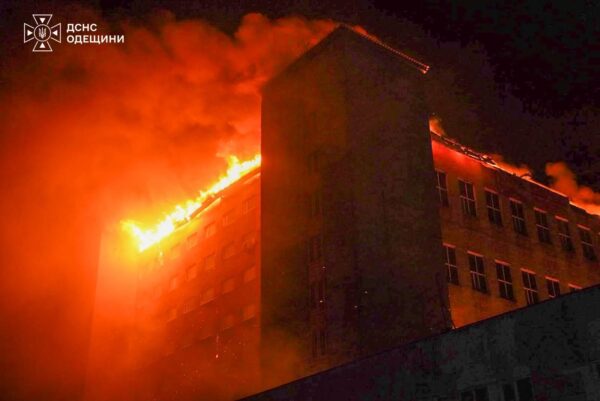
Russian strike damage in Odesa region after attack on civilian infrastructure. — Source: euobserver
Impact on humanitarian operations
Humanitarians were not spared. [1] Yesterday in the Donetsk region, two drones struck a warehouse belonging to the NGO Angels of Salvation, killing one volunteer and injuring another, while an office of the NGO Proliska was hit and destroyed. [1] The UN reminds the parties of their obligation to protect civilians and civilian assets in accordance with international humanitarian law. [1] OCHA calls on the parties to protect civilians – including health workers and their ambulances – and facilitate the unhindered delivery of humanitarian aid. [1]
Battlefield developments in Donetsk region
A total of 277 combat clashes have occurred on the battlefield over the past day, with the Russians focusing their assaults on the Kostiantynivka and Pokrovsk fronts, which saw over 50 attacks in total. [4] On the Kostiantynivka front, 30 Russian attacks were recorded. [4] The Russians conducted assaults near the city of Kostiantynivka and towards Ivanopillia, Novoselivka, Mykolaipillia, Stepanivka, Novopavlivka, Raiske, Toretske, Vilne and Stepy. [4] On the Pokrovsk front, the Russians conducted 23 attacks. [4] They attempted to advance towards the settlements of Svitle, Novyi Donbas, Bilytske, Novohryshyne, Hulive, Serhiivka, Molodetske, Muravka and Novopavlivka. [4] Russia now claims to have encircled the town of Dobropillia. [3] In reality, Russian forces are merely approaching it from the east and south. [3] A Russian Z blogger has also criticised the falsehoods. [3] Ukraine’s Azov has meanwhile announced that it pushed Russian soldiers out of one of the areas between Dobropillia and Druzhkivka. [3] On Tuesday, Russia’s defence ministry made a surprising claim. [3] It announced that Russian forces had encircled the town of Dobropillia. [3] It is located in the Donetsk region and is currently a key section of the front. [3] Russian forces are attempting to advance further, which could allow them to threaten the cities of Sloviansk and Kramatorsk from the south. [3] Russia claims to have completed the encirclement of the town, which had a population of 28,000 before the war. [3] According to Tass, soldiers from the 4th and 15th brigades of Ukraine’s National Guard, as well as the 425th Skala Assault Regiment, remain trapped there. [3] “The elimination of enemy units remaining in the trap is currently under way,” the Russian defence ministry said. [3] Anyone who regularly follows developments on the battlefield, relying on various independent accounts that often draw on geolocated videos from both sides, must know that the claim that Dobropillia has been encircled is completely detached from reality. [3] For example, according to Finnish analysts from the Black Bird Group, Russian forces are indeed approaching the town from the east and south, but they are certainly not present in the north and west in sufficient numbers for this to be described as an encirclement. [3] At most, small numbers of soldiers have infiltrated these areas. [3] While Russia’s ministry and media fantasise about the encirclement of Dobropillia, a successful operation by Ukraine’s 1st Azov Corps of the National Guard took place not far away. [3] The unit is led by Denys Prokopenko. [3] On Wednesday, Azov announced that it had cleared Russian positions from one of the areas between Druzhkivka and Dobropillia. [3] This area is important. [3] Defences in the form of fortifications and barriers are not as strong here, and a breakthrough would allow Russian forces to bypass Sloviansk and Kramatorsk from the south, or possibly the south-west. [3] This is approximately the area where Russian attacks were pushed back. [3] Ukrainians had evidently recognised this and sent reinforcements there. [3] It paid off, and they pushed Russian forces back. [3] However, they did not disclose by how many kms. [3] The Playfra account had previously written about the counterattacks. [3] “The first task was to isolate the area in which Russian forces had concentrated and to contain the enemy. Ukrainian forces were then to create conditions for their own offensive operations,” the website Militarnyi wrote. [3] The first assault groups began advancing on Friday (7 August). [3] They included the Skala Regiment, which had previously been criticised for excessively risky operations that resulted in heavy troop losses. [3] According to one commander, they killed 237 Russian soldiers, wounded 44, and three surrendered. [3] Dense vegetation, unusual tactical movements and extensive drone activity aided Russian forces, making it difficult for Ukrainians to evacuate their wounded soldiers. [3] “According to participants in the operation, the loss of this area is forcing the Russian command to seek alternative routes of advance, which will require additional time and resources,” the website Militarnyi wrote. [3]
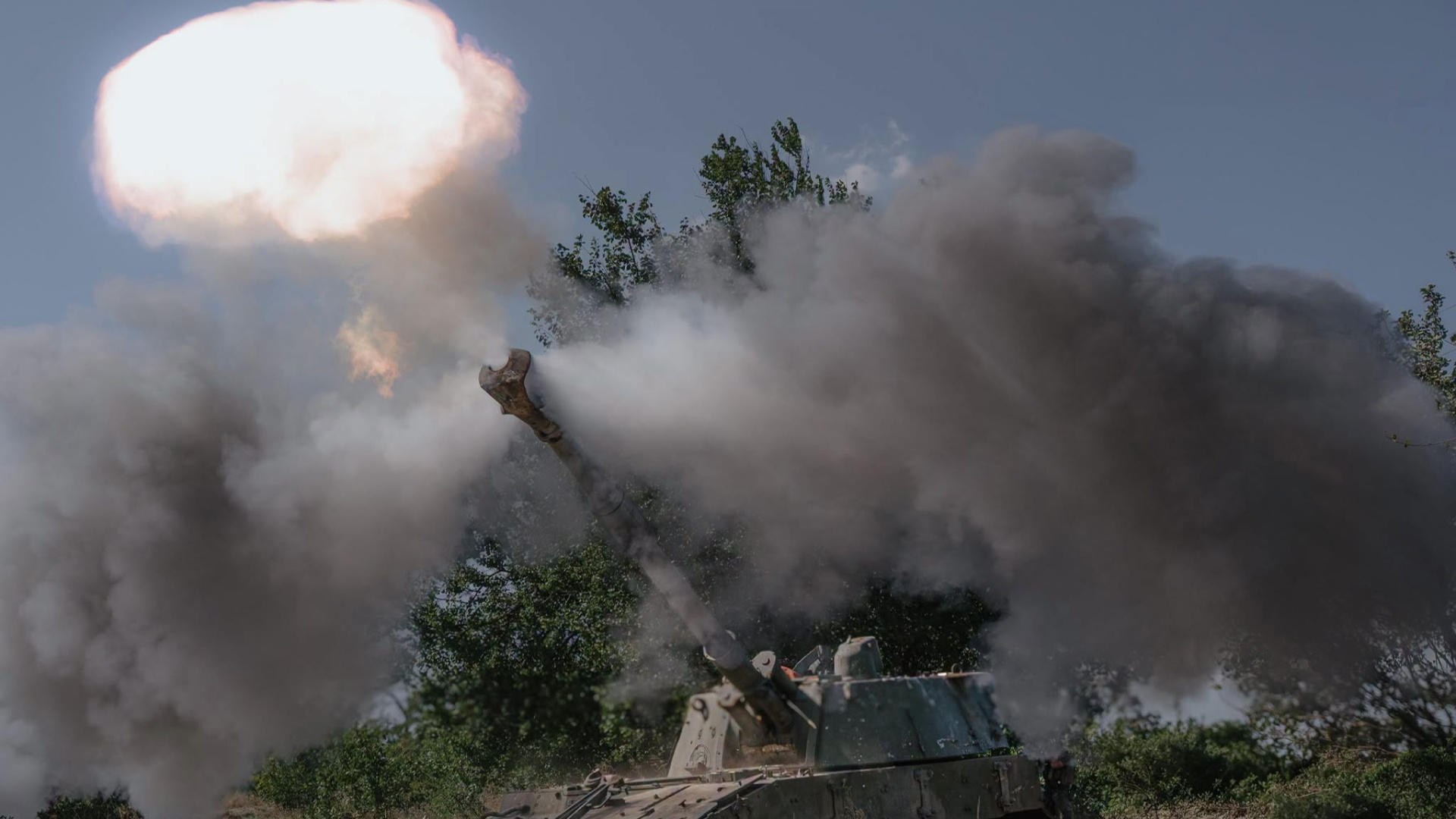
Russian strikes damaged civilian infrastructure and caused casualties across Ukraine including in Kyiv. — Source: ukrainskapravda
Intensified Russian strikes on Kyiv
Russia is conducting its largest campaign against Ukraine’s capital Kyiv and the surrounding area since the first months of the war. [3] This follows from an AFP analysis, and is also suggested by data published by French OSINT analyst Clément Molin. [3] According to AFP, which drew on the ACLED think-tank’s database, there were 118 “incidents” in the Kyiv region during the first 18 days of September. [3] This is the highest figure since March 2022, when 174 attacks were recorded there — but over the entire month. [3] The daily number of incidents is now even higher than it was then. [3] Molin published a map showing all attacks on Kyiv over the past three months. [3] In the last 3 months, at least 350 Russian strikes have been recorded in Kyiv and around. [3] July 2026: 112 strikes including 70 missiles. [3] August 2026: 124 strikes including more than 21 missiles. [3] September 2026: 117 strikes including more than 25 missiles. [3]
Transfer of North Korean POWs to South Korea
Ukraine has recently sent two North Korean soldiers captured by Ukrainian forces to South Korea, Ukrainian President Volodymyr Zelenskyy has said, with Seoul effectively confirming the move. [5] South Korean officials did not deny Zelenskyy's remarks, while noting that Seoul has conducted consultations with Kyiv over the issue. [5] "Recently, we sent two North Korean prisoners of war to the Republic of Korea," Zelenskyy said during his address at the United Nations General Assembly on Wednesday (U.S. time), referring to South Korea by its official name. [5] "These guys are not easy to capture alive. One of them, when he realized he was going to be taken prisoner, tried to kill himself and he was shocked that fate didn't let him die." [5] Two North Korean soldiers were captured by Ukrainian forces in January 2025 after being deployed to Russia's Kursk region among thousands of North Korean troops in support of Moscow's war against Ukraine. [5] The two have expressed their desire to come to South Korea through a North Korean defector group in the South as well as through interviews. [5] South Korea's foreign ministry said it could not confirm details but noted that it has held talks with Ukraine and other countries and agencies based on its position to respect the "free will" of the two soldiers and resolve the issue in accordance with international law and humanitarian principles. [5] "It is difficult to confirm whether the individuals have been handled, the timing and route, or the specific details about the consultations between the two countries," a foreign ministry official said, noting the issue concerns the safety of the two soldiers and their family. [5] An official at the presidential office reiterated the foreign ministry official's remarks in a press notice. [5] South Korean President Lee Jae Myung and Zelenskyy agreed to handle North Korean soldiers captured by Ukraine on humanitarian grounds while respecting their wishes during their summit in July on the sidelines of the North Atlantic Treaty Organization summit in Ankara. [5] Rep. Yu Yong-weon of the main opposition People Power Party claimed the two soldiers safely entered South Korea three to four days earlier via a third country and that Seoul and Kyiv agreed on the transfer in around June. [5] If they have entered the country, they are expected to be under the protection of the National Intelligence Service in line with the law on North Korean defectors. [5]
What to watch next: Russian forces are attempting to advance further in the Donetsk region, which could allow them to threaten the cities of Sloviansk and Kramatorsk from the south, while Ukrainian forces continue counteroperations in areas between Dobropillia and Druzhkivka.