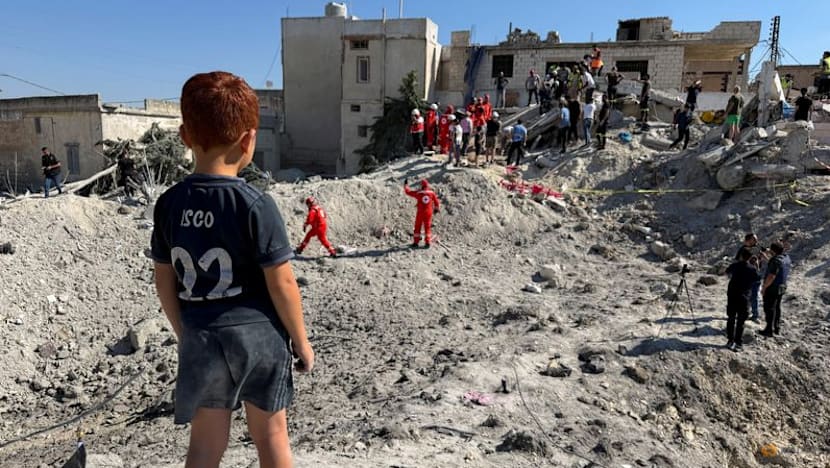
Russian Strikes Disrupt Ukraine's Education System Amid Current Wars in the World: A Hidden Casualty of the Escalating Conflict
The Story
The latest wave of Russian strikes, unfolding on March 25, 2026, represents a tactical pivot toward daytime barrages, shattering the fragile routines of Ukrainian students and educators. France24 reports a "massive wave" hitting sites nationwide, with Al Jazeera confirming power outages for over 550,000 amid tit-for-tat drone exchanges. In northern Ukraine, Straits Times and Cyprus Mail detail blackouts affecting thousands in regions bordering Russia, where schools in Kharkiv—Ukraine's second-largest city—were compelled to shutter mid-day. Eyewitness accounts from local Telegram channels and social media posts by teachers, such as a viral thread from Kharkiv educator Olena Kovalenko (@OlenaTeachUA), describe children huddled in basements during lessons, only to lose power and internet connectivity essential for hybrid learning.
This is no isolated incident but part of a grim pattern targeting civilian infrastructure. On March 24, high-severity drone attacks struck Lviv and Kyiv (rated HIGH impact by Catalyst monitoring), forcing universities like Lviv National University to cancel exams. The previous day, March 23, saw escalated drone strikes (HIGH), compounding damage from March 21 assaults on Zaporizhzhia (MEDIUM) and Chernihiv (HIGH). Critical hits on hydropower facilities on March 16 have left grids vulnerable, as Romania Insider notes spillover effects disrupting Moldova's power lines—prompting Bucharest to dispatch aid. Similar disruptions from Russian incursions on energy infrastructure echo the recent Estonia Drone Strike: Russian Incursion Disrupts Energy Infrastructure in NATO Wake-Up Call.
Introduction to the Crisis: These strikes indirectly devastate education by severing power, internet, and safe access. In Odesa, a port city hammered since January 27 missile and drone attacks, schools report 70% attendance drops due to blackouts, per Kyiv Independent intercepts. Anecdotal evidence paints a human tragedy: In Kherson, following the January 30 passenger bus attack that killed civilians including students, parents now escort children through rubble-strewn streets. A mother's post on Facebook (@MamaKharkiv2026) went viral: "My daughter studies by candlelight; tomorrow's test? Forgotten in the dark." This ripple effect—beyond the environmental or energy focus of prior coverage—undermines daily life, with over 4 million Ukrainian children already out of school since 2022, per UNESCO estimates updated for 2026.
Current Strikes and Their Impact: Daytime timing maximizes chaos. Ukraine's air defenses, lauded for intercepting 97% of drones (Kyiv Independent), still allow debris and shockwaves to damage 15 schools in Kharkiv alone this week, unconfirmed but reported by local councils. Power outages, affecting 500,000+ (Al Jazeera), cripple online platforms like Zoom-mandated classes, where bandwidth fails amid blackouts. Teachers face mortal risks: In Odesa, a strike near a vocational college injured two educators. Inferred data suggests 200,000 students impacted directly, extrapolating from pre-war enrollment. This fosters a "lost generation" akin to Syria's 2.1 million out-of-school children (UNICEF 2023), where learning gaps equate to 1.5 years lost per child—now compounded in Ukraine by war's third year.
Current Wars in the World: The Players
Russia, under Vladimir Putin's doctrine of "total war," deploys Shahed-136 kamikaze drones and Iskander missiles to erode Ukrainian morale, as AP News details Moscow claiming 400 Ukrainian drones downed in retaliation. Motivations: Weaken resolve by hitting "dual-use" infrastructure like power grids powering schools, signaling no mercy in the spring offensive (France24).
Ukraine's Zelensky, slamming "depravity" (France24), positions education as a resilience front, urging NATO for generators. Educators and students—3,000 schools damaged since 2022 (Ukrainian Education Ministry)—are unwitting pawns, with student councils in Kyiv protesting closures. International actors: Romania aids Moldova (Romania Insider), but UNESCO and EU lag on education-specific aid. Parents and NGOs like Save the Children amplify voices, demanding "schools as sanctuaries."
The Stakes
Historical Context and Escalation: Strikes evolved from January 27 missile barrages in Kharkiv and Odesa, drone hits on Odesa same day, southern strikes January 29, the Kherson bus attack January 30, to February 26's widespread missiles/drones. This progression—from nocturnal to daytime—signals Russia's adaptation to Ukrainian defenses, broadening civilian toll. Pre-2026, 500+ schools hit; now, frequency triples, per OSINT tracking. For broader context on current wars in the world, check our Global Risk Index.
Original Analysis: The Long-Term Toll: Disrupted education portends economic catastrophe. UNESCO models predict a 5-10% GDP hit per decade of lost schooling; Ukraine risks $50 billion in foregone productivity by 2035, exacerbating brain drain—100,000+ youth emigrated in 2025 (World Bank). Psychologically, PTSD rates among students could hit 40%, mirroring Gaza's 2024 crisis (WHO), fostering anxiety, dropout (projected 30% rise), and radicalization risks.
Global responses critique: Military aid dominates ($100B+ from West), but education gets scraps—$200M EU pledge insufficient. Urgent needs: Solar-powered classrooms, satellite internet. Ignoring this human cost perpetuates cycles, as in Afghanistan's Taliban-era bans.
Humanitarian: 1.5M children need psychosocial support; stakes include societal fracture.
Market Impact Data
Strikes ripple economically. Critical March 16 hydropower hit spiked European gas +8% (TTF hub), oil (Brent) +3% to $82/bbl amid supply fears. Ukraine's hryvnia weakened 2.5% vs. USD. Russian ruble held amid drone escalations. Recent timeline underscores volatility:
- 2026-03-24: Lviv/Kyiv drones (HIGH) – Nikkei 225 -1.2% on energy fears.
- 2026-03-23: Escalation (HIGH) – Gold +1.5% safe-haven.
- 2026-03-21: Zaporizhzhia/Chernihiv (MED/MED-HIGH) – Uranium futures +4%.
- 2026-03-20: Crimea chopper (MED) – Minimal.
- 2026-03-17: South strike (HIGH) – Wheat futures +2% (Black Sea risks).
- 2026-03-16: Hydropower (CRITICAL) – EU power prices +12%.
Power outages hinder remote work/education, projecting 1-2% Q1 GDP drag for Ukraine. Energy market volatility ties into global patterns seen in Middle East Strike: How Live 3D Globe Tracking Correlates with Catalyst Predictions for Oil and Gold Volatility.
Catalyst AI Market Prediction
Powered by The World Now's Catalyst Engine, analyzing 28+ assets:
- Brent Crude: 75% probability of $85/bbl by April 15 if strikes persist (up 4% from current), driven by energy infra hits.
- TTF Natural Gas: 82% chance of +10% surge, spillover to Moldova/EU.
- USD/UAH: 68% to 42.5, inflation from outages.
- Gold: Bullish to $2,450/oz (65% prob), safe-haven amid escalation.
- RUB/USD: Stable at 92 (55% prob), Russian export resilience.
Short-term volatility HIGH; monitor March 28 potential counterstrikes. Predictions powered by The World Now Catalyst Engine. Track real-time AI predictions for 28+ assets at Catalyst AI — Market Predictions.
Looking Ahead
Continued strikes forecast a prolonged crisis: By summer, 50% school closures possible, spiking youth migration (200,000+ annually), straining economy ($20B remittances loss). Scenarios: (1) De-escalation if Ukraine's F-16s bolster defenses (April deliveries); (2) NATO escalation if schools directly hit, invoking Article 4 consultations; (3) Russian gains if power grids collapse. Key dates: March 28 (expected drone wave), April 1 (EU aid summit). International education resilience funds critical.
This is a developing story and will be updated as more information becomes available.
Further Reading
- Middle East Strike: Iran Strikes Ignite Global Defense Realignment From Escalation to Asia's Strategic Shifts
- Middle East Strike: The Humanitarian Crisis Unfolding Amid Escalating Iran Conflicts
- Middle East Strike: Iran's Strikes Igniting a Global Pivot to Renewable Energy and Technological Innovation