
Russian Strike Kills Assistant to Ex-Top Official in Kyiv Academy Attack
Russian Strikes Hit Kyiv Landmarks and Infrastructure
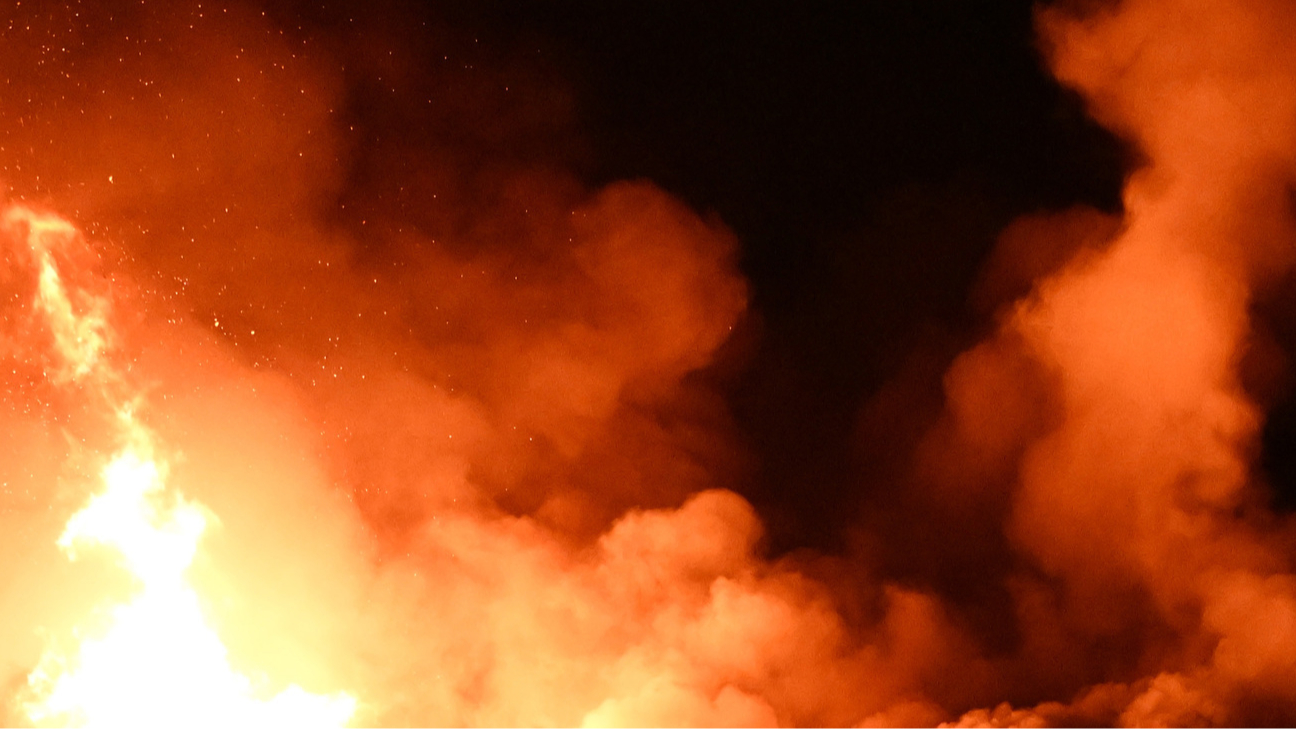
Russian strikes pummeled Ukraine after hitting the National Academy of Sciences in the historic heart of Kyiv in the latest deadly attack on the Ukrainian capital. Video footage shared online appeared to show a high-speed drone smashing into the National Academy of Sciences at a sharp angle, exploding and sending acrid smoke into the blue sky above. People were seen leaning out of windows as bright orange flames engulfed part of the building. Ukraine's former national security and defense council secretary Volodymyr Gorbulin told state broadcaster Suspilne that he was at work at the academy at the time and was slightly wounded. But he said his assistant, who was near the building, was killed. The National Academy of Sciences is close to the German embassy, a cathedral, the national opera and government buildings. The academy called the attack "Russian terror" and "barbarity," targeting "peaceful people who were simply at their workplaces ... Ukrainian science, education and culture." President Volodymyr Zelenskyy said a separate strike in the capital hit a medical facility. That night, Agence France-Presse journalists in Kyiv heard several explosions, as the Ukrainian Air Force warned ballistic missiles were heading toward the city. [3]
Casualties and Damage in Odesa
The number of people injured in the Russian strike on Odesa on 28 September has risen to six, with two people still in hospital. The Russians have attacked infrastructure facilities overnight and this morning. A fire broke out but was quickly extinguished. The city's services are also continuing to deal with the aftermath of the Russian strike on 28 September. Work is continuing at a damaged high-rise residential building. The blast wave broke the windows of neighbouring buildings and an educational institution. Workers are sealing the openings left by shattered windows. According to updated information, six people were injured in the 28 September attack, with two of them still in hospital. Three adults and a child were injured in a Russian strike on a high-rise residential building in Odesa on the afternoon of 28 September. [1]
Drone Attack in Kyiv Oblast
A Russian drone attack in the Bucha district in Kyiv Oblast on the night of 28-29 September has injured two people and caused a fire at a house. Emergency workers in Kyiv Oblast have rescued two people following a Russian attack. Those injured have been taken to hospital. A drone strike set fire to a house and the roof of a neighbouring building in the Bucha district. Firefighters extinguished the fire, which covered an area of more than 300 sq m. Red (missile) and yellow (drone) air-raid warnings were issued in Kyiv throughout the night and on the morning of 29 September. Explosions were heard in the capital and fires broke out. [2]
Wider Strikes Across Ukraine
Elsewhere, Russian strikes killed four and wounded at least 19 at a business center in the central city of Dnipro, while authorities reported an unspecified number of fatalities in a strike on a residential area in eastern Kharkiv. Prime Minister Sergiy Koretsky said Russian forces damaged an ice cream factory in the Zhytomyr region west of Kyiv, and residential buildings in Sumy, in the north, Rivne, in the northwest, and southern Odesa. In Zaporizhzhia in southeastern Ukraine, strikes wounded 30 civilians, three of them seriously, the regional military administration said. A Russian jet-powered drone also struck a Ukrainian village near the Polish border earlier Monday, damaging a border checkpoint, a regional Ukrainian official said. [3]
Context of Intensified Attacks and Ukrainian Appeals
Kyiv has increasingly faced Russian drones and missiles as Europe's worst conflict since World War II grinds through its fifth year. The capital again came under fire after an air force alert warning of approaching drones. Kyiv cultural sites, government buildings and schools have all been targeted before, according to Ukrainian authorities. Russia has been deploying newer jet-powered drones that move faster and are harder to intercept than the traditional models, which are based on Iranian Shahed drones. Zelenskyy renewed his appeal last week to Ukraine's Western allies to step up their military support, including for US-made Patriot interceptors capable of downing powerful ballistic missiles. Koretsky said Monday that Ukraine will postpone some spending commitments, including reconstruction work, because of delays in receiving aid from its foreign backers. The plea for aide comes as Ukrainians consider their options with winter approaching, after Russian attacks on energy infrastructure last year cut power and heating as temperatures plunged to as low as minus 20 degrees Celsius. In an interview with Ukrainian television broadcast on Sunday, Koretsky stopped short of saying that all residents in cities should leave before winter sets in, calling that an "extreme step." But he suggested that vulnerable people should relocate, to avoid overloading the hard-pressed emergency services as they deal with the aftermath of the relentless Russian strikes. "If a person lives, for example, on the 16th floor and for instance the power gets cut, why at that moment, when the state emergency service specialists need to focus on dealing with the consequences, should we be... handling people who need extra attention?" he told TSN television. "For such people, it's worth finding an alternative place to stay for the winter period." [3]
What to watch next: Zelenskyy has renewed appeals for stepped-up Western military support including Patriot interceptors, while Prime Minister Koretsky has indicated Ukraine will postpone some reconstruction spending due to aid delays and has suggested vulnerable residents consider relocating for the winter to ease pressure on emergency services.