
Russia-Ukraine War Surpasses WWII Eastern Front Duration, Eyes Fifth Year Amid Manpower Strains
Helsinki/Kyiv — Russia's full-scale invasion of Ukraine, launched on February 24, 2022, has now outlasted the Soviet Union's grueling four-year battle against Nazi Germany during World War II, with mounting evidence suggesting the conflict will drag into its fifth year, Finnish public broadcaster YLE reported on January 11, 2026.
The milestone underscores the protracted nature of the war, which began as a rapid Russian bid to topple Ukraine's government but has devolved into a grinding war of attrition along a largely static front line. YLE noted that the Soviet-German front, from Operation Barbarossa in June 1941 to the Nazi surrender in May 1945, endured less than four years—roughly 1,418 days. By early 2026, the Ukraine war had eclipsed this mark, reaching nearly 1,450 days since Moscow's forces crossed the border.
This comparison highlights not just chronological endurance but the human and material toll. The Eastern Front remains history's deadliest theater, claiming over 27 million Soviet lives. While casualty figures in Ukraine are harder to verify amid fog-of-war reporting, Western intelligence estimates place combined Russian and Ukrainian losses in the hundreds of thousands, with Ukraine's military reporting over 700,000 Russian casualties by late 2025.
War Background and Evolution
The conflict traces its roots to Russia's 2014 annexation of Crimea and support for separatists in Ukraine's Donbas region, following Kyiv's Euromaidan Revolution that ousted pro-Russian President Viktor Yanukovych. Tensions escalated in late 2021 as Russia massed over 100,000 troops along Ukraine's borders. On February 21, 2022, President Vladimir Putin recognized the self-proclaimed Donetsk and Luhansk People's Republics as independent, paving the way for the invasion three days later.
Initial Russian advances captured swathes of territory, including Kherson and parts of Kharkiv oblast, but met fierce Ukrainian resistance bolstered by Western arms. Kyiv's counteroffensives in fall 2022 liberated much of the occupied Kharkiv region and Kherson city. By 2023, the war settled into trench warfare reminiscent of World War I, centered on Donetsk, Luhansk, Zaporizhzhia, and Kherson oblasts. Ukraine's 2023 counteroffensive yielded limited gains amid dense Russian minefields and fortifications.
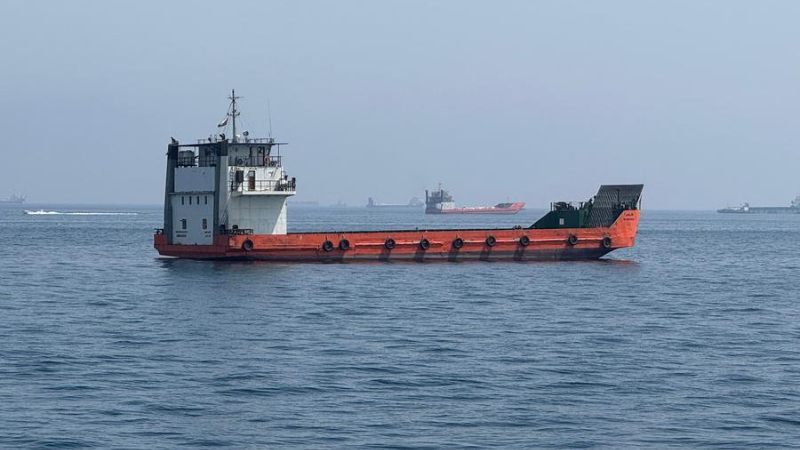
Russia regrouped, capturing Avdiivka in February 2024 and advancing incrementally in Donetsk through 2025. Ukraine, facing ammunition shortages, shifted to drone and precision strikes on Russian logistics and Black Sea Fleet assets, reportedly sinking or damaging over a third of Moscow's warships.
2026 Dynamics: Human Resources as Decisive Factor
As the war enters its fifth year, analysts point to human resources as a pivotal dynamic shaping 2026 outcomes. Both sides grapple with demographic pressures and recruitment challenges in a conflict demanding sustained manpower for infantry assaults and defensive lines.
Ukraine, with a pre-war population of 41 million, has mobilized over 1 million personnel but faces acute shortages. Conscription age was lowered to 25 in April 2024, and mobilization laws tightened, yet desertion cases and draft evasion persist amid war fatigue. President Volodymyr Zelenskyy has appealed for more Western training and long-range weapons to offset numerical disadvantages.
Russia, drawing from a population exceeding 140 million, relies on convicts, volunteers from poorer regions, and North Korean troop deployments—estimated at 10,000 by late 2025—to sustain offensives. Official figures claim over 500,000 contracts signed in 2025, but independent estimates suggest daily casualties averaging 1,200-1,500. Putin's reluctance for another full mobilization, as in September 2022, limits scale.
YLE's report aligns with broader assessments that neither side can achieve decisive breakthroughs without manpower surges. Ukrainian forces hold a 1:1 parity in some sectors but are outgunned 5:1 in artillery. Russian numerical edges erode through attrition, potentially tipping balances if Ukraine receives promised F-16 jets and ATACMS missiles.
International Context and Toll
The war's duration has reshaped global security. NATO expanded with Finland and Sweden's 2023-2024 accessions, and Ukraine received over $200 billion in aid, primarily from the U.S. and EU. Russia's economy, hit by sanctions, pivots to China, India, and North Korea for arms and oil markets.
Civilian impact is staggering: Over 10 million displaced, 30,000 civilian deaths per UN data, and infrastructure devastation costing $500 billion to rebuild. Energy weaponization—via strikes on Ukraine's grid and Nord Stream sabotage—triggered Europe's worst crisis since 1945.
Outlook: No End in Sight
YLE's analysis signals no quick resolution, with Russia's Pokrovsk push and Ukraine's Kursk incursion (August 2024) illustrating mutual attritional strategies. Diplomatic feelers, including U.S. President-elect overtures in late 2025, falter on territorial concessions—Kyiv demands full withdrawal, Moscow insists on annexed regions.
As human resource strains intensify in 2026, the war's trajectory hinges on external support and internal resilience. Without escalation or negotiation breakthroughs, the conflict risks mirroring historical quagmires, prolonging suffering across Europe.
(Word count: 712)