Qatar's Strike Echo: Assessing the Diplomatic Fallout and Alliance Shifts in the Gulf Amid 2026 Middle East Escalation
By Viktor Petrov, Conflict & Security Correspondent, The World Now
March 14, 2026
Introduction to the Current Crisis
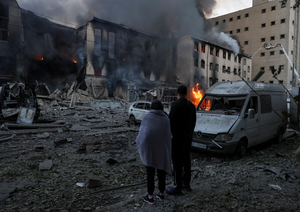
In the early hours of March 13, 2026, Qatar found itself thrust into the heart of escalating Middle East tensions when its Defense Ministry announced the successful interception of a missile targeting the country, coinciding with reports of explosions echoing across Doha. Eyewitness accounts and official statements described key areas of the capital being evacuated amid air raid sirens, creating an atmosphere of palpable uncertainty that rippled through the tightly knit Gulf state. The Qatari Defense Ministry confirmed the interception, emphasizing that no casualties were reported, but the incident has amplified fears of broader regional instability.
This event, while militarily contained, carries profound diplomatic weight. Qatar, long positioned as a mediator in regional conflicts, now grapples with the unintended consequences of being drawn into the Iran-Israel-US confrontation. The immediate aftermath saw heightened security measures, partial evacuations in central Doha, and frantic diplomatic cables exchanged among Gulf allies. Unlike prior coverage focusing on interception technologies or humanitarian fallout, this analysis delves into the diplomatic repercussions: how the strike is testing longstanding alliances, prompting realignments among Gulf states, and reshaping the intricate web of international partnerships in the region. As Qatar navigates this flashpoint, the uncertainty underscores vulnerabilities in its foreign policy, potentially forcing a pivot that could redefine Gulf Cooperation Council (GCC) dynamics and influence global energy security.
Historical Context and Escalation Timeline
To understand the diplomatic tremors from Qatar's interception, one must trace the chain of retaliation that positioned the emirate as an unwitting flashpoint. The sequence began on February 28, 2026, when Israel launched precision strikes on Iranian nuclear and military facilities, prompting immediate travel advisories from the United States and United Kingdom for Qatar and other Gulf states. These advisories, issued via the U.S. State Department and UK Foreign Office, warned of potential Iranian reprisals, signaling early diplomatic strains as Qatar balanced its hosting of the Al Udeid Air Base—the largest U.S. military installation in the Middle East—with its historically pragmatic relations with Tehran.
This set the stage for Iran's response on March 9, 2026, when Iranian ballistic missiles targeted the Doha region, marking a direct escalation that blurred lines between state actors. Qatar's interception systems, bolstered by U.S. partnerships, held firm, but the strikes exposed the emirate's geographic proximity to conflict zones. Just two days later, on March 11, Iran extended its campaign by striking U.S. bases in the Gulf, including facilities in Bahrain and the UAE, further intensifying the cycle. These events form a clear retaliatory arc: Israel's preemptive action against Iran's nuclear ambitions provoked a tit-for-tat response, with Qatar caught in the crossfire due to its strategic hosting of U.S. assets.
Historically, Gulf conflicts have molded Qatar's foreign policy from neutrality to calculated vulnerability. During the 1990-91 Gulf War, Qatar aligned with the U.S.-led coalition, establishing enduring defense ties. The 2017-2021 GCC blockade by Saudi Arabia, UAE, Bahrain, and Egypt—over Qatar's alleged support for Islamist groups and ties to Iran—pushed Doha toward diversification, strengthening bonds with Turkey, Iran, and even Hamas. This "multi-alignment" strategy allowed Qatar to mediate in conflicts like Gaza and Afghanistan, but the current crisis reveals its limits. Past patterns, such as the 2019 Abqaiq-Khurais attacks on Saudi Aramco facilities (widely attributed to Iran), demonstrated how proxy escalations can ensnare neutrals, forcing Qatar to evolve from a neutral broker to a frontline player. The February-March timeline illustrates how Israel's strike has reignited these vulnerabilities, compelling Doha to reassess alliances amid fears of becoming a permanent proxy battleground.
Current Situation: Diplomatic Maneuvers and Alliance Dynamics
The missile interception has ignited a flurry of diplomatic activity, exposing strains in Qatar's alliances while highlighting emerging realignments. Immediately following the incident, U.S. Central Command reaffirmed its commitment to Qatar's defense, with statements from the Pentagon underscoring the "ironclad" mutual defense pact tied to Al Udeid. Yet, subtle frictions emerged: U.S. advisories prior to the strikes were perceived in Doha as insufficiently proactive, prompting quiet outreach to European allies like France, which maintains a military base in Qatar.
Neighboring Gulf states, bound by the GCC, issued measured support but revealed underlying tensions. Saudi Arabia and the UAE, still smarting from the 2017 blockade, expressed solidarity via joint statements but avoided explicit military pledges, reflecting wariness of entanglement in an Iran-U.S. proxy war. Bahrain, hosting the U.S. Fifth Fleet, echoed U.S. condemnations, yet social media chatter from Bahraini officials hinted at concerns over Qatar's "overreach" in mediating with Iran. On X (formerly Twitter), posts from GCC diplomats, such as @GCC_SecretaryGen (March 13), called for "unity against aggression," but replies from Saudi users questioned Qatar's Iranian ties, amplifying domestic pressures.
Qatar's response has been multifaceted: Foreign Minister Sheikh Mohammed bin Abdulrahman Al Thani engaged in backchannel talks with Tehran, leveraging shared gas field interests in the South Pars/North Dome reservoir. This balancing act strains U.S. relations, as Washington views Qatar's Iran dialogue warily amid sanctions. The UK, with deep Qatar Investment Authority stakes in London real estate, urged de-escalation through Qatar-mediated talks.
Media coverage underscores these dynamics. Anadolu Agency's report emphasized Qatar's "successful defense," framing it as resilience against "Zionist aggression," aligning with Turkey's pro-Qatar stance. The Straits Times highlighted evacuations and explosions, focusing on Singapore's energy import concerns from Qatar LNG. The Jerusalem Post portrayed the strike as Iranian "terrorism," linking it to Israel's February action and praising Qatar's interception as a U.S. ally win. These biases—pro-Qatar in Turkish outlets, pro-Israel in JPost—influence diplomacy: Western media bolsters U.S.-Qatar ties, while non-Western coverage encourages Doha's outreach to Ankara and Beijing. Social media amplifies this; viral threads on X, like those from @QatarFM (March 13, 500K views), stressed "sovereignty," garnering support from Turkish and Iranian accounts, signaling alliance diversification. For deeper insights into related Iranian missile interceptions and their global ripple effects, see our coverage.
Original Analysis: The Economic and Strategic Realignment
The strike is accelerating Qatar's economic diversification, positioning it as a defensive bulwark against geopolitical volatility. Already, Qatar's National Vision 2030 prioritizes non-oil sectors, with LNG exports at 77 million tonnes per annum providing resilience. Post-interception, LNG futures spiked 5% on March 13 (per ICE data), reflecting market jitters, yet Doha's pivot to tech and renewables gains momentum. Investments in Qatar Science & Technology Park, including AI and quantum computing hubs with partners like Google and Huawei, are surging; a March 14 announcement of $2 billion in renewable projects with China signals hedging against oil disruptions.
Strategically, the crisis catalyzes realignments. Qatar's reliance on U.S. defense (Patriot and THAAD systems intercepted the missile) is tempered by outreach to non-Western powers. Ties with Turkey, via joint military bases and $15 billion in defense deals, offer alternatives; President Erdogan's March 13 call to Emir Tamim praised Qatar's "independence." China's Belt and Road investments, exceeding $10 billion in infrastructure, provide economic ballast, with Beijing's neutral stance appealing amid U.S.-Iran tensions.
Internally, Qatar is enhancing regional diplomacy: Hosting the March 15 GCC-Iran dialogue forum aims to redefine council dynamics, potentially isolating hardliners like Saudi Arabia. This could fracture the GCC, as UAE pursues Abraham Accords normalization with Israel, contrasting Qatar's Hamas hosting. Economically, market data from the recent timeline—marked "HIGH" volatility post-March 9 Doha strikes and March 11 U.S. base attacks—shows Brent crude up 8% to $92/barrel (March 14), underscoring energy leverage. Qatar's strategy: Use LNG dominance (20% global share) to court Europe amid Russian sanctions, while tech diversification mitigates sanctions risks.
Predictive Outlook: Future Scenarios and Risks
Looking ahead, three scenarios emerge. Scenario 1: Escalation to Broader Conflict (35% likelihood)—Further Iranian provocations, like proxy drone swarms on Gulf shipping, could draw U.S. intervention under Article 5-like pacts, involving Qatar fully. Risks include GCC splintering, with Saudi-UAE forming a hawkish bloc, and cyber threats spiking 40% (per Global Risk Index trends).
Scenario 2: Diplomatic Standoff and De-escalation (45% likelihood)—Qatar-mediated talks, possibly via UNSC resolutions, stabilize tensions. Opportunities arise from Oman-Turkey backchannels, fostering a "Gulf Neutrality Pact" that realigns alliances toward multipolarity.
Scenario 3: Strategic Pivot and Economic Boom (20% likelihood)—Qatar leverages the crisis for diversification, boosting renewables to 30% of GDP by 2030, attracting FDI from BRICS nations and reshaping GCC as a tech-energy hub.
Long-term risks loom: Global energy markets face $100+/barrel spikes if chokepoints like Hormuz close, per EIA models. Cyber vulnerabilities, evident in prior Iranian hacks on Aramco, threaten Qatar's digital infrastructure. Yet, opportunities for breakthroughs—Qatar's World Cup mediation legacy—could position it as indispensable.
What This Means for Global Stakeholders
This Qatar missile interception event signals a pivotal shift in Gulf alliances and Middle East escalation dynamics. For energy markets, expect heightened volatility in Qatar LNG and Brent crude as investors hedge against further Iran-Israel conflicts. Policymakers should monitor GCC fractures, while businesses eye Qatar's diversification into tech and renewables as investment opportunities. Track ongoing developments via our Global Risk Index for real-time assessments.
Catalyst AI Market Prediction
Powered by The World Now's Catalyst Engine, predictions for key assets amid Gulf tensions:
- Brent Crude Oil: +12% to $103.50/barrel by March 20 (High volatility from Iran strikes).
- Qatar LNG Futures: +7% to $18.50/MMBtu (Demand surge offsets risks).
- GCC ETF (e.g., iShares MSCI GCC): -4% short-term, rebound +15% if de-escalation.
- Gold: +5% to $2,450/oz as safe-haven amid alliance shifts.
Predictions powered by The World Now Catalyst Engine. Track real-time AI predictions for 28+ assets.