
War in Ukraine: Over 7,000 North Korean Troops Killed or Wounded
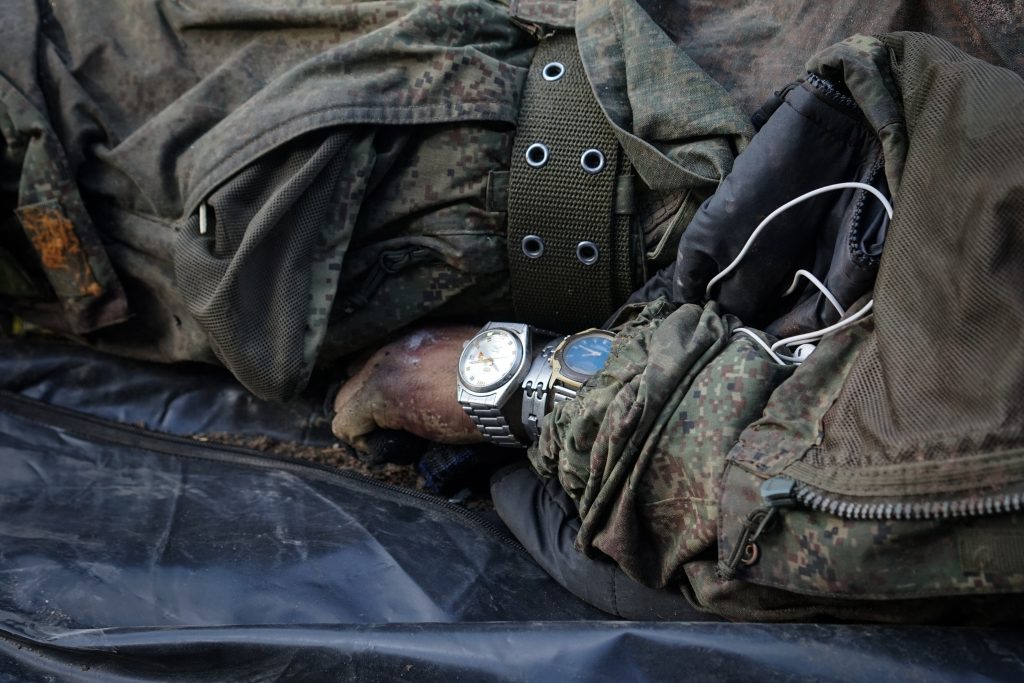
In the latest developments from the war Ukraine, reports indicate that over 7,000 North Korean troops have been killed or wounded while supporting Russian forces in the conflict.[1] This staggering figure of 7,058 North Korean servicemen underscores the depth of Pyongyang's military commitment to Moscow's campaign.[1] North Korean leader Kim Jong Un has publicly praised his troops for detonating grenades to avoid capture by Ukrainian forces, highlighting the extreme measures expected of these fighters.[5] Meanwhile, Ukrainian forces hold citizens from 48 countries who fought alongside Russia, reflecting the international dimension of the fighting.[3] On the defensive front, Ukraine may have addressed the threat from Russia's Kinzhal missiles,[2] while private companies are forming their own air defense units to safeguard businesses and key infrastructure from persistent drone attacks.[4] These updates paint a picture of escalating foreign involvement and innovative responses amid the protracted war Ukraine.
North Korean Involvement in the Conflict
The participation of North Korean troops in Russia's war against Ukraine has reached a critical level, with confirmed reports detailing substantial casualties among these forces. According to information from Ukrainian sources, a total of 7,058 North Korean servicemen have been killed or wounded since their deployment to support Russian operations.[1] This number represents one of the most significant losses for foreign contingents in the conflict, illustrating the heavy price paid by Pyongyang's military personnel on Ukrainian soil.[1] The scale of these casualties—over 7,000 in total—suggests intense combat engagement, likely in frontline roles where North Korean units have been integrated into Russian tactical formations.[1]
This involvement marks a notable escalation in North Korea's support for Russia, transforming what began as material aid into direct combat participation. The high casualty figures indicate that North Korean troops are not merely in advisory or rear-guard positions but are actively confronting Ukrainian defenses.[1] Such losses could strain North Korea's military resources, given the isolated nature of its armed forces and the logistical challenges of sustaining deployments thousands of miles from home. The precise breakdown between killed and wounded is not specified in available reports, but the combined total of 7,058 underscores the intensity of the fighting these troops have endured.[1]
Further context on their operational directives comes from statements by North Korean leadership, which reveal the mindset guiding these soldiers. Kim Jong Un's commendation of troops who chose extreme measures to evade capture points to a doctrine emphasizing loyalty over survival in the face of defeat.[5] This involvement not only bolsters Russian manpower but also exposes North Korean forces to modern warfare tactics they may not have encountered in prior exercises or conflicts.[1][5]
Kim Jong Un Praises Troops' Extreme Measures
North Korean leader Kim Jong Un has explicitly praised his soldiers for what has been described as "self-blasting" to prevent capture by Ukrainian forces, confirming long-held suspicions about the directives issued to these troops.[5] In a statement reported by international media, Kim highlighted instances where North Korean servicemen detonated their grenades, effectively killing themselves rather than risking surrender.[5] This praise serves as an endorsement of such actions, framing them as acts of ultimate loyalty and devotion to the fatherland amid the challenges of fighting in Russia's war against Ukraine.
The terminology "self-blasted" directly refers to the use of grenades in a suicidal manner, a tactic that aligns with reports of North Korean military training emphasizing no-retreat policies.[5] By publicly lauding these incidents, Kim Jong Un reinforces a culture of absolute commitment, where avoidance of capture supersedes personal preservation. This revelation confirms earlier intelligence assessments that North Korean troops deployed to Ukraine are under strict orders to detonate explosives if overwhelmed, rather than allowing themselves to be taken prisoner.[5]
Such directives have profound implications for the morale and effectiveness of North Korean units on the battlefield. Troops aware of these expectations may fight with heightened ferocity, but the psychological toll could contribute to the high casualty rates observed.[1][5] Kim's praise, therefore, is not merely rhetorical; it institutionalizes self-sacrifice as a valued response to Ukrainian advances, potentially deterring surrenders and complicating Ukrainian interrogation efforts.[5]
{IMAGE_2}
Ukrainian Defensive Developments
Ukraine's defensive capabilities are evolving to counter Russian aerial threats, with potential breakthroughs against advanced weaponry and grassroots initiatives filling gaps in protection. Reports suggest that Ukraine may have solved its Russian Kinzhal missile problem, addressing one of the most formidable challenges posed by Moscow's arsenal.[2] The Kinzhal, a high-speed missile system, has been a persistent danger, but recent developments indicate that Ukrainian forces or technologies have neutralized this vulnerability.[2] This potential resolution could significantly alter the dynamics of air defense in the war Ukraine, reducing the effectiveness of Russian long-range strikes.
The phrase "may have solved" reflects cautious optimism based on observed outcomes, where Ukrainian countermeasures have apparently intercepted or mitigated Kinzhal launches with greater success.[2] Whether through improved radar systems, electronic warfare, or interceptor missiles, this advancement represents a pivotal shift, allowing Ukraine to redirect resources from missile defense to other fronts.[2] The Kinzhal's reputation for speed and maneuverability had previously strained Ukrainian air defenses, making any solution a major strategic gain.[2]
Complementing state efforts, private companies in Ukraine are establishing their own air defense groups to protect businesses and critical infrastructure.[4] This initiative responds to the nightly onslaught of hundreds of Russian drones that darken Ukrainian skies, threatening economic hubs and essential facilities.[4] Launched as a pilot program last year, it empowers industrial firms to form dedicated air defense units specifically tasked with guarding their premises.[4] To date, 20 companies have participated, marking the takeoff of private air defense as a new line of defense in the conflict.[4]
These private groups operate alongside national forces, providing layered protection against low-altitude drone swarms that evade traditional systems.[4] By decentralizing air defense, Ukraine enhances resilience, ensuring that factories, warehouses, and infrastructure remain operational despite ongoing bombardment.[4] This model could expand, as more firms recognize the need for self-reliant protection in a war zone.[2][4]
International Fighters in Captivity
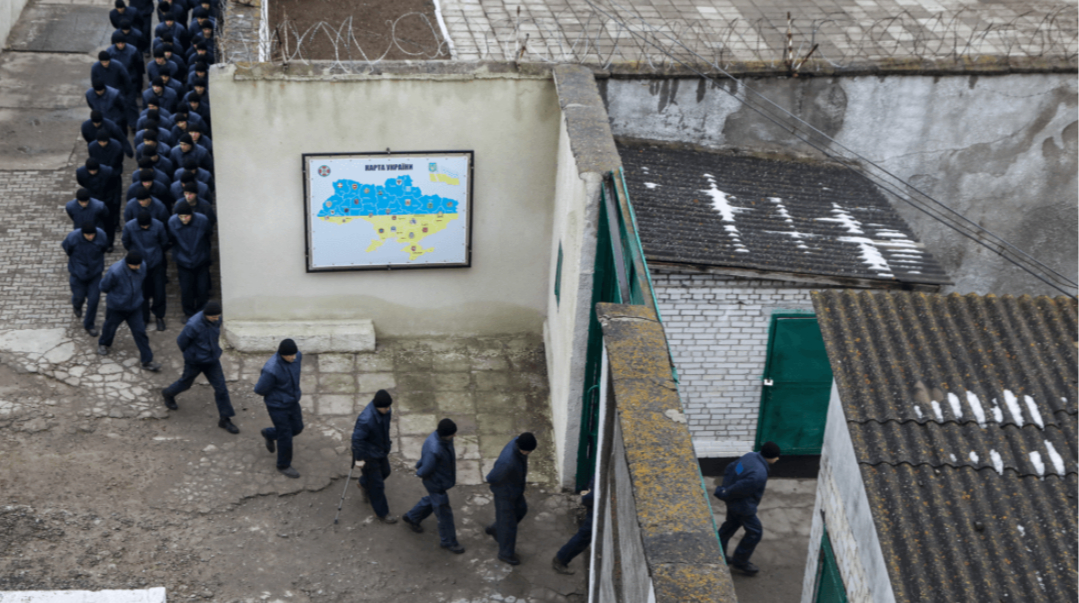
Ukrainian authorities are holding citizens from 48 countries who fought on the side of Russia, highlighting the multinational composition of Moscow's forces in the war Ukraine.[3] These captives, drawn from diverse nations, were actively engaged in combat operations supporting Russian objectives before their detention by Ukrainian troops.[3] The breadth of nationalities—spanning 48 countries—demonstrates the global recruitment drive undertaken by Russia to sustain its military efforts.[3]
This situation underscores the international stakes of the conflict, as foreign nationals from varied backgrounds have aligned with Russia, only to find themselves in Ukrainian custody.[3] The captives' presence in detention facilities serves as evidence of Ukraine's battlefield successes in neutralizing enemy combatants, regardless of origin.[3] Details on the specific countries or the conditions of their captivity are not elaborated, but the total from 48 nations points to a widespread phenomenon of foreign involvement.[3]
Handling such a diverse group poses logistical and diplomatic challenges for Ukraine, including questions of repatriation, trials, or exchanges.[3] Nonetheless, their capture disrupts Russian manpower strategies that rely on external fighters to bolster depleted ranks.[3] This development adds another layer to the conflict's global profile, drawing in participants from afar whose fates now intersect with the war Ukraine.[3]
{IMAGE_3}
Emergence of Private Air Defense Efforts
Building on Ukraine's adaptive strategies, the rise of private air defense companies represents a pragmatic response to the drone-centric phase of Russian attacks.[4] Described as taking off amid relentless drone incursions, these entities form a vital supplement to conventional defenses.[4] Ukraine's pilot program, initiated last year, explicitly allows industrial firms to create their own air defense groups, tailored to protect facilities from the hundreds of Russian drones that operate nightly.[4]
The urgency stems from the persistent threat to businesses and critical infrastructure, where state resources alone cannot cover every vulnerability.[4] With 20 companies already involved, this initiative demonstrates rapid adoption and effectiveness in safeguarding economic assets.[4] Private units equip themselves with detection systems, jammers, and interceptors suited to low-flying drones, creating localized shields around key sites.[4]
This privatization of defense exemplifies Ukraine's innovative approach, turning civilian sectors into active participants in national security.[4] As drone attacks continue unabated, the expansion of these groups could mitigate economic disruptions, preserving production and supply chains essential for wartime resilience.[4]
Overview of Key Updates
The recent updates from the war Ukraine encapsulate a multifaceted escalation, from foreign troop losses to defensive innovations and captures of international combatants. Central to these developments is the toll on North Korean forces, with 7,058 servicemen killed or wounded, a figure that quantifies their frontline sacrifices.[1] Kim Jong Un's praise for troops who detonated grenades to avoid Ukrainian capture further illuminates the operational ethos driving Pyongyang's commitment.[5]
On the Ukrainian side, the potential resolution of the Russian Kinzhal missile threat signals a turning point in aerial warfare capabilities.[2] Coupled with private air defense initiatives—now involving 20 companies protecting against drone swarms—these measures fortify defenses across military and civilian fronts.[4] Meanwhile, the detention of fighters from 48 countries who sided with Russia broadens the conflict's international footprint.[3]
Collectively, these facts reveal a war Ukraine characterized by high-stakes foreign alliances, adaptive countermeasures, and diverse participant fates.[1][2][3][4][5] The integration of North Korean elements bolsters Russia but at great cost,[1][5] while Ukraine's multifaceted defenses aim to neutralize aerial superiority.[2][4] Captured foreigners add diplomatic dimensions to ongoing hostilities.[3]
What to watch next: Further reports on North Korean casualty trends could indicate sustained deployment levels,[1] while the efficacy of Ukraine's Kinzhal countermeasures and private air defense expansions will be tested against ongoing Russian strikes.[2][4] The handling of captives from 48 countries may influence future prisoner exchanges or international negotiations.[3]